
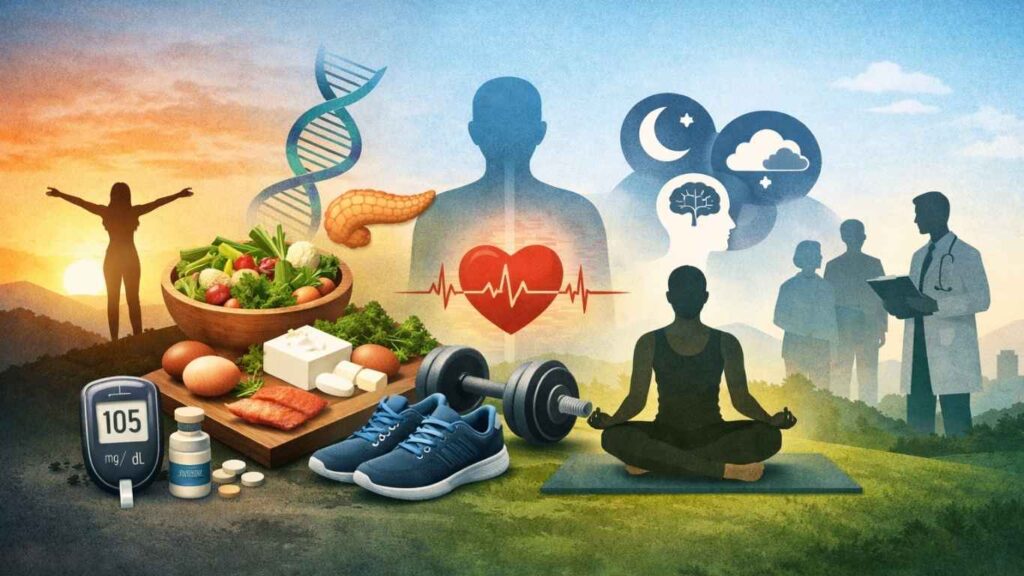
Diabetes has become one of the most common lifestyle-related health conditions in India. Many patients believe that once diagnosed, diabetes means lifelong medication and unavoidable complications. But is that always true? With growing research and real-world evidence, doctors now recognize that type 2 diabetes can often be controlled—and in some cases reversed—through structured lifestyle changes.
What Is Diabetes Reversal?
Diabetes reversal does not mean a permanent cure. Instead, it means:
- Blood sugar levels return to non-diabetic or prediabetic range
- HbA1c improves significantly
- The body becomes more sensitive to insulin
- Medication dosage is reduced or sometimes stopped under medical supervision
This is most commonly achievable in Type 2 Diabetes, especially when diagnosed early.
Diabetes reversal means control without dependency — where blood sugar improves, insulin sensitivity returns, and long-term health is restored through structured lifestyle changes, not shortcuts.
Why Type 2 Diabetes Is Different
Type 2 diabetes is primarily driven by:
- Insulin resistance
- Excess visceral (belly) fat
- Poor dietary habits
- Physical inactivity
- Chronic stress and sleep disruption
Unlike Type 1 diabetes, the pancreas in Type 2 diabetes still produces insulin—but the body doesn’t use it efficiently. This makes lifestyle correction a powerful treatment tool.
Can Blood Sugar Be Controlled Without Lifelong Medication?
For many patients, yes—but with conditions.
Doctors may consider reducing medication when:
- Fasting blood sugar is consistently below 110 mg/dL
- Post-meal sugar remains below 140 mg/dL
- HbA1c drops below 6.5%
- Weight, waist circumference, and metabolic markers improve
Medication is not stopped suddenly. Instead, doctors gradually taper doses while monitoring blood sugar trends.
Key Lifestyle Pillars That Enable Diabetes Control
1. Nutrition That Targets Insulin Resistance
An Indian diabetes-friendly diet focuses on:
- High fiber vegetables
- Adequate protein (dal, paneer, eggs, fish)
- Healthy fats (nuts, seeds, ghee in moderation)
- Reducing refined carbs (white rice, maida, sugar)
The goal is stable blood sugar, not starvation.
2. Physical Activity Beyond Walking
While walking helps, it’s not enough alone.
Doctors recommend:
- Strength training (3–4 times/week)
- Light cardio
- Daily movement (NEAT activity)
Muscle improves glucose uptake and reduces insulin resistance.
3. Weight & Belly Fat Reduction
Even 5–10% weight loss can dramatically improve insulin sensitivity.
Belly fat releases inflammatory hormones that worsen diabetes—reducing it improves sugar control faster than scale weight alone.
4. Sleep & Stress Regulation
Poor sleep and chronic stress increase cortisol, which:
- Raises blood sugar
- Promotes fat storage
- Reduces insulin sensitivity
Doctors now treat sleep as a medical intervention, not a lifestyle luxury.
Who Is the Best Candidate for Diabetes Reversal?
Lifestyle-led diabetes control works best for:
- People diagnosed within the last 5–7 years
- Those not yet dependent on high insulin doses
- Patients willing to follow structured routines
- Individuals without major organ complications
However, even long-term diabetics benefit through better control and reduced medication dependency.
Common Myths About Diabetes Reversal
❌ “Once diabetic, always diabetic”
✔️ Blood sugar behavior can change with lifestyle
❌ “Medication means failure”
✔️ Medication is support, not defeat
❌ “Only fasting sugar matters”
✔️ HbA1c and post-meal sugar are equally important
Why Medical Supervision Is Non-Negotiable
Stopping or reducing medication without guidance can cause:
- Dangerous sugar spikes
- Hypoglycemia
- Long-term organ damage
A responsible diabetes reversal program always involves:
- Regular monitoring
- Doctor review
- Personalized adjustments
Final Thoughts
Diabetes is no longer just a “sugar problem”—it’s a metabolic lifestyle condition. For many people, blood sugar can be controlled safely and sustainably without lifelong medication when nutrition, activity, sleep, and stress are addressed together.
Reversal is not about shortcuts or trends. It’s about consistent, medically guided lifestyle care.