
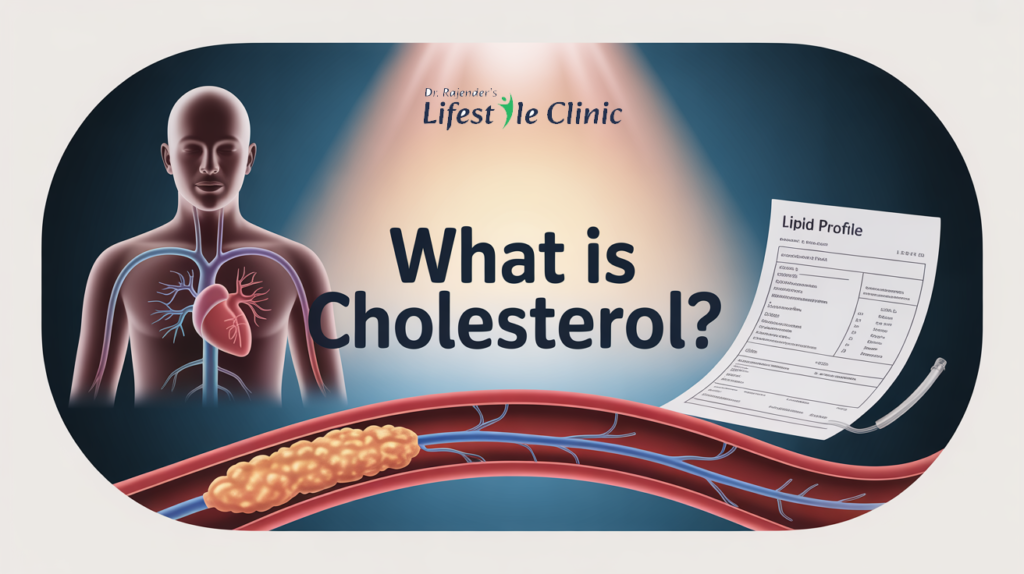
To understand what is cholesterol, you must know that cholesterol is made partly by your liver and partly from the food you eat.
Cholesterol helps in:
- Building healthy cells
- Producing hormones
- Making bile for digestion
- Supporting vitamin D production
So cholesterol is not always bad. The problem starts when cholesterol levels become too high.
Types of Cholesterol
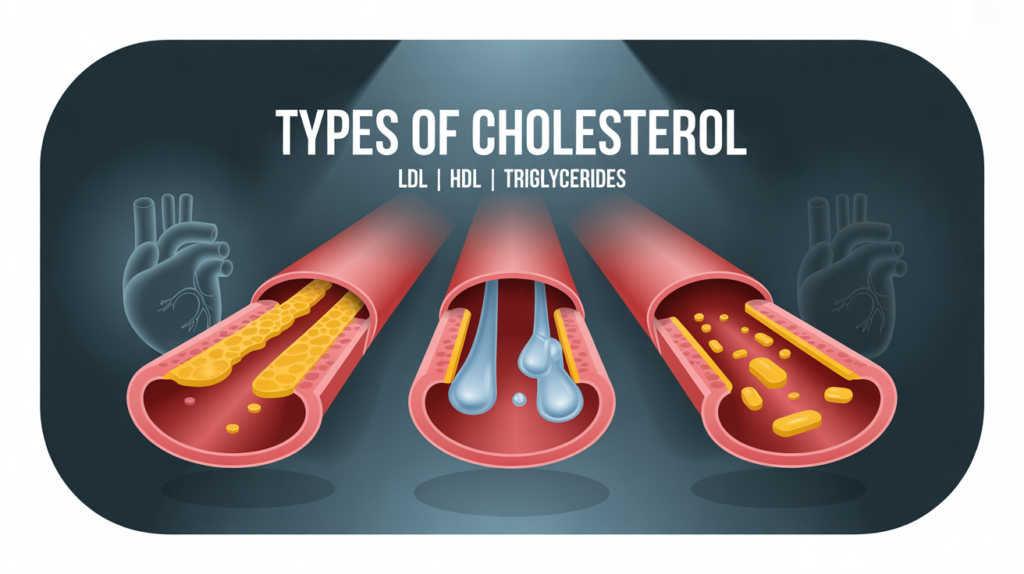
When learning what is cholesterol, it is important to understand its types.
1. LDL Cholesterol (Bad Cholesterol)
LDL carries cholesterol to arteries. Too much LDL can:
- Block blood vessels
- Increase heart attack risk
- Cause stroke
High LDL cholesterol is dangerous.
2. HDL Cholesterol (Good Cholesterol)
HDL removes extra cholesterol from blood and takes it back to the liver.
Higher HDL levels protect your heart.
3. Triglycerides
Triglycerides are another type of fat in blood. High triglycerides increase heart disease risk.
What Is High Cholesterol?
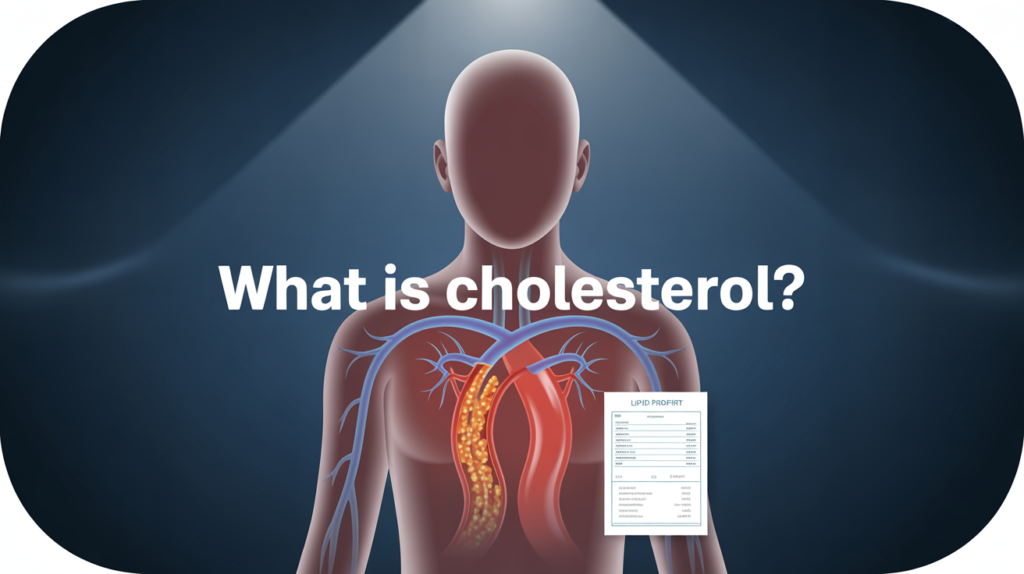
High cholesterol means excess LDL or total cholesterol in blood.
Normal levels:
- Total cholesterol: Below 200 mg/dL
- LDL: Below 100 mg/dL
- HDL: Above 40 (men), 50 (women)
- Triglycerides: Below 150 mg/dL
Regular blood tests help monitor cholesterol levels.
Causes of High Cholesterol
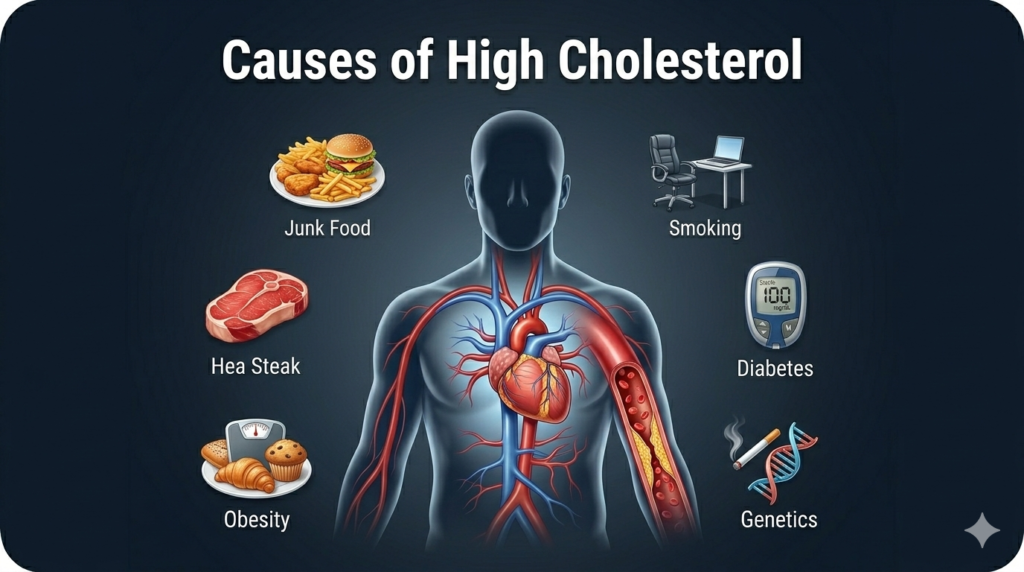
Understanding what is cholesterol also means knowing what increases it.
1. Poor Diet
- Too much fried food
- Junk food
- Red meat
- Bakery items
- Processed foods
These increase bad cholesterol.
2. Obesity
Excess weight increases LDL and triglycerides.
3. Lack of Exercise
Physical inactivity reduces good cholesterol (HDL).
4. Diabetes
High blood sugar increases bad cholesterol.
5. Smoking
Smoking lowers HDL and damages arteries.
6. Genetics
Family history increases risk.
Symptoms of High Cholesterol
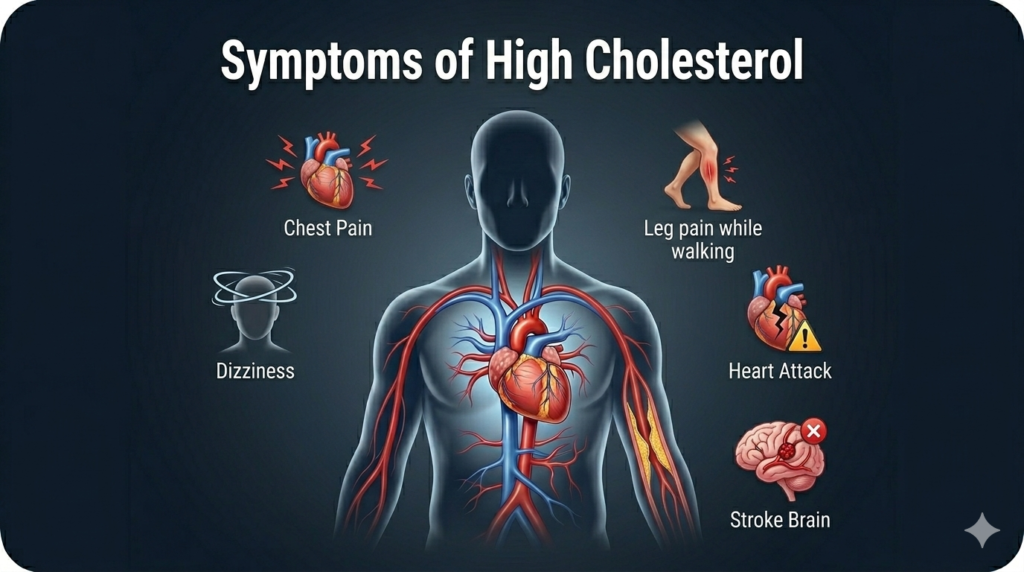
One important fact about what is cholesterol is that high cholesterol usually has no early symptoms.
It is called a “silent disease.”
Sometimes symptoms appear only after complications:
- Chest pain
- Heart attack
- Stroke
That is why regular testing is important.
What Is Cholesterol’s Role in Heart Disease?
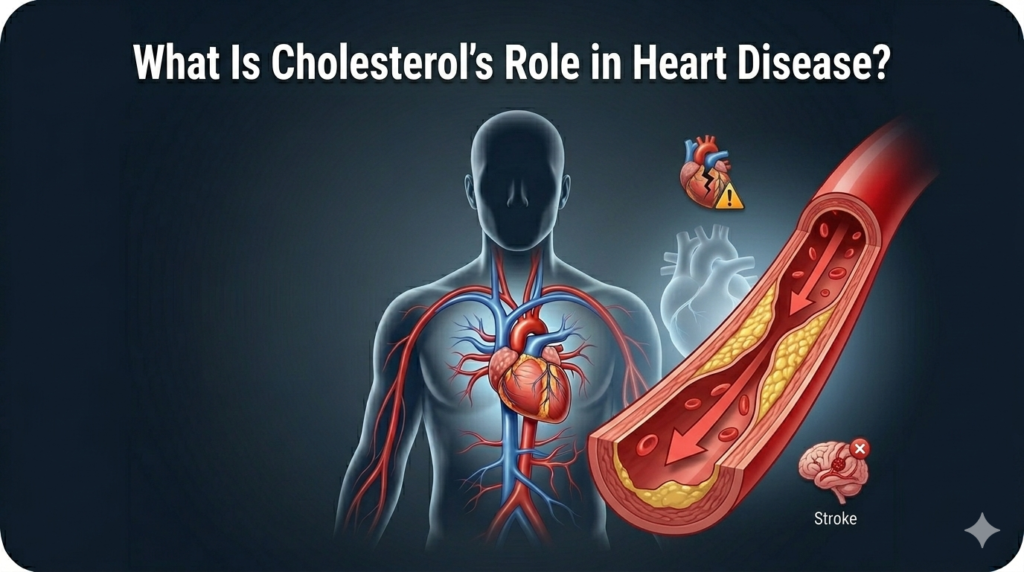
When LDL cholesterol increases:
- Fat deposits build up in arteries
- Blood flow becomes restricted
- Heart works harder
This condition is called atherosclerosis.
If arteries block completely, it can cause heart attack or stroke.
Risk Factors for High Cholesterol
People at higher risk:
- Over 40 years
- Obesity
- Diabetes
- High blood pressure
- Sedentary lifestyle
- Family history
Early prevention reduces complications.
How to Control Cholesterol Naturally
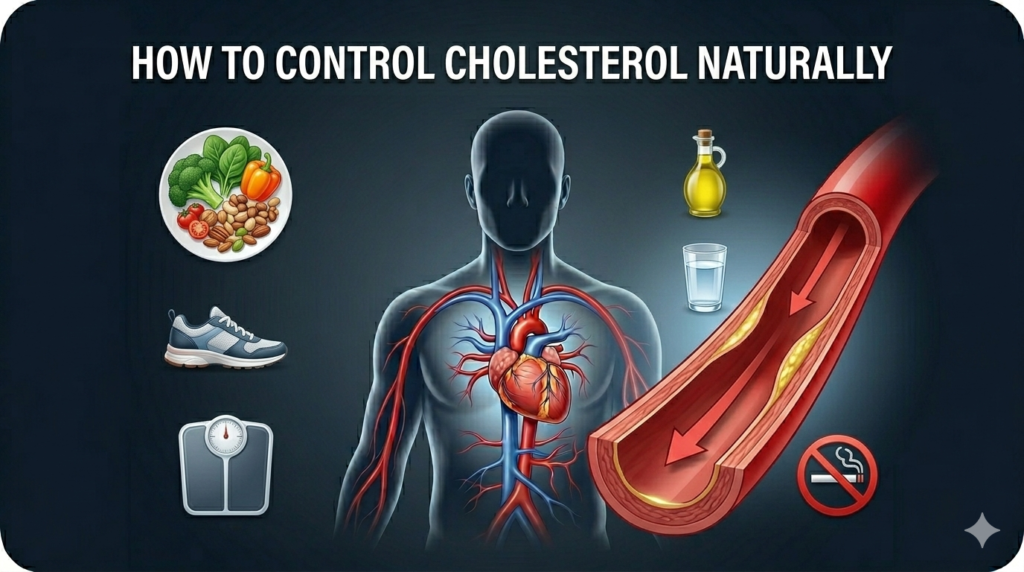
Now that you understand what is cholesterol, let’s discuss how to control it.
1. Follow Plate Method
- 50% vegetables
- 25% protein
- 25% whole grains
This reduces cholesterol naturally.
2. Eat Heart-Healthy Foods
Include:
- Oats
- Nuts
- Seeds
- Leafy greens
- Fruits
- Olive oil
These reduce LDL cholesterol.
3. Exercise Daily
30 minutes walking reduces bad cholesterol and increases good cholesterol.
4. Maintain Healthy Weight
Weight loss improves cholesterol levels.
5. Avoid Junk Food
Reduce:
- Fried foods
- Processed snacks
- Sugary drinks
6. Stop Smoking
Quitting smoking improves HDL.
7. Manage Diabetes and Blood Pressure
Proper sugar control protects heart health.
Medical Treatment for High Cholesterol
If lifestyle changes are not enough, doctors may prescribe:
- Statins
- Cholesterol-lowering medications
Always follow medical advice.
What Is Cholesterol Test?
A cholesterol test (lipid profile) measures:
- Total cholesterol
- LDL
- HDL
- Triglycerides
Test every 1–2 years after age 30.
People with diabetes should test more often.
Cholesterol and Diabetes Connection
High blood sugar damages blood vessels.
When diabetes and high cholesterol combine:
- Risk of heart disease doubles
- Kidney problems increase
- Stroke risk increases
Lifestyle correction is essential.
Can Cholesterol Be Reversed?
Yes, in many cases.
With:
- Healthy diet
- Regular exercise
- Weight loss
- Stress control
- Good sleep
Cholesterol levels improve significantly.
Frequently Asked Questions (FAQ)
1. What is cholesterol in simple words?
Cholesterol is a fatty substance in blood that helps build cells but can block arteries if too high.
2. Is cholesterol always bad?
No. Your body needs cholesterol. Only high LDL is harmful.
3. What causes high cholesterol?
Poor diet, obesity, diabetes, lack of exercise, and genetics.
4. Can high cholesterol cause heart attack?
Yes. It blocks arteries and increases heart attack risk.
5. How can I reduce cholesterol naturally?
Eat healthy foods, exercise daily, lose weight, and avoid junk food.
6. Does cholesterol have symptoms?
Usually no early symptoms. Regular testing is important.
7. How often should I check cholesterol?
Every 1–2 years or as advised by doctor.
Conclusion
Now you understand what is cholesterol, its types, causes, and prevention methods. Cholesterol is necessary for the body, but high cholesterol increases the risk of heart disease and stroke.
Healthy eating, regular exercise, weight control, and stress management can significantly improve cholesterol levels.
Small lifestyle changes today protect your heart tomorrow.