
What Is Metabolism? A Simple Guide to How Your Body Uses Energy
Introduction
Many people hear the word metabolism when talking about weight loss, energy levels, and fat burning, but very few understand what it actually means.
So, what is metabolism?
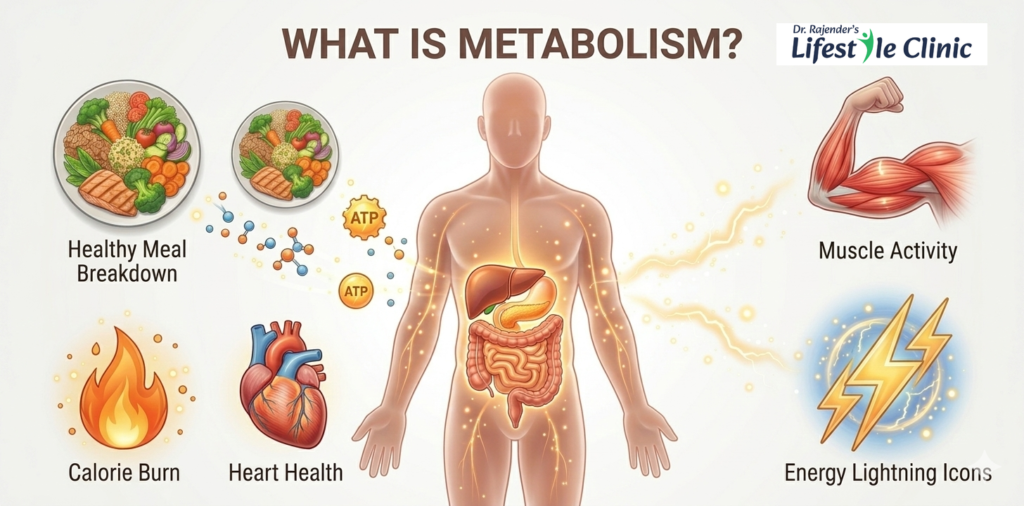
Metabolism refers to all the chemical processes inside your body that convert food into energy. This energy helps your body perform essential functions such as breathing, digestion, circulation, cell repair, and maintaining body temperature.
Even when you are sleeping or resting, your body is constantly using energy through metabolism.
Understanding what metabolism is and how it works is important because it plays a major role in:
- Body weight
- Fat burning
- Energy levels
- Blood sugar control
- Overall health
In this article, we will explain what metabolism is, how it works, what affects it, and how you can improve metabolism naturally.
What Is Metabolism?
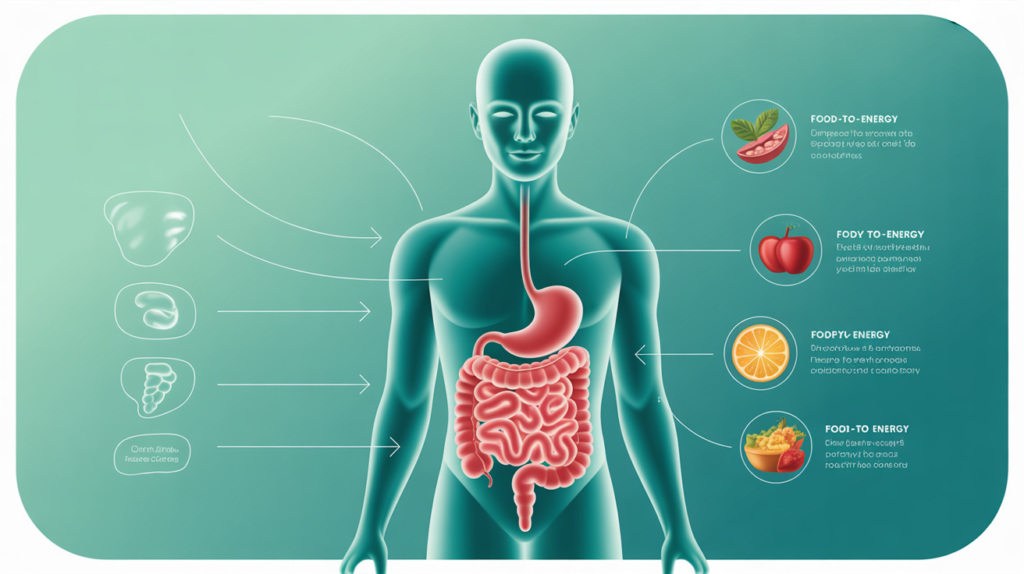
Metabolism is the process by which your body converts food into energy.
When you eat food such as carbohydrates, proteins, and fats, your digestive system breaks them down into smaller molecules.
For example:
- Carbohydrates become glucose
- Proteins become amino acids
- Fats become fatty acids
These nutrients enter the bloodstream and are used by cells to produce energy for the body.
This energy is used for:
- Movement
- Thinking
- Digestion
- Heart beating
- Cell repair
Simply put:
Metabolism is how your body uses food to stay alive and function properly.
Two Main Types of Metabolism
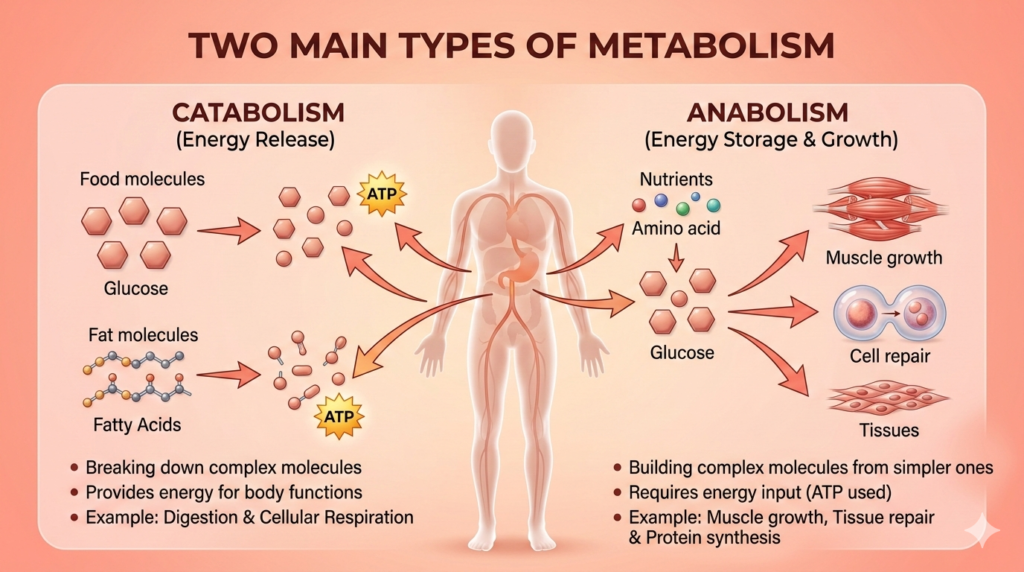
Metabolism has two major processes.
1. Catabolism
Catabolism is the process of breaking down food molecules into smaller units to release energy.
Example:
- Breaking glucose to produce energy
- Breaking fat for fuel
This process provides the energy needed for body functions.
2. Anabolism
Anabolism is the process of building and repairing body tissues using energy.
Example:
- Muscle building
- Cell repair
- Hormone production
Both catabolism and anabolism work together to maintain healthy metabolism.
What Is Basal Metabolic Rate (BMR)?
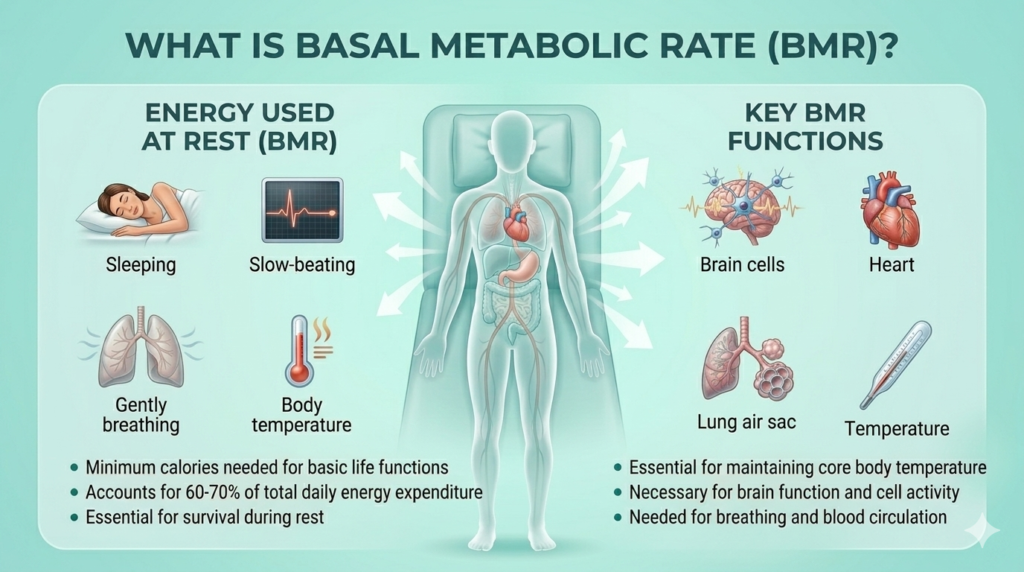
One important concept in metabolism is Basal Metabolic Rate (BMR).
BMR is the number of calories your body burns at rest to keep basic functions working.
These functions include:
- Breathing
- Blood circulation
- Body temperature regulation
- Brain function
- Organ activity
Surprisingly, about 60–70% of the calories your body burns daily come from BMR.
Even if you do nothing all day, your body still burns calories through metabolism.
Factors That Affect Metabolism
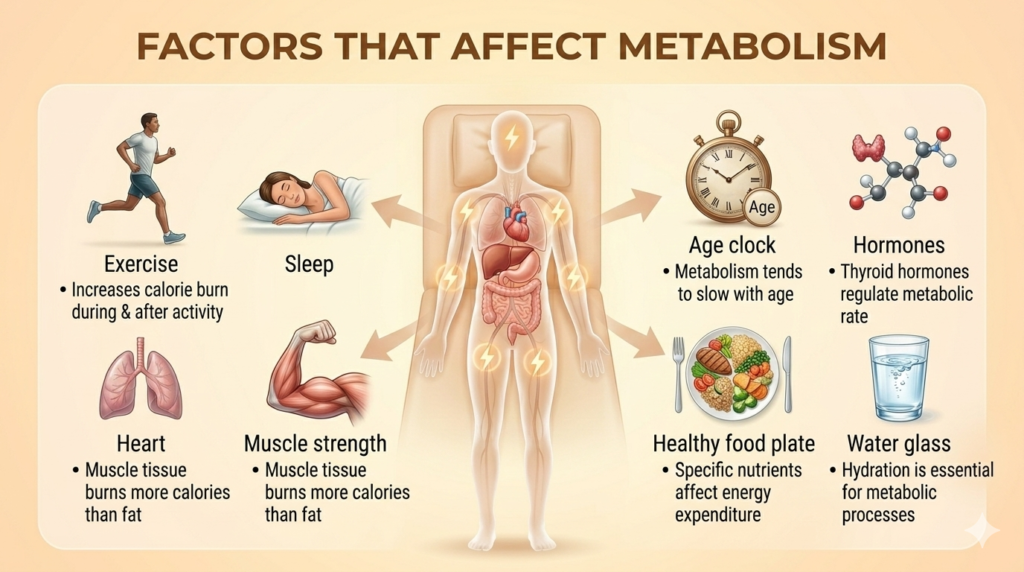
Many factors influence how fast or slow your metabolism works.
1. Age
Metabolism naturally slows down with age.
After age 30, muscle mass gradually decreases, which reduces metabolic rate.
2. Muscle Mass
Muscle tissue burns more calories than fat tissue.
People with more muscle tend to have faster metabolism.
3. Physical Activity
Exercise increases calorie burning and boosts metabolism.
Regular movement helps your body use energy efficiently.
4. Hormones
Hormones regulate many metabolic processes.
For example:
- Thyroid hormones control metabolic rate
- Insulin controls blood sugar metabolism
- Cortisol affects fat storage
Hormonal imbalance can slow metabolism.
5. Diet
The type of food you eat also influences metabolism.
High-protein foods increase metabolic activity during digestion.
6. Sleep
Poor sleep disrupts hormones that regulate metabolism.
Lack of sleep can lead to weight gain and slower metabolism.
Signs of Slow Metabolism
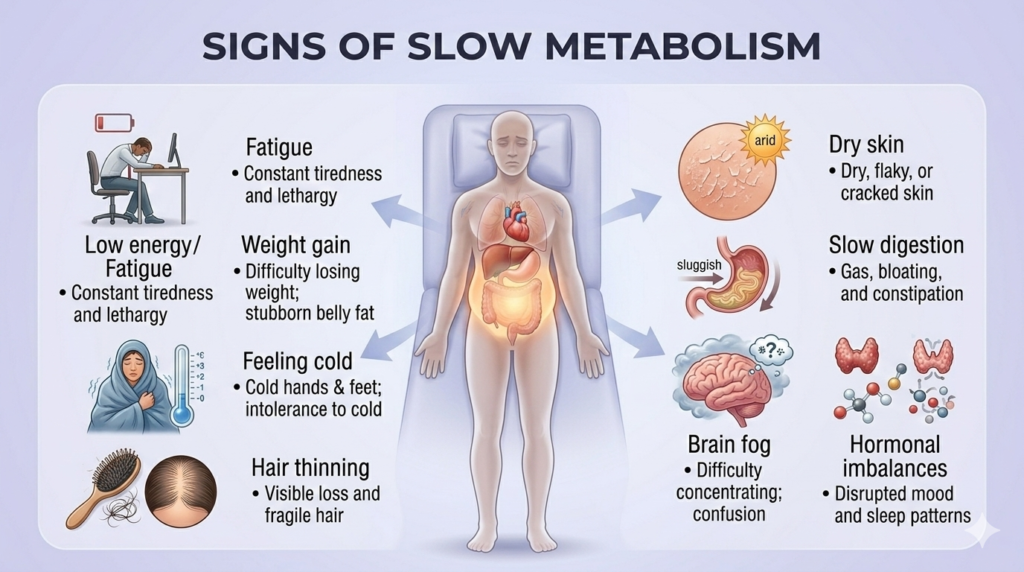
Many people worry about having slow metabolism.
Common signs include:
- Weight gain
- Fat accumulation
- Low energy levels
- Difficulty losing weight
- Feeling cold often
- Slow digestion
- Hair thinning
- Dry skin
However, metabolism alone is not the only factor in weight gain. Lifestyle habits also play a major role.
Metabolism and Weight Loss
Metabolism plays an important role in body weight regulation.
When metabolism is efficient:
- The body burns calories effectively
- Fat storage decreases
- Energy levels remain stable
But when metabolism slows down:
- Calories are stored as fat
- Weight gain becomes easier
- Fat loss becomes difficult
This is why many weight loss programs focus on boosting metabolism naturally.
Foods That Help Boost Metabolism
Certain foods help increase metabolism by improving digestion, fat burning, and hormone balance.
Protein-Rich Foods
Protein requires more energy to digest.
Examples:
- Eggs
- Fish
- Chicken
- Lentils
- Paneer
- Greek yogurt
Fiber-Rich Foods
Fiber improves digestion and keeps metabolism active.
Examples:
- Vegetables
- Fruits
- Whole grains
- Seeds
Healthy Fats
Healthy fats support hormone balance.
Examples:
- Nuts
- Seeds
- Avocado
- Olive oil
Spices
Some spices slightly increase metabolic activity.
Examples:
- Ginger
- Turmeric
- Cinnamon
- Black pepper
Lifestyle Habits That Improve Metabolism
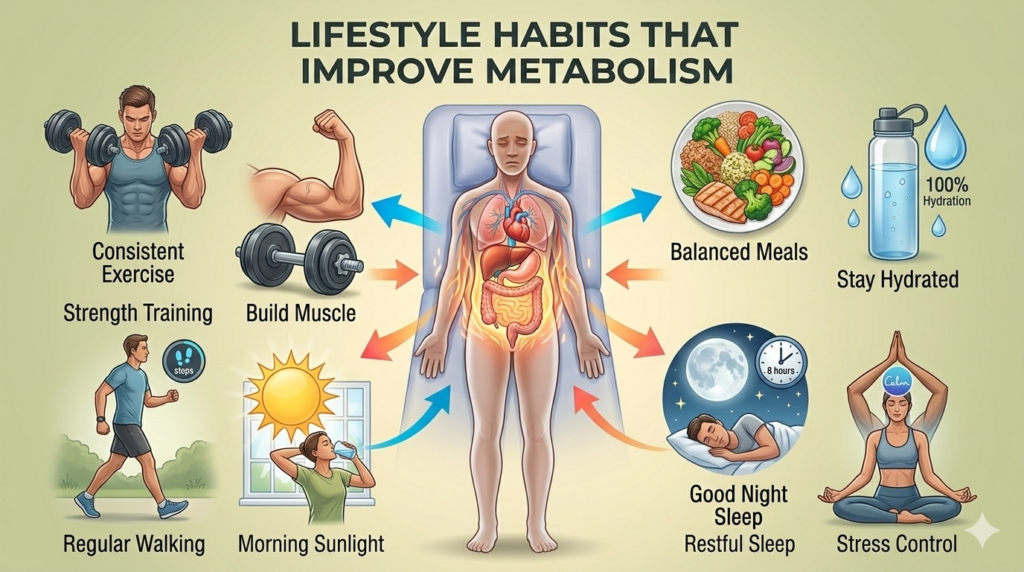
Improving metabolism does not require extreme diets.
Simple lifestyle habits can help your body burn energy efficiently.
1. Exercise Regularly
Physical activity boosts metabolism and increases calorie burning.
Both cardio and strength training are beneficial.
2. Build Muscle
Strength training helps increase muscle mass.
More muscle means higher metabolism.
3. Eat Balanced Meals
Balanced meals with protein, fiber, and healthy fats improve metabolic function.
4. Drink Enough Water
Hydration helps digestion and metabolic processes.
5. Sleep Well
Good sleep improves hormone balance and metabolism.
Aim for 7–8 hours of sleep daily.
6. Manage Stress
High stress increases cortisol, which can slow metabolism and increase belly fat.
Yoga, meditation, and breathing exercises help reduce stress.
Metabolism and Blood Sugar
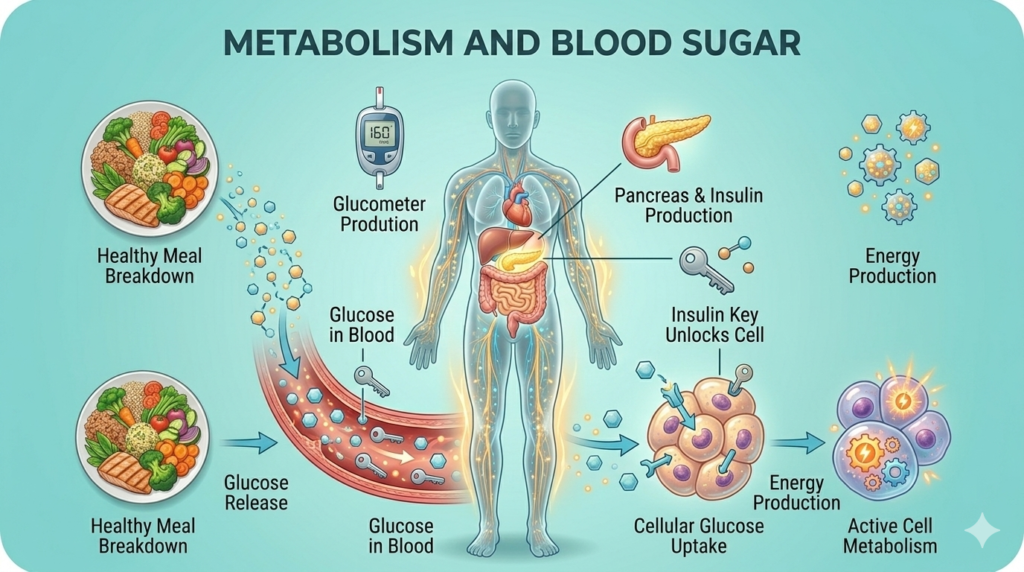
Metabolism is closely connected with blood sugar control.
After eating carbohydrates:
- Glucose enters the bloodstream
- Insulin helps move glucose into cells
- Cells use glucose for energy
If metabolism is impaired, it may lead to:
- Insulin resistance
- Prediabetes
- Type 2 diabetes
Healthy metabolism helps maintain stable blood sugar levels.
Can Metabolism Be Increased?
Yes, metabolism can be improved through healthy lifestyle changes.
Ways to boost metabolism include:
- Regular exercise
- Eating protein-rich foods
- Maintaining healthy weight
- Staying active throughout the day
- Improving sleep quality
- Reducing stress
However, there are no magic foods or pills that drastically increase metabolism.
Consistent healthy habits are the key.
FAQ: What Is Metabolism?
1. What is metabolism in simple words?
Metabolism is the process by which the body converts food into energy to perform essential functions.
2. Does metabolism affect weight?
Yes. Metabolism determines how efficiently the body burns calories, which influences weight gain or loss.
3. Can metabolism slow down?
Yes. Aging, poor diet, inactivity, and hormonal problems can slow metabolism.
4. How can I increase metabolism naturally?
You can boost metabolism by exercising, eating protein-rich foods, sleeping well, and managing stress.
5. Does drinking water increase metabolism?
Drinking water supports metabolic processes and may slightly increase calorie burning.
6. Is metabolism genetic?
Genetics influence metabolism, but lifestyle habits play a bigger role.
Conclusion
Understanding what metabolism is helps you take better control of your health.
Metabolism is the engine of the body, converting food into energy and supporting essential processes like digestion, circulation, and cell repair.
While factors like age and genetics influence metabolism, lifestyle habits such as exercise, balanced nutrition, good sleep, and stress management play a powerful role in keeping metabolism healthy.
By making small daily improvements in your lifestyle, you can support a strong metabolism, better energy levels, healthy weight, and improved overall health.