
How to Gain Muscle Weight: A Complete Guide to Healthy Muscle Gain
Introduction
Many people struggle with being underweight and often ask how to gain muscle weight in a healthy way. While gaining weight may sound easy, gaining healthy muscle weight instead of body fat requires proper nutrition, exercise, and lifestyle habits.
Muscle gain is not just about eating more food. It involves building lean muscle tissue while improving strength and metabolism. A healthy muscle-building plan includes balanced meals, strength training, adequate protein intake, good sleep, and consistency.
In this guide, we will explain how to gain muscle weight naturally, the best foods for muscle growth, and the most effective habits that help build lean muscle.
Why Gaining Muscle Weight Is Important
Gaining muscle weight can improve overall health and physical performance.
Healthy muscle mass helps:
- Improve body strength
- Boost metabolism
- Support bone health
- Improve posture and balance
- Increase energy levels
- Reduce risk of injuries
People who have very low body weight or poor muscle mass may experience weakness, fatigue, and low immunity.
Building muscle weight helps the body function better and improves overall fitness.
Understanding Muscle Growth
To understand how to gain muscle weight, it is important to know how muscles grow.
Muscle growth happens when muscle fibers experience stress during exercise. After exercise, the body repairs and rebuilds these fibers using nutrients from food.
This repair process makes the muscles stronger and larger.
Three main factors are required for muscle growth:
- Strength training
- Adequate protein intake
- Proper recovery and sleep
When these three elements are balanced, the body builds muscle efficiently.
Best Foods to Gain Muscle Weight
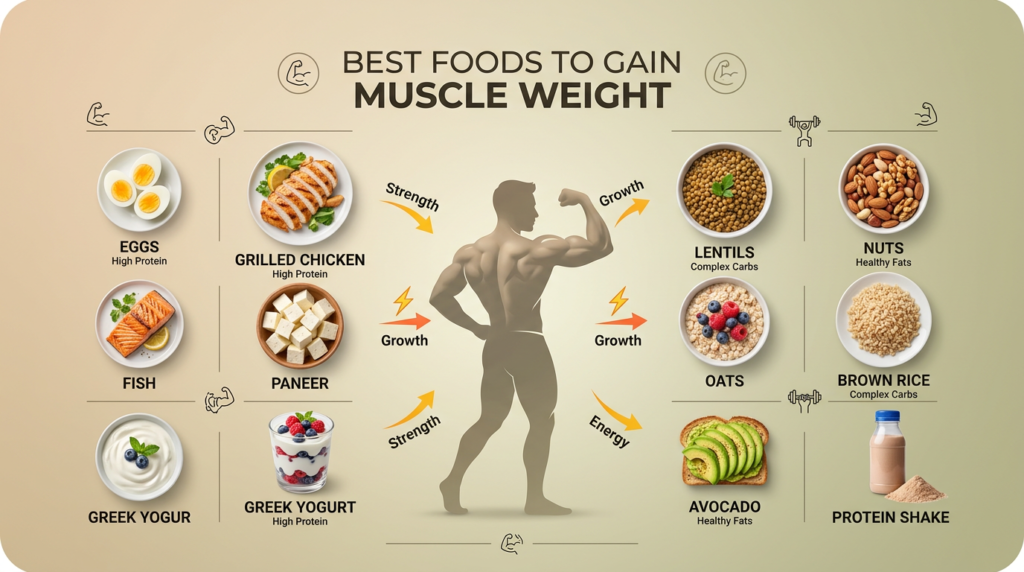
Nutrition plays a major role in muscle building. Eating the right foods provides the nutrients needed for muscle repair and growth.
1. Protein-Rich Foods
Protein is the most important nutrient for muscle gain.
Protein helps repair muscle tissues after workouts.
Good protein sources include:
- Eggs
- Chicken
- Fish
- Paneer
- Greek yogurt
- Lentils
- Beans
- Tofu
- Sprouts
Most people trying to gain muscle should consume adequate protein in every meal.
2. Healthy Carbohydrates
Carbohydrates provide energy for workouts and muscle recovery.
Healthy carbohydrate sources include:
- Brown rice
- Oats
- Whole wheat
- Sweet potatoes
- Quinoa
- Fruits
- Whole grains
Carbohydrates help refill glycogen stores, which fuel muscle activity.
3. Healthy Fats
Healthy fats support hormone production and overall health.
Important fat sources include:
- Nuts
- Seeds
- Avocado
- Olive oil
- Peanut butter
- Fatty fish
Healthy fats also increase calorie intake, which helps with muscle weight gain.
Strength Training for Muscle Weight Gain
Exercise is essential for muscle development.
The most effective workouts for muscle growth are strength training exercises.
These include:
- Weight lifting
- Resistance band training
- Push-ups
- Squats
- Deadlifts
- Pull-ups
- Lunges
Strength training causes muscle fiber stress, which triggers muscle repair and growth.
For best results:
- Train 3–5 times per week
- Focus on progressive overload (gradually increasing weight or resistance)
Importance of Protein Timing
Protein intake timing can influence muscle recovery.
Many fitness experts recommend consuming protein:
- After workouts
- During balanced meals throughout the day
Post-workout protein helps repair muscles and promotes faster recovery.
Examples of post-workout meals:
- Eggs and whole wheat toast
- Protein smoothie
- Paneer with vegetables
- Chicken and rice bowl
Role of Calories in Muscle Gain
To gain muscle weight, the body must consume more calories than it burns.
This is known as a calorie surplus.
However, the goal should be lean muscle gain, not excessive fat gain.
Healthy calorie sources include:
- Whole grains
- Nuts and seeds
- Protein foods
- Healthy oils
- Fruits
Avoid excessive junk food because it increases body fat instead of muscle mass.
Importance of Sleep for Muscle Growth
Sleep plays a critical role in muscle development.
During sleep, the body releases growth hormone, which helps repair muscles.
Lack of sleep can slow muscle growth and increase fatigue.
For optimal muscle gain:
- Sleep 7–9 hours per night
- Maintain consistent sleep timing
- Avoid late-night screen use
Good sleep improves both recovery and muscle strength.
Hydration and Muscle Performance
Water is often overlooked in muscle-building plans.
Proper hydration helps:
- Improve muscle contraction
- Prevent fatigue
- Support nutrient transport
- Maintain exercise performance
Drink enough water throughout the day, especially during workouts.
Common Mistakes When Trying to Gain Muscle Weight
Many people make mistakes when trying to gain weight.
Common mistakes include:
Eating Too Much Junk Food
Fast food increases fat gain instead of muscle.
Skipping Strength Training
Without resistance exercise, extra calories turn into body fat.
Not Eating Enough Protein
Low protein intake slows muscle growth.
Poor Sleep
Sleep deprivation reduces muscle recovery.
Lack of Consistency
Muscle growth takes time and regular effort.
Avoiding these mistakes helps achieve healthy muscle gain.
Best Lifestyle Habits for Muscle Growth
Developing healthy habits supports long-term muscle gain.
Key habits include:
- Eating balanced meals regularly
- Strength training several times per week
- Getting adequate sleep
- Staying hydrated
- Managing stress
- Maintaining consistent exercise routines
Consistency is the most important factor in achieving muscle weight gain.
Can Supplements Help Gain Muscle Weight?
Some people use supplements to support muscle gain.
Common supplements include:
- Protein powder
- Creatine
- Branched-chain amino acids (BCAAs)
However, supplements should not replace healthy food.
Whole foods remain the best source of nutrients for muscle growth.
FAQ: How to Gain Muscle Weight
1. How can I gain muscle weight quickly?
Muscle gain requires regular strength training, adequate protein intake, and calorie surplus.
Consistency is the key.
2. How much protein is needed for muscle gain?
Most people require sufficient protein distributed across meals to support muscle repair.
3. Can beginners gain muscle fast?
Yes. Beginners often experience rapid muscle growth during the first few months of training.
4. Is cardio bad for muscle gain?
Moderate cardio is beneficial for heart health, but excessive cardio may reduce muscle gain.
5. How long does it take to gain muscle?
Visible muscle growth may take several weeks to months, depending on training and nutrition.
Conclusion
Understanding how to gain muscle weight is important for building strength and improving overall health.
Healthy muscle gain requires a combination of balanced nutrition, strength training, proper recovery, and consistent habits.
Eating protein-rich foods, performing resistance exercises, sleeping well, and maintaining a calorie surplus all contribute to effective muscle growth.
By following these healthy strategies, anyone can gradually increase muscle weight, improve physical strength, and achieve better overall fitness.