

Weight Regain After Dieting: Why It Happens and How to Stop It
Introduction
Many people experience weight regain after dieting, even after successfully losing several kilograms. You may follow a strict diet plan, reduce calories, exercise regularly, and see good results. However, after a few months, the lost weight slowly returns.
This situation can be frustrating and confusing. If you worked hard to lose weight, why does the body regain it?
The truth is that weight regain after dieting is very common. Studies show that many people regain a large portion of the weight they lose within one or two years.
Understanding why this happens is important for maintaining long-term weight loss. Several biological, hormonal, and lifestyle factors influence weight regain after dieting.
The good news is that by making sustainable lifestyle changes, it is possible to prevent weight regain and maintain a healthy weight.
Why Weight Regain After Dieting Happens
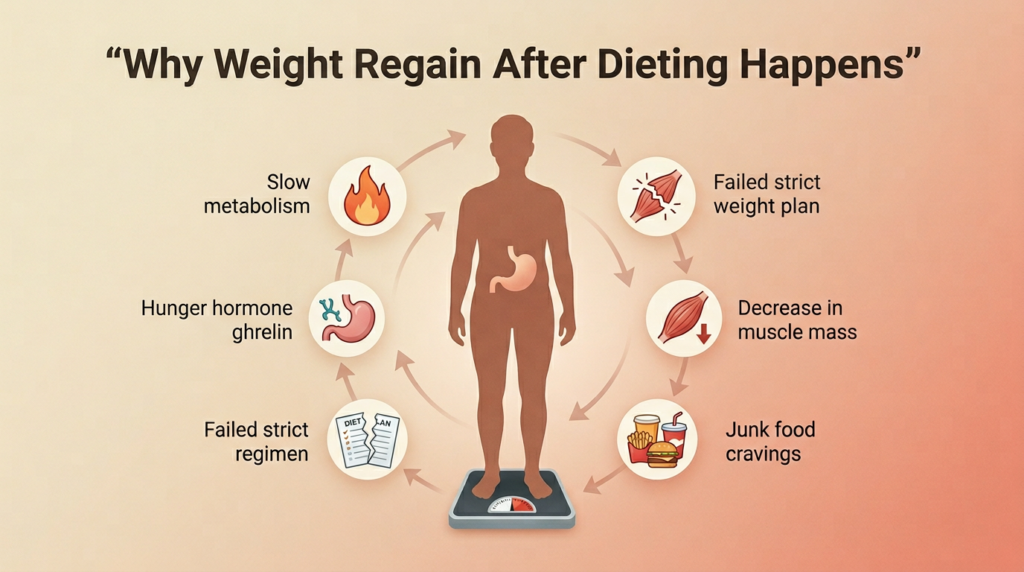
The body has natural mechanisms that try to maintain its previous weight. When you lose weight rapidly through strict dieting, the body responds by conserving energy and increasing hunger.
These responses are the main reasons behind weight regain after dieting.
1. Metabolism Slows Down
One major reason for weight regain after dieting is metabolic slowdown.
When you reduce calorie intake drastically, your body adapts by lowering metabolic rate. This means the body burns fewer calories than before.
This process is called metabolic adaptation.
Because metabolism slows down, your body requires fewer calories. When normal eating resumes, excess calories are stored as fat, causing weight regain after dieting.
2. Hunger Hormones Increase
Hormonal changes also play a role in weight regain after dieting.
Two important hormones control hunger:
• Leptin – signals fullness
• Ghrelin – stimulates hunger
During dieting, body fat decreases, which reduces leptin levels and increases ghrelin levels.
As a result, people feel:
• Increased hunger
• Strong food cravings
• Difficulty controlling appetite
These hormonal changes make weight regain after dieting more likely.
3. Muscle Loss During Dieting
Many restrictive diets cause loss of muscle mass along with fat.
Muscle burns more calories than fat tissue. When muscle mass decreases, metabolic rate drops.
A slower metabolism makes it easier to regain weight.
Without adequate protein intake and strength training, muscle loss increases the risk of weight regain after dieting.
4. Psychological Effects of Dieting
Strict dieting often creates mental stress and feelings of deprivation.
When people stop dieting, they may return to previous eating habits or overeat foods that were restricted during the diet.
This psychological response contributes to weight regain after dieting.
Some individuals also experience binge eating after long periods of strict dieting.
5. Returning to Old Habits
Temporary diets rarely change long-term habits.
After finishing a diet plan, many people return to lifestyle patterns that caused weight gain in the first place.
These habits include:
• Eating processed foods
• Skipping exercise
• Poor sleep
• Stress eating
Without long-term lifestyle changes, weight regain after dieting becomes almost inevitable.
Signs of Weight Regain After Dieting
Recognizing early signs of weight regain can help prevent further weight gain.
Common signs include:
• Increased hunger
• Cravings for sugary or processed foods
• Gradual weight increase
• Fatigue or low energy
• Reduced metabolism
Addressing these signs early can help control weight regain after dieting.
How to Stop Weight Regain After Dieting
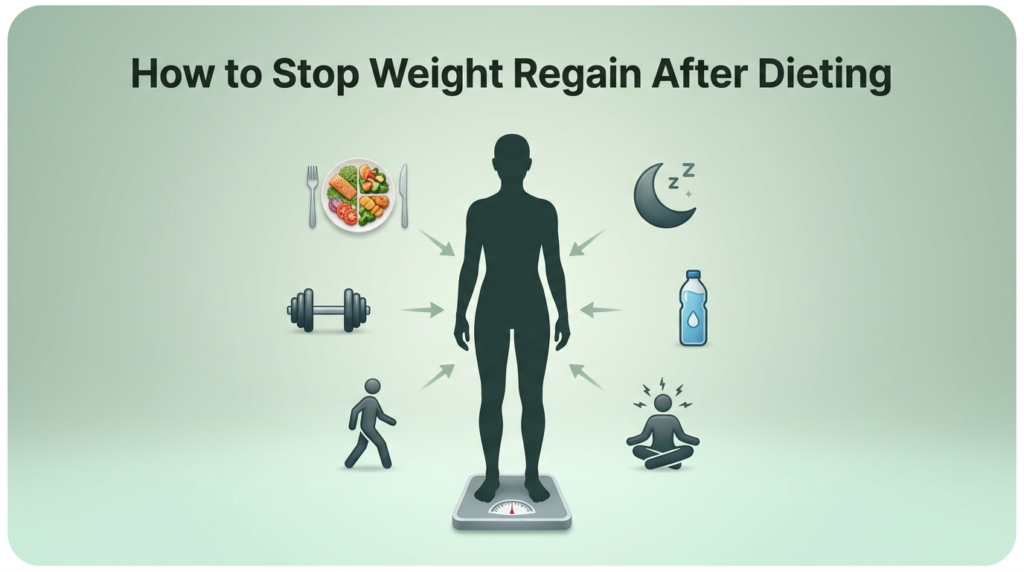
Preventing weight regain after dieting requires sustainable lifestyle habits instead of extreme dieting.
Here are effective strategies to maintain long-term weight loss.
1. Follow a Balanced Diet
Instead of extremely low-calorie diets, adopt balanced eating patterns.
A healthy diet should include:
• Vegetables and fruits
• Lean proteins
• Whole grains
• Healthy fats
Balanced meals help control hunger and support metabolism.
2. Increase Protein Intake Protein plays a key role in preventing weight regain after dieting.
Protein helps:
• Preserve muscle mass
• Increase satiety
• Improve metabolism
Good protein sources include:
• Eggs
• Fish
• Chicken
• Lentils
• Greek yogurt
• Nuts and seeds
Including protein in every meal supports weight maintenance.
3. Strength Training
Exercise is essential for maintaining weight loss.
Strength training helps prevent weight regain after dieting by preserving muscle mass and boosting metabolism.
Examples include:
• Weight lifting
• Resistance band exercises
• Squats
• Push-ups
Strength training should be done 2–3 times per week.
4. Stay Physically Active
Daily movement helps burn calories and maintain weight.
Activities that help prevent weight regain after dieting include:
• Walking
• Cycling
• Swimming
• Yoga
Even small increases in daily activity can make a significant difference.
5. Improve Sleep Quality
Sleep has a strong influence on appetite and metabolism.
Poor sleep increases hunger hormones and reduces the body’s ability to regulate weight.
People who sleep less than six hours are more likely to experience weight regain after dieting.
Aim for 7–8 hours of sleep per night.
6. Manage Stress
Chronic stress increases the hormone cortisol, which promotes fat storage.
High cortisol levels increase appetite and cravings.
Stress management techniques include:
• Meditation
• Yoga
• Deep breathing
• Regular exercise
Reducing stress helps prevent weight regain after dieting.
7. Avoid Crash Diets
Crash diets often lead to rapid weight loss followed by rapid weight gain.
Gradual and sustainable weight loss is more effective for long-term results.
Healthy weight loss usually occurs at 0.5–1 kg per week.
This approach reduces the risk of weight regain after dieting.
Importance of Long-Term Lifestyle Changes
Successful weight maintenance requires long-term habits rather than temporary diet plans.
Healthy habits that prevent weight regain after dieting include:
• Balanced meals
• Regular exercise
• Adequate sleep
• Stress management
• Staying hydrated
Consistency is more important than short-term dieting.
Weight Maintenance Is Different From Weight Loss
Maintaining weight loss requires continued effort.
Weight maintenance involves:
• Monitoring eating habits
• Staying physically active
• Maintaining healthy routines
People who adopt sustainable habits are less likely to experience weight regain after dieting.
When to Seek Professional Help
If repeated dieting leads to weight regain, professional guidance may help.
Healthcare professionals can provide personalized plans to manage weight effectively.
Underlying medical conditions such as:
• Insulin resistance
• Hormonal imbalance
• Thyroid disorders
can also contribute to weight regain after dieting.
Identifying and addressing these issues improves long-term weight management.
Conclusion
Weight regain after dieting is a common challenge caused by metabolic adaptation, hormonal changes, muscle loss, and lifestyle habits.
Although dieting may produce quick results, maintaining weight loss requires sustainable lifestyle changes.
Balanced nutrition, strength training, physical activity, good sleep, and stress management are key strategies to prevent weight regain after dieting.
Instead of focusing on temporary diets, adopting healthy long-term habits is the best way to achieve lasting weight management and overall well-being.