

Can Diabetes Affect Eyesight? Causes, Symptoms, and Prevention
Introduction
Many people living with diabetes often ask: can diabetes affect eyesight? The answer is yes. Diabetes can significantly affect eye health and may lead to serious vision problems if blood sugar levels remain uncontrolled for a long time.
High blood sugar damages small blood vessels throughout the body, including those in the eyes. Over time, this damage can lead to conditions such as diabetic retinopathy, blurred vision, glaucoma, and even vision loss.
Understanding how diabetes affects eyesight is important for preventing complications and protecting long-term eye health. With early detection and proper blood sugar control, most diabetes-related eye problems can be prevented or managed effectively.
How Diabetes Affects Eyesight
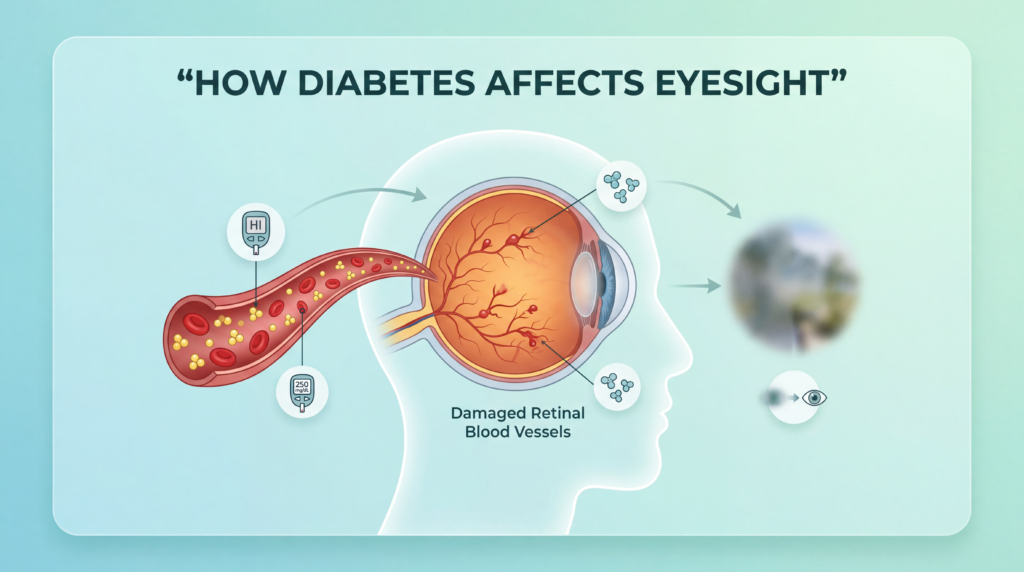
To understand can diabetes affect eyesight, it helps to know how high blood sugar affects the eyes.
When blood glucose levels remain high for long periods, the tiny blood vessels in the retina become damaged. The retina is the light-sensitive layer at the back of the eye that helps you see clearly.
High sugar levels can cause:
• Blood vessels in the retina to swell
• Leakage of fluid or blood into the eye
• Abnormal growth of new blood vessels
• Damage to the optic nerve
All these changes can affect vision and lead to diabetes-related eye diseases.
Diabetes-Related Eye Diseases

Several eye conditions explain why diabetes affects eyesight.
1. Diabetic Retinopathy
Diabetic retinopathy is the most common eye disease caused by diabetes.
It occurs when high blood sugar damages the small blood vessels in the retina.
There are two stages:
Non-proliferative diabetic retinopathy (NPDR)
Early stage where blood vessels swell or leak.
Proliferative diabetic retinopathy (PDR)
Advanced stage where abnormal blood vessels grow in the retina.
If untreated, diabetic retinopathy can cause severe vision loss.
2. Diabetic Macular Edema
Macular edema occurs when fluid builds up in the macula, the central part of the retina responsible for sharp vision.
This swelling causes:
• Blurred vision
• Difficulty reading
• Distorted images
Diabetic macular edema is a common reason diabetes affects eyesight.
3. Cataracts
People with diabetes are more likely to develop cataracts at a younger age.
A cataract occurs when the lens of the eye becomes cloudy.
Symptoms include:
• Blurred vision
• Difficulty seeing at night
• Sensitivity to light
High blood sugar accelerates cataract formation.
4. Glaucoma
Glaucoma is another condition where diabetes affects eyesight.
It occurs when pressure builds up inside the eye and damages the optic nerve.
Symptoms may include:
• Eye pain
• Headache
• Vision loss
• Tunnel vision
People with diabetes are almost twice as likely to develop glaucoma.
Early Signs That Diabetes Is Affecting Eyesight
Many people do not notice symptoms early, which is why regular eye checkups are important.
Common signs that diabetes affects eyesight include:
• Blurred vision
• Difficulty focusing
• Dark spots or floaters
• Poor night vision
• Eye strain
• Double vision
If these symptoms appear, an eye examination should be done immediately.
Why High Blood Sugar Damages Vision

The reason diabetes affects eyesight is mainly due to long-term high blood sugar levels.
High glucose damages blood vessels and nerves throughout the body, including the eyes.
Several factors contribute to eye damage:
1. Damage to Retinal Blood Vessels
High sugar weakens and blocks blood vessels in the retina.
2. Fluid Leakage
Damaged vessels leak fluid into eye tissues, causing swelling.
3. Oxygen Supply Problems
When vessels are blocked, the retina does not receive enough oxygen.
4. Growth of Abnormal Blood Vessels
The body tries to compensate by growing new vessels, which can bleed easily.
These changes explain how diabetes affects eyesight over time.
Risk Factors for Diabetes Eye Problems
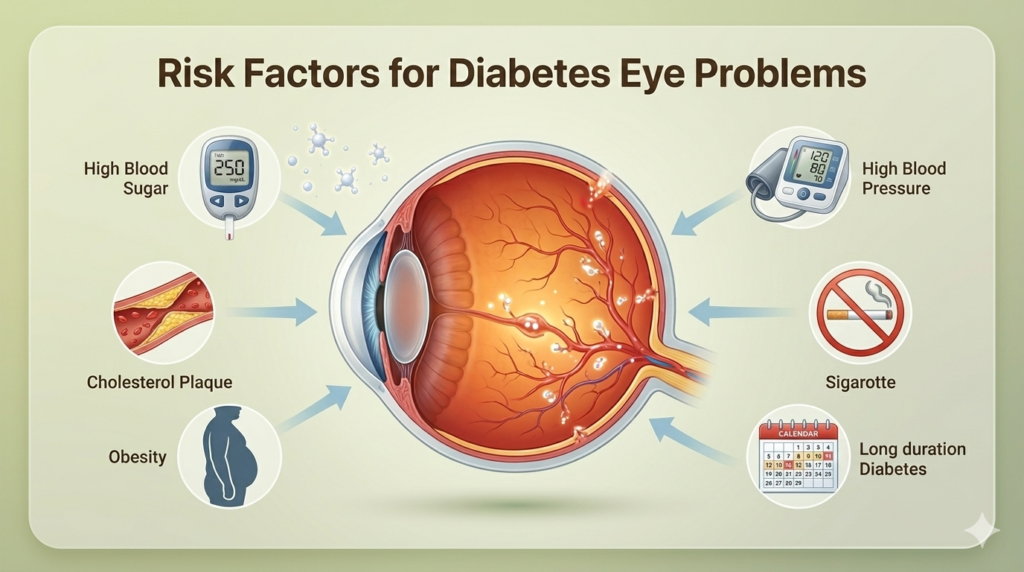
Certain factors increase the risk that diabetes affects eyesight.
Poor Blood Sugar Control
Consistently high glucose levels increase retinal damage.
Long Duration of Diabetes
The longer someone has diabetes, the higher the risk.
High Blood Pressure
Hypertension worsens damage to eye vessels.
High Cholesterol
Elevated cholesterol affects circulation to the retina.
Smoking
Smoking reduces oxygen supply to eye tissues.
Obesity
Obesity increases insulin resistance and metabolic stress.
Managing these risk factors can help prevent vision problems.
Can Diabetes-Related Vision Loss Be Prevented?
Yes. In many cases, the complications that explain can diabetes affect eyesight can be prevented.
Early lifestyle changes and medical care play a major role.
How to Protect Eyesight in Diabetes
1. Control Blood Sugar
The most important step is maintaining stable blood glucose levels.
Healthy diet, medication, and regular monitoring help reduce eye damage.
2. Regular Eye Checkups
People with diabetes should have a dilated eye exam once a year.
Early detection allows treatment before vision loss occurs.
3. Manage Blood Pressure
Keeping blood pressure under control protects delicate blood vessels in the eyes.
4. Maintain Healthy Cholesterol
Healthy cholesterol levels reduce vascular damage and improve circulation.
5. Eat Eye-Healthy Foods
A balanced diet supports eye health.
Helpful foods include:
• Green leafy vegetables
• Carrots
• Citrus fruits
• Nuts and seeds
• Fish rich in omega-3
These foods provide antioxidants that protect the retina.
6. Exercise Regularly
Physical activity improves blood circulation and insulin sensitivity.
Regular exercise helps stabilize blood sugar levels and reduce complications.
7. Quit Smoking
Smoking worsens blood vessel damage and increases risk of eye disease.
Stopping smoking helps protect vision.
Diabetes and Temporary Blurred Vision
Sometimes people notice blurred vision when blood sugar suddenly rises or falls.
High glucose changes the shape of the eye lens temporarily.
Once sugar levels return to normal, vision usually improves.
However, frequent blurred vision can also indicate that diabetes affects eyesight, so it should not be ignored.
When to See an Eye Doctor
People with diabetes should seek medical attention if they experience:
• Sudden vision changes
• Persistent blurred vision
• Dark spots or floaters
• Eye pain
• Difficulty seeing at night
Early treatment can prevent permanent vision loss.
Conclusion
So, can diabetes affect eyesight? Yes, diabetes can significantly impact eye health and may lead to serious conditions such as diabetic retinopathy, cataracts, glaucoma, and macular edema.
High blood sugar damages the delicate blood vessels of the retina, which can gradually affect vision if not treated.
The good news is that most diabetes-related eye problems are preventable. Controlling blood sugar, maintaining a healthy lifestyle, and having regular eye examinations can protect eyesight and prevent complications.
Taking early action is the best way to maintain clear vision and overall health while living with diabetes.