
In today’s health-conscious world, the debate around almond milk vs cow milk has become increasingly important, especially for people managing diabetes. With the rise of plant-based diets and dairy alternatives, many individuals wonder whether replacing traditional dairy milk with almond milk can actually help improve blood sugar control.
For diabetics, small dietary choices can significantly affect blood glucose levels. The type of milk you consume daily may influence blood sugar spikes, calorie intake, and overall metabolic health. Understanding the differences between almond milk and cow milk for diabetics can help you make smarter choices that support long-term health.
How Milk Choice Affects Blood Sugar
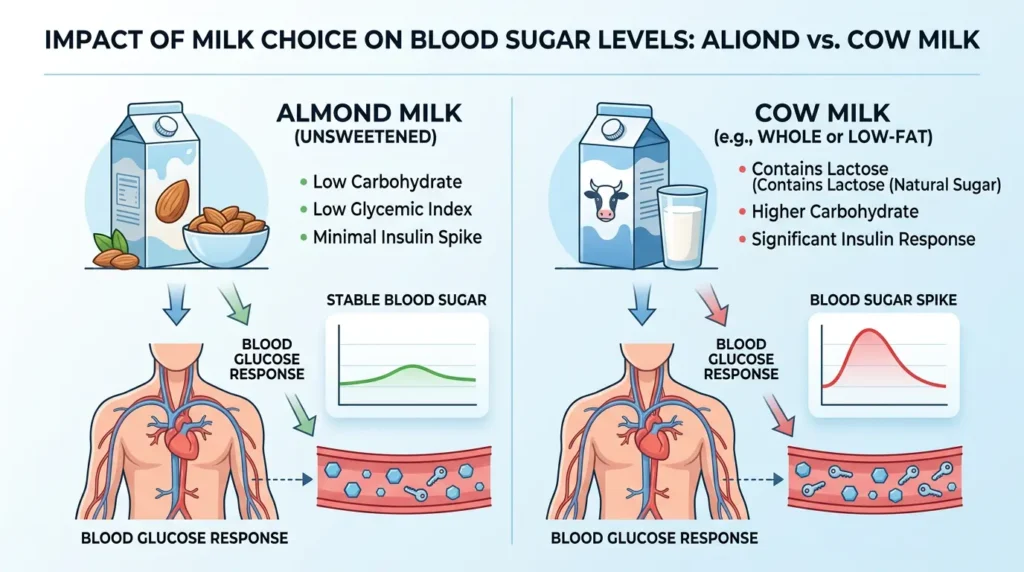
For individuals with diabetes, carbohydrate intake plays a crucial role in maintaining stable blood sugar levels. Milk contains natural sugars, but the type and quantity vary depending on the milk source.
The main difference in the cow milk vs almond milk comparison lies in carbohydrate content.
Cow milk contains lactose, a natural sugar that breaks down into glucose and galactose during digestion. This process can raise blood sugar levels, particularly when consumed in larger quantities.
Unsweetened almond milk, on the other hand, contains almost no natural sugar and very few carbohydrates. This makes it a low glycemic beverage, meaning it has minimal impact on blood glucose levels.
For people who are trying to stabilize blood sugar or reduce daily carbohydrate intake, almond milk is often considered one of the best milk alternatives for diabetes management.
Nutritional Comparison: Almond Milk vs Cow Milk
Here is a simple comparison of the nutritional values of unsweetened almond milk and whole cow milk per cup.
| Nutrient | Almond Milk (Unsweetened) | Cow Milk (Whole) |
|---|---|---|
| Calories | 30–50 | ~150 |
| Carbohydrates | 1–2 g | ~12 g |
| Protein | ~1 g | ~8 g |
| Fat | ~2.5 g | ~8 g |
| Calcium | Fortified | Naturally present |
From this comparison, several key differences become clear.
Almond milk calories vs regular milk: Almond milk contains far fewer calories, which can help support weight management.
Carbohydrate content: Almond milk has significantly fewer carbohydrates, making it better for controlling blood sugar.
Protein content: Cow milk contains more protein, which can be beneficial for muscle health and satiety.
Calcium levels: Almond milk is often fortified with calcium and vitamin D, but it’s important to check the label when purchasing.
Blood Sugar Impact: Which Is Better for Diabetics?
For individuals managing diabetes, the most important factor when choosing milk is how it affects blood glucose levels.
Research shows that foods with lower carbohydrate content typically cause smaller blood sugar spikes. Because almond milk contains almost no carbohydrates when unsweetened, it has a minimal impact on blood sugar.
Cow milk, however, contains lactose. When lactose is digested, it converts into glucose and can raise blood sugar levels. This doesn’t necessarily make cow milk unhealthy, but it does mean diabetics should consume it more carefully.
Another factor to consider is insulin response. Dairy proteins such as whey may trigger a stronger insulin release in the body. For people trying to improve insulin sensitivity or reduce fasting glucose levels, switching to unsweetened almond milk may offer advantages.
Because of these factors, many nutrition experts consider almond milk one of the best low-sugar milk options for diabetics.
Health Benefits Beyond Blood Sugar Control
While blood sugar control is important, milk choices can also influence overall health.
Benefits of Almond Milk
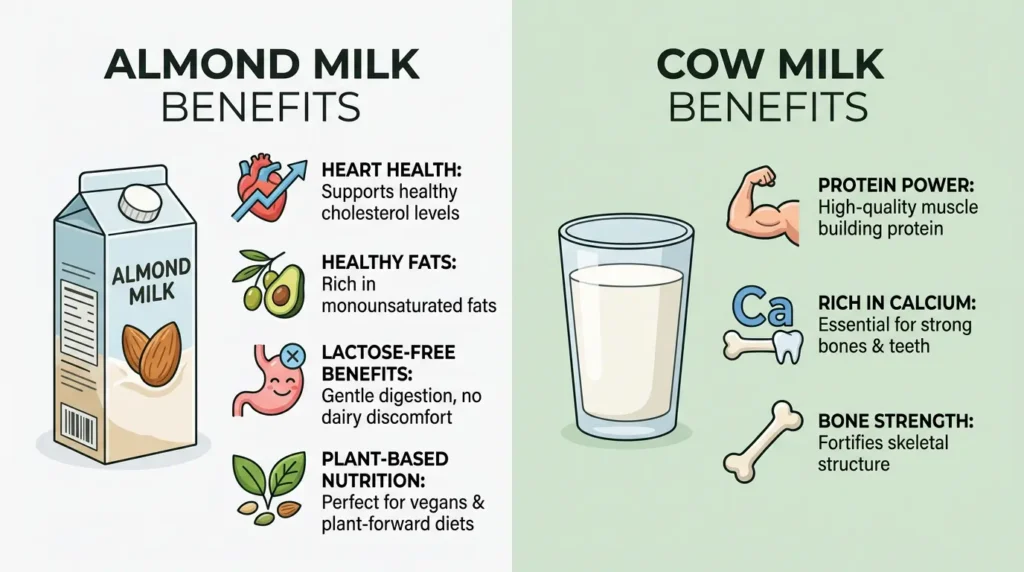
Almond milk offers several advantages:
- Low carbohydrate content
- Naturally lactose-free
- Supports heart health due to healthy fats
- Lower calorie intake for weight management
- Suitable for plant-based diets
It is also ideal for people with lactose intolerance who cannot digest dairy comfortably.
Many people exploring almond milk benefits for diabetics appreciate that it supports both metabolic health and heart health.
Benefits of Cow Milk
Despite the benefits of almond milk, cow milk still provides valuable nutrients.
Cow milk is rich in:
- Complete protein
- Natural calcium
- Vitamin B12
- Riboflavin
These nutrients support bone health, muscle maintenance, and overall nutrition. For people who tolerate lactose well and maintain stable blood sugar levels, moderate cow milk consumption can still fit into a balanced diet.
Ultimately, the question “Is almond milk healthier than regular milk?” depends on your health priorities.
Which Should You Choose?
Choosing between almond milk vs cow milk depends on individual goals and health conditions.
Almond Milk May Be Better If You:
- Want to control blood sugar levels
- Are reducing carbohydrate intake
- Follow a plant-based diet
- Are lactose intolerant
- Are trying to lose weight
Cow Milk May Be Better If You:
- Need higher protein intake
- Want natural calcium without fortification
- Do not experience blood sugar spikes from dairy
For diabetics, the most important rule is to choose unsweetened almond milk. Many flavored almond milk products contain added sugars that can increase blood glucose levels.
Monitoring your blood sugar after consuming different milk types can also help you understand how your body responds.
Practical Tips for Diabetics Choosing Milk
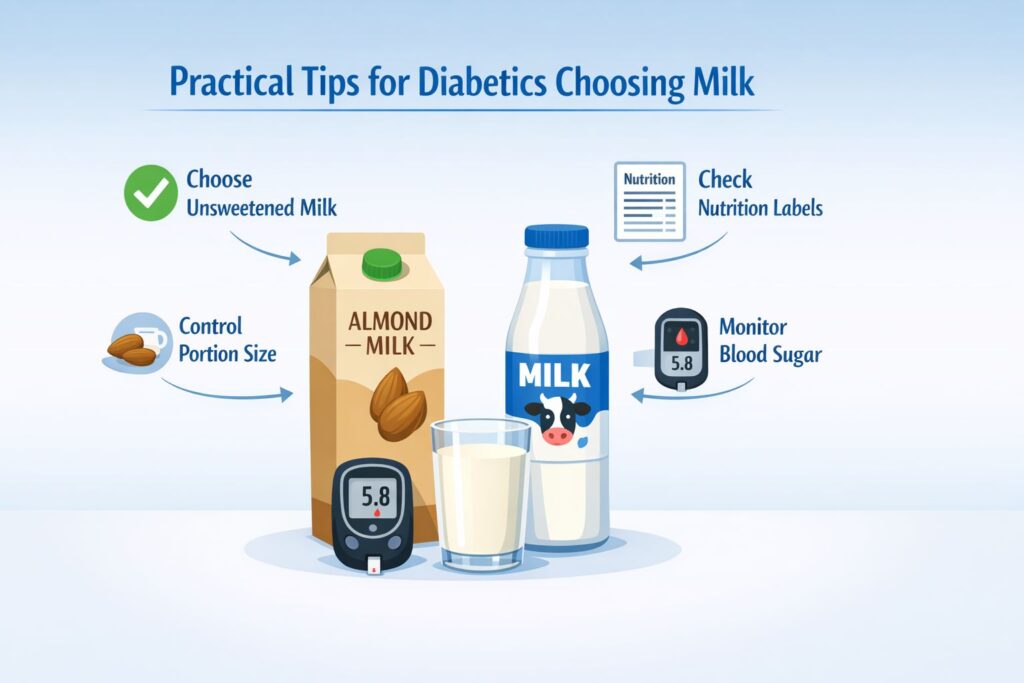
If you are managing diabetes, these tips can help you make better milk choices:
Choose unsweetened almond milk whenever possible.
Check nutrition labels carefully for added sugars.
Limit portion sizes of cow milk if you notice blood sugar spikes.
Pair milk with fiber or protein foods to slow glucose absorption.
Track your blood sugar response after drinking milk.
These small adjustments can help ensure your milk choice supports your overall diabetes management plan.
Conclusion
When comparing almond milk vs cow milk, both options provide unique benefits. However, for most people with diabetes, unsweetened almond milk offers advantages due to its low carbohydrate content and minimal impact on blood sugar levels.
Cow milk remains a nutritious source of protein and calcium, but its lactose content may cause higher glucose spikes in some individuals.
The best approach is to choose the option that aligns with your health goals while maintaining a balanced diet, regular exercise routine, and consistent blood sugar monitoring.
FAQs
Is almond milk safe for type 2 diabetes patients?
Yes. Unsweetened almond milk is low in carbohydrates and sugar, making it safe and beneficial for people with type 2 diabetes.
Which is better for blood sugar control: almond milk or cow milk?
Almond milk is generally better for blood sugar control because it contains fewer carbohydrates than cow milk.
Can diabetics replace dairy milk with almond milk?
Yes. Many diabetics replace regular milk with almond milk to help reduce daily carbohydrate intake and improve blood sugar stability.
Does almond milk help manage diabetes naturally?
Almond milk can help manage diabetes by reducing sugar intake and supporting stable glucose levels.
How does almond milk affect blood sugar compared to cow milk?
Unsweetened almond milk has minimal impact on blood sugar, while cow milk’s lactose content can cause moderate increases.
Can diabetics drink almond milk at night?
Yes. Unsweetened almond milk is low in carbohydrates and usually does not cause major blood sugar spikes at night.