
Introduction
When it comes to diabetes, choosing the right fruits can feel confusing. Two of the most commonly eaten fruits are apples and bananas. Many people wonder which one is better for blood sugar control.
The truth is, both fruits are healthy. But they affect blood sugar in slightly different ways. Understanding this can help you make better choices in your daily diet.
Nutritional Difference Between Apple and Banana
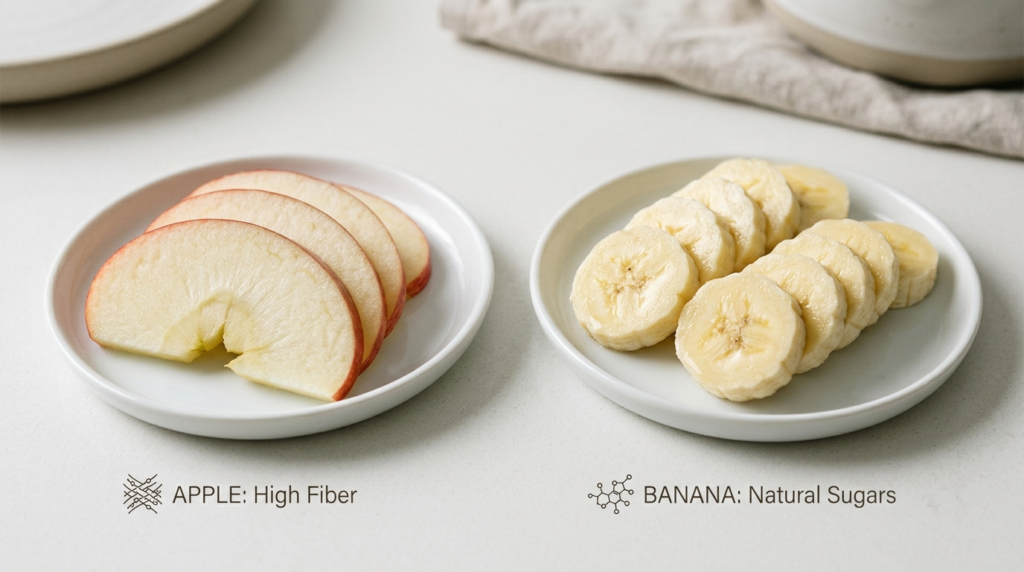
Both apple and banana contain natural sugars, fiber, vitamins, and minerals. However, their composition is slightly different.
- Apples are higher in fiber, especially soluble fiber like pectin
- Bananas contain more carbohydrates and natural sugar
- Bananas also provide more potassium and energy
This difference is important when managing diabetes.
How Apple Affects Blood Sugar
Apples are considered a better option for blood sugar control.
Why apples are beneficial:
- High in fiber, which slows sugar absorption
- Low to moderate glycemic index
- Helps prevent sudden sugar spikes
The fiber in apples forms a gel-like substance in the gut, slowing digestion. This means glucose enters the bloodstream gradually, making it easier to manage blood sugar levels.
How Banana Affects Blood Sugar
Bananas are also healthy but can raise blood sugar slightly faster than apples.
Why bananas need moderation:
- Higher carbohydrate content
- Faster digestion compared to apples
- Can cause a quicker rise in blood sugar
However, this does not mean bananas should be avoided completely.
Important tip:
- Choose semi-ripe bananas instead of overripe ones
- Overripe bananas have higher sugar and can spike blood glucose faster
Glycemic Index Comparison
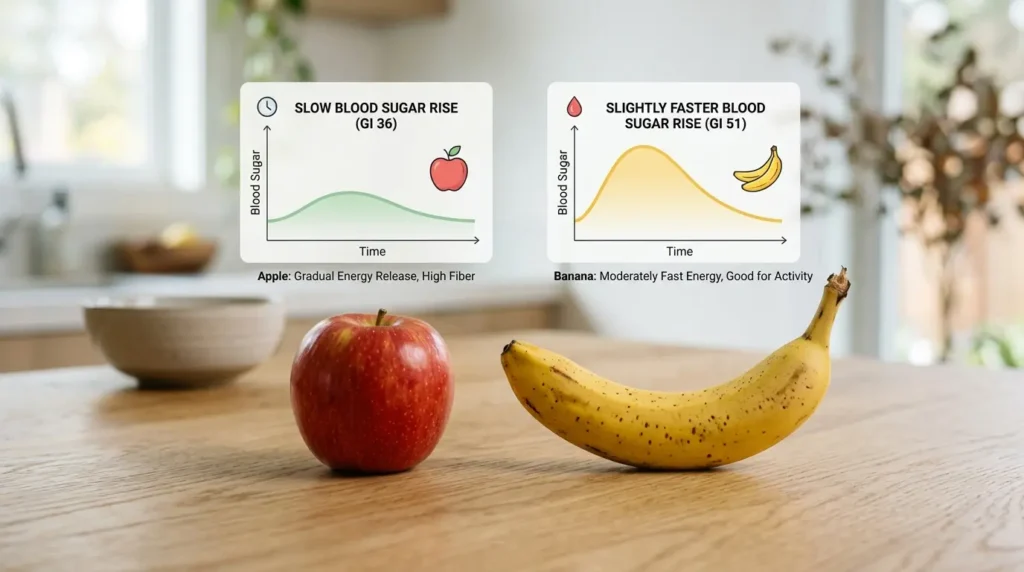
Glycemic Index (GI) measures how quickly a food raises blood sugar.
- Apple: Low GI (around 36–40)
- Banana: Medium GI (around 50–60 depending on ripeness)
This means apples cause a slower increase in blood sugar compared to bananas.
Portion Size Matters More
One of the biggest mistakes people make is focusing only on the fruit, not the quantity.
👉 Even healthy fruits can raise blood sugar if eaten in excess.
Recommended portions:
- 1 small apple
- 1 small banana (preferably semi-ripe)
Eating more than this can lead to higher sugar levels.
Best Way to Eat Apple and Banana

How you eat fruits matters just as much as which fruit you choose.
Smart combinations:
- Apple + almonds
- Banana + peanuts
Adding protein or healthy fats slows down sugar absorption and improves blood sugar control.
Which is Better for Diabetes?
If we compare both:
- Apple is slightly better due to higher fiber and lower GI
- Banana is still healthy but should be eaten in moderation
👉 So the winner is: Apple (slightly better)
But this does not mean bananas are bad.
Final Conclusion
Both apples and bananas can be part of a healthy diabetes diet when eaten correctly.
Instead of avoiding fruits, focus on:
- Portion control
- Choosing the right ripeness
- Pairing with protein or healthy fats
👉 The simple rule is:
Eat smart, not less
By following this approach, you can enjoy both fruits without worrying about blood sugar spikes.
FAQs
1. Can diabetics eat bananas daily?
Yes, but in small portions and preferably semi-ripe.
2. Why are apples better for diabetes?
Apples contain more fiber, which slows sugar absorption.
3. Do bananas increase blood sugar quickly?
Ripe bananas can raise blood sugar faster, so portion control is important.
4. Is it okay to eat fruits with nuts?
Yes, combining fruits with nuts helps control blood sugar.
5. Which fruit is safest for diabetes?
Low GI fruits like apple, guava, and papaya are generally safer.