

Diabetes & Ulcerative Colitis: What to Eat & Avoid
Introduction
Managing diabetes along with ulcerative colitis can be challenging because both conditions require careful dietary control. While diabetes focuses on blood sugar management, ulcerative colitis requires protecting the gut from irritation.
👉 The key is to balance blood sugar control while maintaining gut health.
Why Food Choices Matter More in This Condition
In diabetes, high-fiber foods are usually recommended. But in ulcerative colitis—especially during flare-ups—high fiber and raw foods can worsen symptoms.
👉 So the approach changes:
First protect the gut, then control blood sugar—while balancing both together.
Flare vs Remission: The Most Important Concept
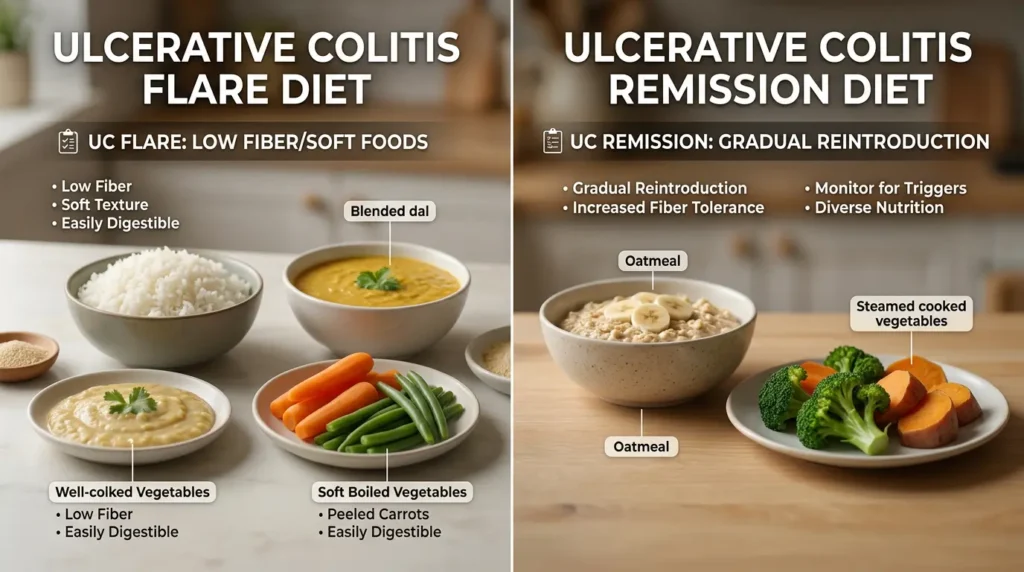
During Flare (Active Symptoms)
When symptoms like diarrhea, pain, or inflammation are present:
- Follow a low-fiber, low-residue approach
- Avoid:
- Raw vegetables and salads
- Seeds, skins, and whole pulses
- Millets and high-fiber foods
- Prefer:
- Soft rice
- Thin dal
- Boiled vegetables
- Curd (if tolerated)
👉 Goal: Reduce irritation and allow healing.
During Remission (Recovery Phase)
When symptoms improve:
- Gradually reintroduce:
- Oats
- Cooked vegetables
- Fruit pulp
- Avoid sudden increase in fiber
- Follow individual tolerance
👉 Goal: Improve nutrition without triggering symptoms.
Key Principles to Follow
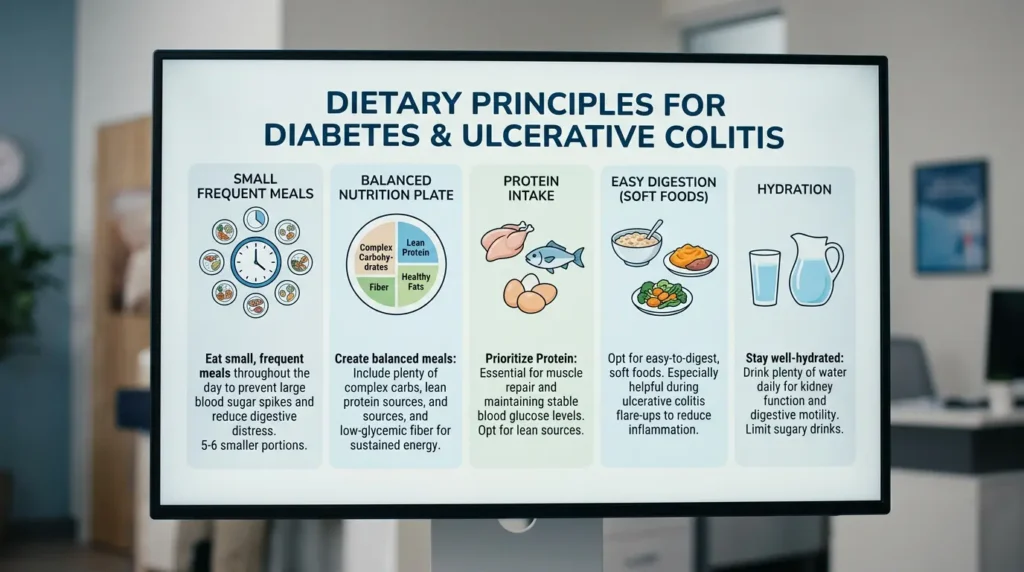
1. Choose Easy-to-Digest Foods
Soft, cooked foods are easier on the gut compared to raw foods.
2. Maintain Balanced Nutrition
Include:
- Controlled carbohydrates
- Protein for healing
- Healthy fats
3. Eat Small, Frequent Meals
This reduces digestive stress and helps maintain stable blood sugar.
4. Focus on Protein Intake
Protein helps in recovery and prevents muscle loss.
Good sources:
- Egg whites
- Fish
- Lightly cooked chicken
5. Hydration Is Critical
Due to diarrhea risk, fluid intake must be increased.
Include:
- Coconut water
- Buttermilk (if tolerated)
- ORS
- Rice kanji
Sample Daily Meal Pattern
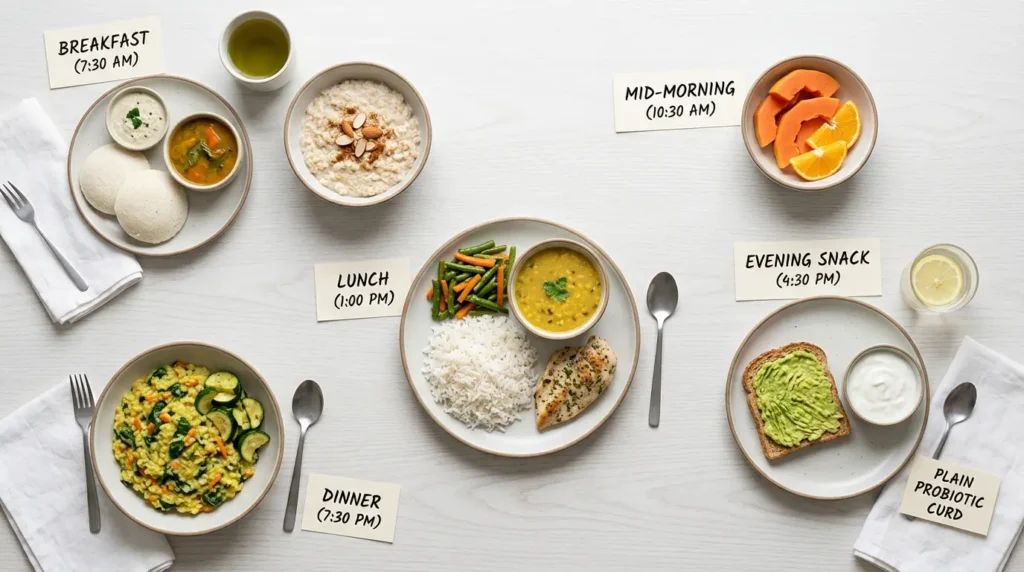
Breakfast
- Idli
- Soft upma
- Oats porridge
Mid-Morning
- Banana
- Stewed apple
- Coconut water
Lunch
- Soft rice + thin dal + cooked vegetables
- Add protein like egg white or fish
Evening Snack
- Toast
- Curd
- Soft poha
Dinner
- Light meal similar to lunch
- Avoid heavy or spicy foods
Foods to Avoid
- Raw salads during flare
- Spicy and oily foods
- Fried snacks and packaged foods
- Pickles and heavy masala
- Excess caffeine and alcohol
Important Medical Considerations
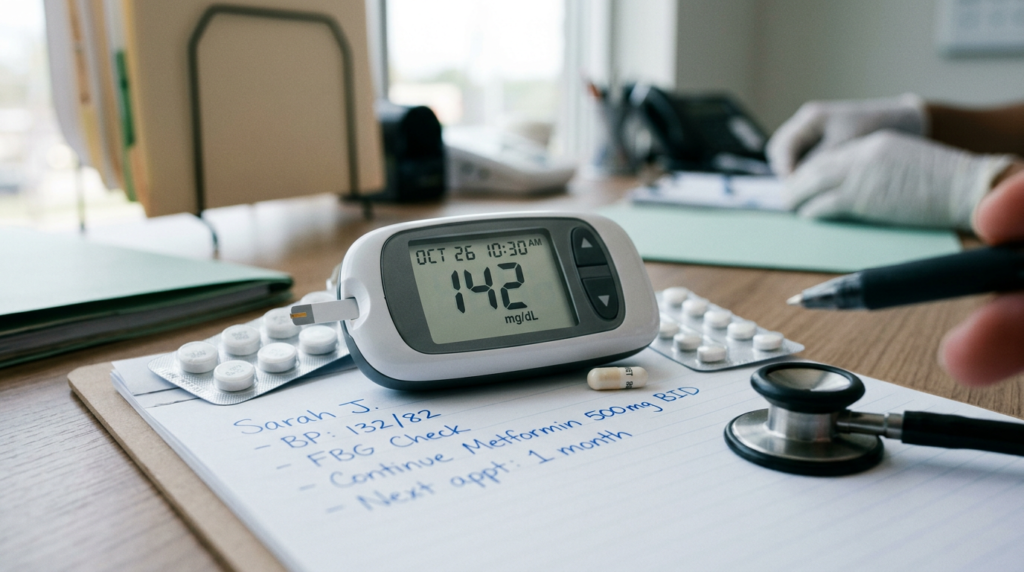
- Steroids can increase blood sugar
- Reduced food intake may lead to low sugar
- Digestion issues may cause unstable glucose levels
👉 Regular monitoring is essential.
Conclusion
Managing diabetes with ulcerative colitis requires a balanced and flexible approach. The focus should be on gut-friendly foods while maintaining stable blood sugar.
👉 Remember:
Personalization is the key—what works for one person may not work for another.
🔹 Take the First Step Towards Better Health
If you are struggling to manage diabetes along with ulcerative colitis, the right guidance can make a big difference.
At Dr. Rajender’s Lifestyle Clinic, we provide personalized diet and lifestyle plans that focus on both blood sugar control and gut health.
👉 Book your consultation today
📞 +91 8179630411
FAQs
1. Can I eat fiber in ulcerative colitis?
Yes, but only during remission and in controlled amounts.
2. Is rice better than roti?
Yes, rice is usually easier to digest during flare.
3. Can I eat raw vegetables?
Avoid during flare; introduce slowly later.
4. Why is protein important?
It helps healing and prevents muscle loss.
5. How often should I eat?
Small, frequent meals are recommended.