
Introduction
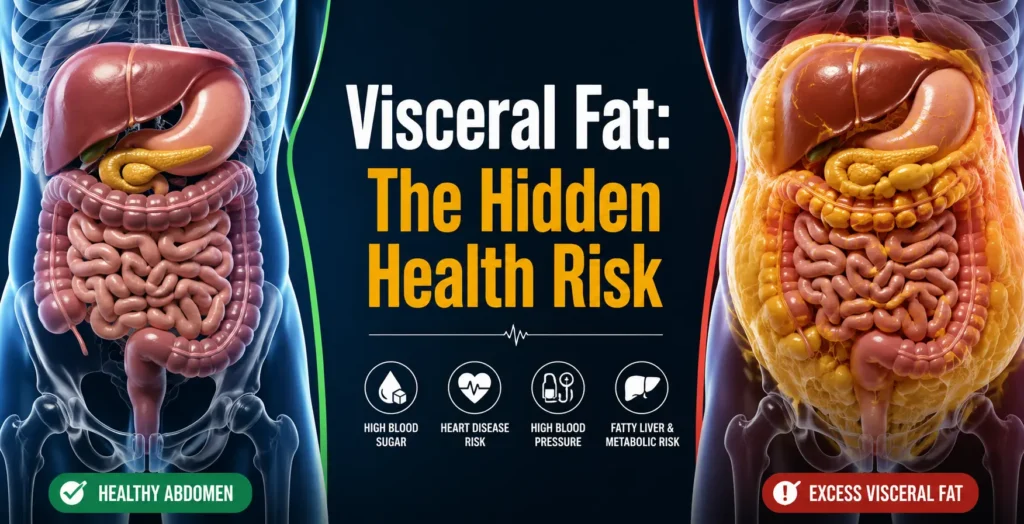
Many people believe that losing weight automatically means becoming healthier. However, focusing only on body weight often misses a much bigger problem — visceral fat.
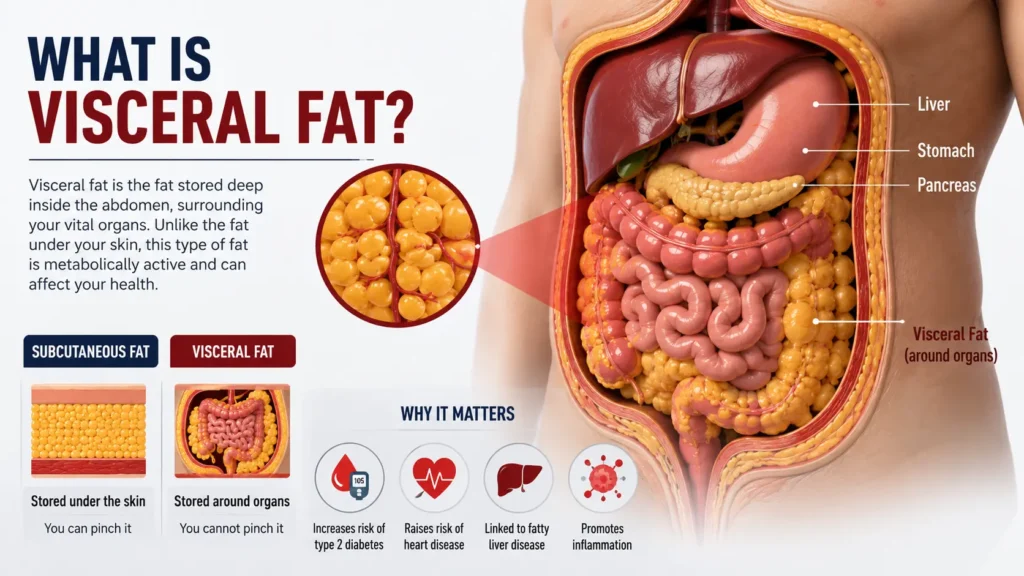
Visceral fat is the deep fat stored around vital organs like the liver, pancreas, and intestines. Unlike the fat under the skin, this hidden fat directly affects metabolism and increases the risk of chronic diseases.
👉 This is why even people who appear slim can still have serious metabolic health issues.
What Is Visceral Fat?
Not all body fat behaves the same way.
Types of Body Fat
| Type of Fat | Location | Risk Level |
|---|---|---|
| Subcutaneous Fat | Under the skin | Lower |
| Visceral Fat | Around internal organs | High |
Visceral fat is metabolically active and releases inflammatory substances that interfere with normal body function.
Why Visceral Fat Is Dangerous
Excess visceral fat is strongly linked to:
- Insulin resistance
- Type 2 diabetes
- Fatty liver
- High blood pressure
- Heart disease
It also increases chronic inflammation in the body, making metabolic disorders worse over time.
👉 The danger is not just how you look externally, but what is happening internally.
You Can Be Slim and Still Unhealthy
A common misconception is that only overweight people have unhealthy fat levels.
In reality, some individuals with normal body weight may still have high visceral fat, often called “hidden fat.”
This means:
- Normal weight does not always equal good health
- The weighing scale alone cannot measure metabolic health
What Causes Visceral Fat?
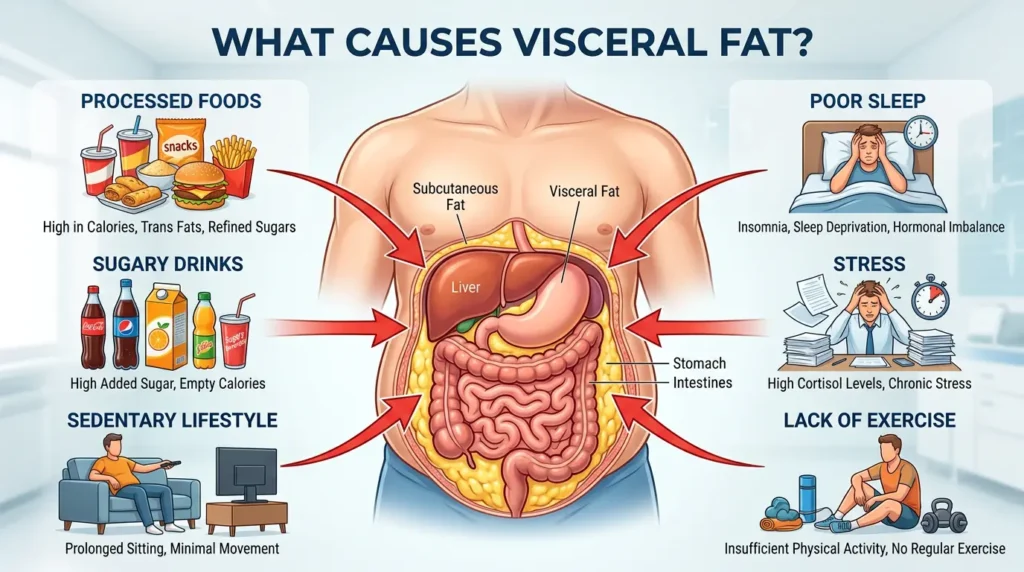
Several lifestyle factors contribute to visceral fat accumulation:
1. High Sugar Intake
Sugary beverages and processed foods increase fat storage around the abdomen.
2. Sedentary Lifestyle
Lack of physical activity reduces calorie utilization and promotes fat accumulation.
3. Chronic Stress
Stress increases cortisol levels, which encourages belly fat storage.
4. Poor Sleep
Sleep deprivation affects hormones involved in appetite and metabolism.
How to Measure Visceral Fat
Waist Circumference
A simple method is checking waist size.
👉 Ideally:
Waist circumference should be less than half your height.
Body Composition Analysis
Some fitness centers and clinics use machines to estimate visceral fat levels.
Best Ways to Reduce Visceral Fat
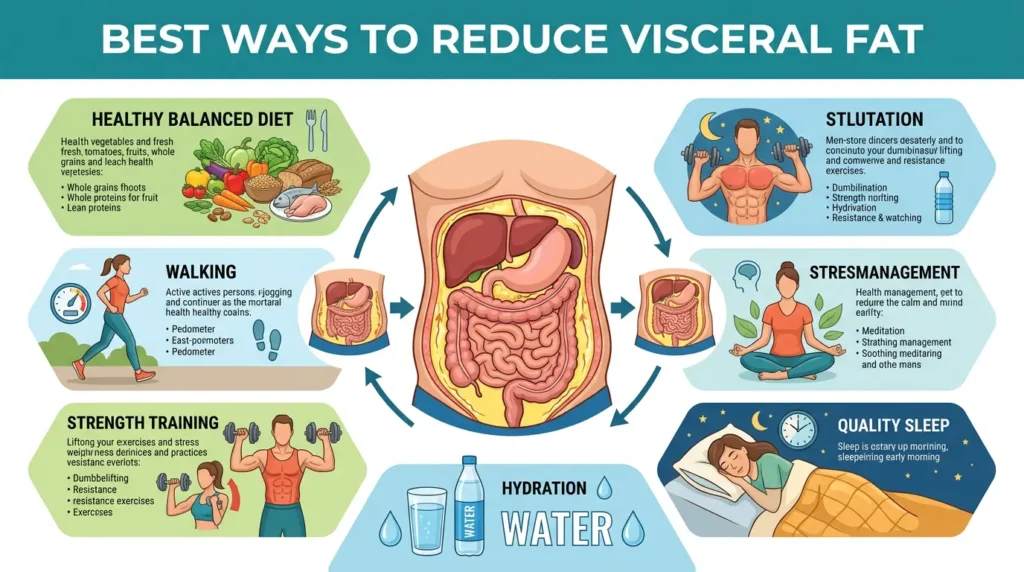
1. Improve Diet Quality
Focus on:
- Whole foods
- Fiber-rich vegetables
- Lean proteins
- Healthy fats
Avoid:
- Processed foods
- Sugary drinks
- Refined carbohydrates
2. Regular Physical Activity
The best exercises include:
- Walking
- Strength training
- Interval training
👉 Exercise improves insulin sensitivity and burns stored fat.
3. Manage Stress
Practices like:
- Yoga
- Meditation
- Deep breathing
can help reduce cortisol and improve metabolic health.
4. Prioritize Sleep
Aim for 7–8 hours of quality sleep daily.
5. Consider Intermittent Fasting
Fasting can help the body access stored fat and improve metabolic flexibility when done appropriately.
How Long Does It Take to Lose Visceral Fat?
Results vary depending on consistency and lifestyle habits.
👉 Improvements may begin within a few weeks, but long-term reduction requires sustainable changes.
Conclusion
Health is not defined only by body weight. The real concern is visceral fat, which silently affects metabolism and increases the risk of chronic disease.
By improving diet, staying active, managing stress, and focusing on long-term habits, you can reduce visceral fat and improve overall health.
👉 Remember:
A smaller waist is often more important than a smaller number on the weighing scale.
🔹 Take Control of Your Metabolic Health
If you are struggling with belly fat, insulin resistance, or metabolic issues, proper guidance can help.
At Dr. Rajender’s Lifestyle Clinic, we focus on lifestyle-based approaches to reduce visceral fat and improve overall health naturally.
👉 Book your consultation today
📞 8179630411
FAQs
1. Can slim people have visceral fat?
Yes, this is known as hidden fat.
2. Is visceral fat dangerous?
Yes, it increases the risk of diabetes and heart disease.
3. What is the best exercise for visceral fat?
Walking, strength training, and HIIT are effective.
4. Does stress increase belly fat?
Yes, high cortisol levels promote abdominal fat storage.
5. Can diet alone reduce visceral fat?
Diet helps, but combining it with exercise and lifestyle changes works best.