

Introduction
Seasonal changes can affect more than just the weather. For many people, changes in temperature, humidity, and air quality can trigger allergies and breathing problems. While seasonal allergies are often linked with sneezing and itchy eyes, they can also significantly affect lung health.
Environmental triggers during seasonal transitions can irritate the airways, increase inflammation, and make breathing uncomfortable. Understanding these triggers and symptoms can help protect your respiratory health.
How Seasonal Changes Affect the Lungs
The lungs are constantly exposed to the surrounding air. During seasonal transitions, the air quality and environmental conditions change, which can irritate the respiratory system.
Common seasonal effects include:
- Increased airborne allergens
- Dry or humid air
- Fluctuating pollution levels
- Sudden temperature changes
These factors can make the airways more sensitive and reactive, especially in people prone to allergies.
Common Seasonal Triggers That Affect Lung Health
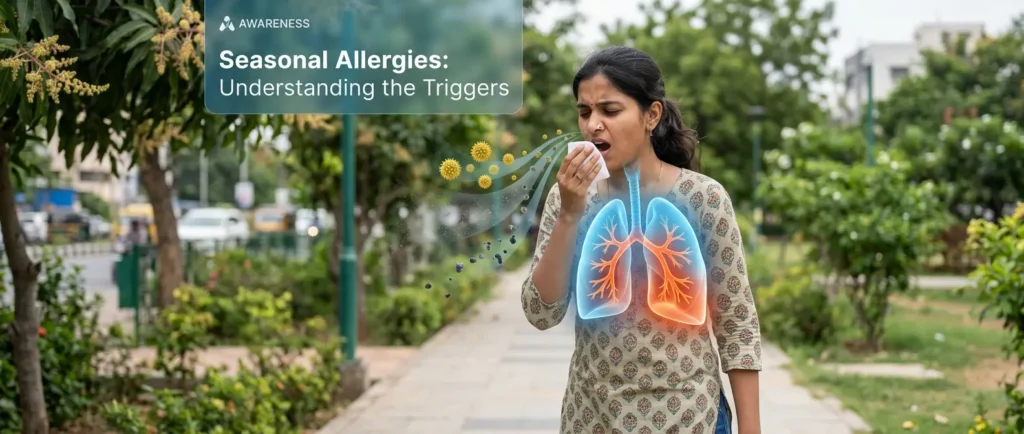
1. Pollen Exposure
Pollen is one of the most common seasonal allergy triggers.
When inhaled, pollen can:
- Irritate the airways
- Cause inflammation
- Trigger coughing and breathing discomfort
Different plants release pollen during different seasons, increasing exposure throughout the year.
2. Dust and Indoor Allergens
Seasonal changes often affect indoor environments too.
Common indoor triggers include:
- Dust particles
- Fabric fibres
- Indoor pollutants
Closed rooms and poor ventilation can increase exposure to these allergens and worsen lung irritation.
3. Humidity and Dampness
Very high or very low humidity can affect breathing comfort.
- High humidity encourages mould growth
- Dry air irritates the throat and airways
Both conditions can trigger coughing and increase airway sensitivity.
4. Air Pollution
Pollution levels may rise during certain seasons.
Polluted air can:
- Irritate lung tissue
- Increase inflammation
- Worsen respiratory symptoms
People living in urban areas are especially vulnerable.
5. Sudden Temperature Changes
Rapid shifts between hot and cold temperatures can affect airway function.
Cold air may:
- Tighten the airways
- Trigger coughing
- Cause chest discomfort or shortness of breath
How Allergies Affect the Lungs
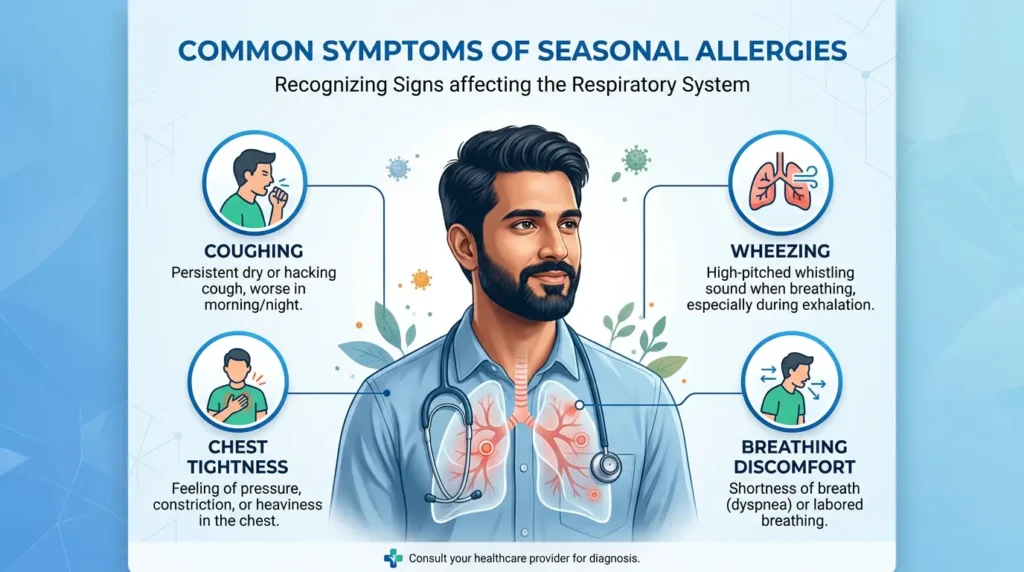
When allergens enter the respiratory system, the immune system reacts strongly, causing inflammation inside the airways.
Airway Inflammation
Inflamed airways become narrower, making breathing difficult.
Excess Mucus Production
The lungs produce mucus to trap allergens, but excess mucus can block airflow and create chest congestion.
Airway Sensitivity
Sensitive airways may overreact even to mild triggers, causing:
- Wheezing
- Chest tightness
- Frequent coughing
Symptoms That Indicate Lung Involvement
Seasonal allergies affecting the lungs may cause:
- Persistent cough
- Wheezing or whistling sound while breathing
- Shortness of breath
- Chest tightness
- Fatigue due to breathing difficulty
Symptoms may worsen during certain times of the day or specific seasons.
Who Is More Vulnerable?
Certain groups are more likely to experience seasonal lung allergies:
People with Asthma or COPD
Existing respiratory conditions increase airway sensitivity.
Children
Developing lungs are more reactive to allergens and pollution.
Older Adults
Age-related changes in lung function increase vulnerability.
People with Allergic Tendencies
Individuals with previous allergies are more likely to develop respiratory symptoms.
Practical Tips to Protect Lung Health
Monitor Air Quality
Stay informed about pollen counts and pollution levels.
Improve Indoor Air
- Keep rooms clean and dust-free
- Ensure proper ventilation
- Avoid dampness and mould growth
Stay Hydrated
Adequate water intake helps keep mucus thin and easier to clear.
Use Protective Measures
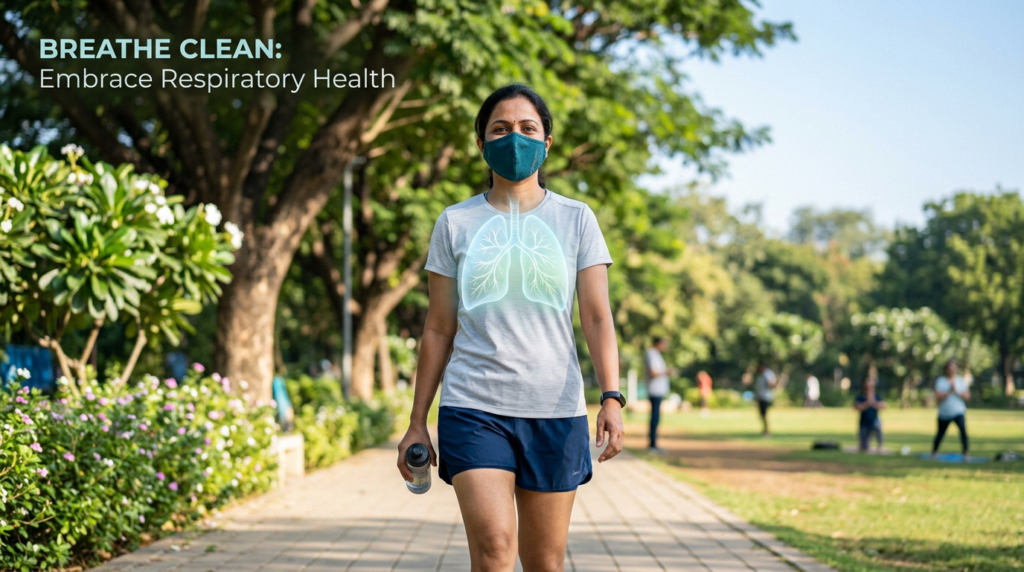
Cover your nose and mouth in polluted areas and avoid strong environmental triggers.
Maintain Healthy Habits
- Sleep well
- Stay physically active
- Avoid sudden temperature exposure
When to See a Doctor
Medical attention is important if:
- Breathing difficulty increases
- Wheezing becomes frequent
- Symptoms affect daily activities
- Chest tightness persists
Early diagnosis can help prevent long-term lung problems.
Conclusion
Seasonal allergies can significantly affect lung health, especially in sensitive individuals. Environmental triggers like pollen, pollution, dust, and sudden temperature changes can irritate the airways and cause breathing discomfort.
The good news is that simple preventive steps can protect your lungs and reduce symptoms.
👉 Remember:
Small lifestyle habits and early care can make a big difference in maintaining healthy lungs during seasonal changes.
FAQs
1. Can seasonal allergies affect the lungs?
Yes, allergies can cause airway inflammation and breathing problems.
2. What are common lung allergy symptoms?
Coughing, wheezing, chest tightness, and shortness of breath.
3. Can indoor air trigger allergies?
Yes, dust, mould, and poor ventilation can worsen symptoms.
4. Who is at higher risk?
People with asthma, children, older adults, and allergy-prone individuals.
5. When should I see a doctor?
If symptoms worsen, breathing becomes difficult, or daily activities are affected.