

Introduction
Most people think strength training is only about building bigger muscles or improving physical appearance. However, strength training offers benefits far beyond muscle growth. It plays a major role in improving bone health, balance, mobility, and overall quality of life.
As people age, muscle mass and bone density naturally decline. Without proper exercise and nutrition, bones become weaker and more fragile, increasing the risk of fractures and osteoporosis.
The good news is that regular strength training can help slow bone loss, improve stability, and support long-term health naturally.
Why Bone Health Matters
Bones are living tissues that constantly rebuild and repair themselves.
After the age of 40, bone mass gradually declines at a rate of nearly 1% per year. Factors that contribute to bone loss include:
- Aging
- Physical inactivity
- Poor nutrition
- Hormonal changes
Over time, weak bones become more susceptible to fractures, even from small falls or minor stress.
Understanding Osteoporosis
Osteoporosis is a condition where bones become weak and fragile.
It significantly increases fracture risk, especially in:
- Hips
- Spine
- Wrists
Hip fractures are particularly serious because many people never regain full independence afterward.
Simple daily activities like:
- Walking
- Climbing stairs
- Bending down
can become difficult after major fractures.
How Strength Training Helps Bone Health
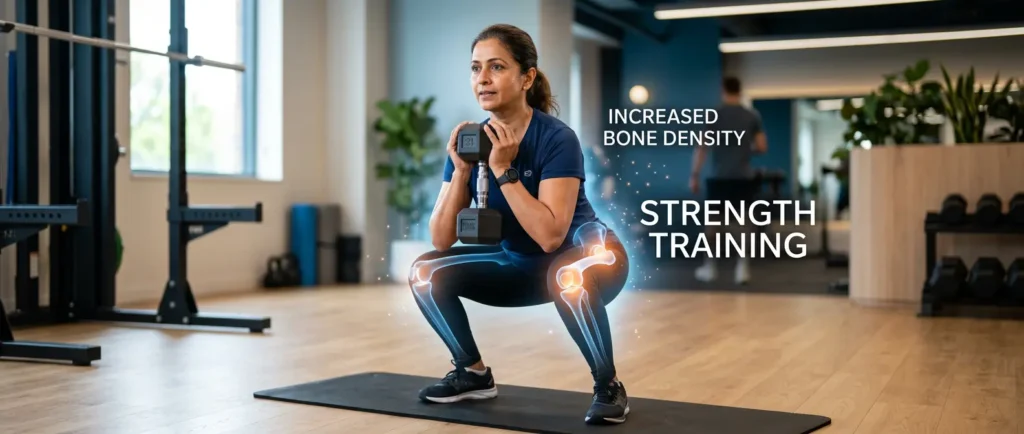
Strength training places controlled stress on bones and muscles.
This stress stimulates bone-forming cells, helping bones become:
- Stronger
- Denser
- More resilient
Exercises using:
- Dumbbells
- Resistance bands
- Weight machines
- Body weight
all contribute to better bone strength.
Research shows that resistance training can help slow bone loss and may even improve bone density over time.
Strength Training vs Aerobic Exercise
Walking and running are beneficial weight-bearing exercises, but strength training provides additional bone-health benefits.
Resistance training specifically targets:
- Hips
- Spine
- Wrists
These are the areas most vulnerable to fractures.
Strength workouts also improve:
- Muscle power
- Coordination
- Balance
- Stability
This reduces the risk of falls, which are one of the leading causes of fractures in older adults.
Strength Training Improves Balance and Confidence
Strong muscles help support better posture and movement control.
Benefits include:
- Improved balance
- Better flexibility
- Enhanced mobility
- Reduced fear of falling
When people feel physically stronger, they are more likely to stay active and independent.
Strength Training and Healthy Aging

Strength training is one of the best tools for healthy aging.
Regular resistance exercise can help:
- Preserve muscle mass
- Maintain bone density
- Improve metabolism
- Support joint function
- Enhance daily activity performance
It also supports overall energy levels and functional independence.
Who Should Do Strength Training?
Strength training is beneficial for:
- Young adults
- Middle-aged individuals
- Older adults
It is especially important for:
- Women after menopause
- Individuals with low bone density
- Sedentary adults
Even simple exercises performed consistently can provide long-term health benefits.
Simple Strength Training Exercises
Beginners can start with:
- Squats
- Wall push-ups
- Resistance band exercises
- Light dumbbell training
- Step-ups
The goal is gradual progress with proper form and consistency.

Tips for Safe Strength Training
1. Start Slowly
Begin with light resistance and focus on technique.
2. Train Regularly
Aim for 2–3 sessions weekly.
3. Combine with Good Nutrition
Adequate:
- Protein
- Calcium
- Vitamin D
are essential for muscle and bone health.
4. Focus on Balance
Include exercises that improve coordination and stability.
5. Stay Consistent
Long-term consistency produces the best results.
Conclusion
Strength training builds much more than muscles. It strengthens bones, improves balance, reduces fracture risk, and supports healthy aging.
As bone density naturally declines with age, regular resistance exercise becomes extremely important for maintaining independence and overall quality of life.
👉 The key message is simple:
Strong muscles help create strong bones and a stronger future.
Adding regular strength training to your routine can improve health, confidence, and long-term mobility.
FAQs
1. Can strength training improve bone health?
Yes, strength training helps stimulate bone formation and improve bone density.
2. How often should I do strength training?
Most people benefit from 2–3 sessions per week.
3. Is strength training safe for older adults?
Yes, when done correctly, it is highly beneficial for healthy aging.
4. Does walking help bone health too?
Yes, walking is a weight-bearing exercise that supports bone strength.
5. Why is strength training important after age 40?
Bone and muscle mass naturally decline with age, making resistance exercise important for prevention and healthy aging.