

Introduction
Caffeine is one of the most commonly consumed stimulants in the world. Found in coffee, tea, energy drinks, and soft drinks, caffeine can temporarily improve alertness and energy levels. However, excessive caffeine intake may lead to sleep problems, anxiety, restlessness, headaches, and increased heart rate.
Many people want to reduce caffeine intake without completely giving up their favorite drinks or routines. The good news is that small lifestyle changes can make the transition easier and more sustainable.
Learning how to cut back on caffeine gradually can improve sleep quality, energy balance, and overall health naturally.
Why Too Much Caffeine Can Be a Problem
While moderate caffeine intake is generally safe, excess consumption may cause:
- Poor sleep quality
- Anxiety and nervousness
- Increased heart rate
- Digestive discomfort
- Dependence and withdrawal headaches
- Afternoon energy crashes
Reducing caffeine intake may help improve both physical and mental wellness.
Best Tips to Reduce Caffeine Intake

1. Try Decaf Coffee
One of the easiest ways to reduce caffeine is by switching to decaffeinated coffee.
Decaf coffee:
- Tastes similar to regular coffee
- Contains much less caffeine
- Helps maintain your coffee routine
Many people find it easier to transition gradually by replacing evening coffee with decaf versions.
2. Choose Herbal Teas
Naturally caffeine-free herbal teas can be a great alternative.
Popular options include:
- Chamomile tea
- Peppermint tea
- Ginger tea
- Hibiscus tea
Herbal teas may also help the body relax and improve bedtime routines.
3. Make a Half-Caf Brew
Instead of quitting suddenly, try mixing:
- Half regular coffee
- Half decaf coffee
This simple strategy helps reduce caffeine intake gradually while minimizing withdrawal symptoms like headaches and fatigue.
4. Replace Coffee with Warm Drinks
Many people enjoy coffee because of the comfort and routine rather than caffeine itself.
Try alternatives like:
- Warm lemon water
- Herbal tea
- Cinnamon water
- Warm milk
These drinks can help satisfy the habit without excess caffeine.
5. Use Exercise for an Energy Boost

Fatigue does not always mean you need caffeine.
Sometimes your body simply needs movement.
Quick activities like:
- Walking
- Stretching
- Squats
- Push-ups
can improve blood circulation and naturally increase energy levels.
6. Reduce Caffeine Slowly
Stopping caffeine suddenly may cause:
- Headaches
- Irritability
- Fatigue
- Difficulty concentrating
A gradual reduction is usually more comfortable.
For example:
- Reduce one cup every few days
- Delay your first coffee of the day
- Use smaller cup sizes
7. Improve Sleep Quality
Poor sleep often increases caffeine dependence.
Better sleep habits can naturally reduce the need for stimulants.
Healthy sleep habits include:
- Reducing screen time before bed
- Sleeping at consistent times
- Avoiding caffeine late in the evening
8. Stay Hydrated
Dehydration can cause tiredness and headaches, which people sometimes mistake for low energy.
Drinking enough water may help:
- Improve focus
- Reduce fatigue
- Support energy naturally
Benefits of Reducing Caffeine Intake
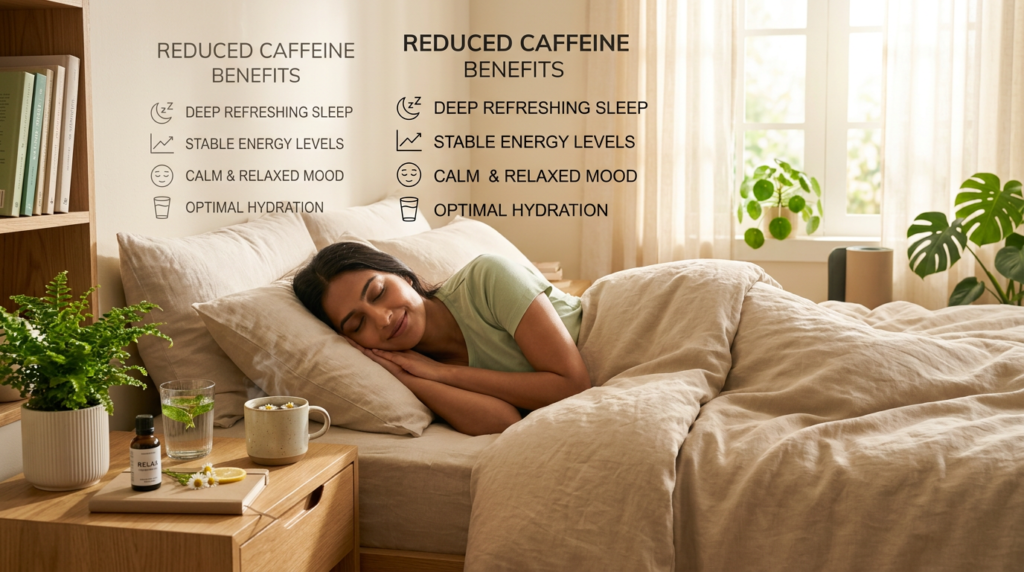
Cutting back on caffeine may improve:
- Sleep quality
- Anxiety levels
- Energy stability
- Hydration
- Digestive health
Many people also notice fewer energy crashes during the day.
Healthy Alternatives to Caffeine
Instead of relying heavily on caffeine, try:
- Herbal teas
- Fresh fruit
- Physical activity
- Balanced meals
- Deep breathing exercises
Healthy lifestyle habits provide more sustainable energy support.
Conclusion
Reducing caffeine intake does not mean giving up the drinks and routines you enjoy. Small gradual changes like switching to decaf coffee, herbal teas, and healthier lifestyle habits can make the transition easier.
👉 The key message is simple:
Balanced energy comes from healthy habits, not just caffeine.
By improving sleep, hydration, movement, and nutrition, you can naturally support better energy and long-term wellness.
FAQs
1. What happens when you reduce caffeine intake?
You may experience better sleep, reduced anxiety, and fewer energy crashes.
2. Is decaf coffee completely caffeine-free?
No, decaf coffee still contains small amounts of caffeine.
3. What are the best caffeine-free drinks?
Herbal teas, lemon water, and warm milk are good alternatives.
4. Can reducing caffeine improve sleep?
Yes, limiting caffeine especially in the evening can improve sleep quality.
5. Should caffeine be stopped suddenly?
Gradual reduction is usually recommended to avoid withdrawal symptoms.
Reducing caffeine intake doesn’t mean giving up your favorite routines. Small healthy changes can improve sleep, energy balance, focus, and overall wellness naturally.
📞 For personalized nutrition and lifestyle guidance, contact Dr. Rajender’s Lifestyle Clinic at 8179630411 and start building healthier daily habits today.