

Introduction
A calorie deficit is one of the most discussed concepts in weight loss and fat loss. Simply put, a calorie deficit happens when your body burns more calories than it consumes from food. While this idea sounds simple, sustainable fat loss involves much more than just eating less.
Many people struggle with:
- Slow progress
- Weight loss plateaus
- Hunger and cravings
- Inconsistent results
Understanding how calorie deficits actually work can help you lose fat in a healthier and more sustainable way.
What Is a Calorie Deficit?
A calorie deficit occurs when the body uses more energy than it receives through food and drinks.
When this happens, the body begins using stored energy, mainly body fat, to meet its energy needs. This is the foundation of fat loss.
However, fat loss is not always a straight-line process.
Why Weight Loss Feels Slow Sometimes
Even when you are following a calorie deficit, progress may feel inconsistent.
This happens because the body adapts in several ways:
- Hunger increases
- Metabolism slows slightly
- Daily movement may decrease
- Water retention fluctuates
This is why scale weight may not drop every single day. Long-term trends matter more than short-term fluctuations.
The Quality of Your Habits Matters
A calorie deficit alone is not enough for healthy fat loss.
Lifestyle habits play a major role in:
- Preserving muscle
- Managing hunger
- Supporting metabolism
- Maintaining long-term results
Healthy habits make a calorie deficit more sustainable and easier to maintain.
Best Habits for Sustainable Fat Loss

1. Eat More Protein
Protein helps:
- Preserve muscle mass
- Improve fullness
- Support metabolism
Good protein sources include:
- Eggs
- Chicken
- Fish
- Yogurt
- Tofu
- Lentils
Protein-rich meals may help reduce overeating naturally.
2. Include Fiber-Rich Foods
Fiber improves fullness and supports digestion.
High-fiber foods include:
- Vegetables
- Fruits
- Oats
- Whole grains
- Legumes
Fiber-rich meals help control hunger during fat loss.
3. Strength Training Is Important

Strength training helps:
- Preserve lean muscle mass
- Improve body composition
- Support long-term metabolism
Resistance training is especially important during calorie deficits.
4. Increase Daily Movement
Fat loss is not only about workouts.
Daily movement like:
- Walking
- Taking stairs
- Stretching
- Standing more often
can significantly increase calorie expenditure over time.
You Don’t Need to Count Every Calorie
Many people believe fat loss requires strict calorie counting.
However, sustainable habits matter more than exact numbers.
Simple strategies include:
- Eating balanced meals
- Reducing liquid calories
- Choosing minimally processed foods
- Using smaller plates
- Managing portion sizes
These habits naturally help create a calorie deficit.
Sleep and Stress Affect Fat Loss
Poor sleep and high stress may make fat loss harder.
They can:
- Increase cravings
- Raise hunger hormones
- Reduce motivation
- Affect energy levels
Improving sleep quality and stress management supports healthier fat loss.
Signs Your Calorie Deficit May Be Too Extreme
Very low-calorie diets may cause:
- Fatigue
- Irritability
- Poor concentration
- Sleep problems
- Low workout performance
- Increased hunger
Extreme restriction is usually difficult to maintain long term.
Sustainable fat loss should feel realistic and balanced.
How Fast Should Fat Loss Happen?
Healthy fat loss is usually gradual.
A realistic rate is:
👉 Around 0.5–1% of body weight per week
Slow and steady progress is often easier to maintain long term.
Focus on Consistency, Not Perfection
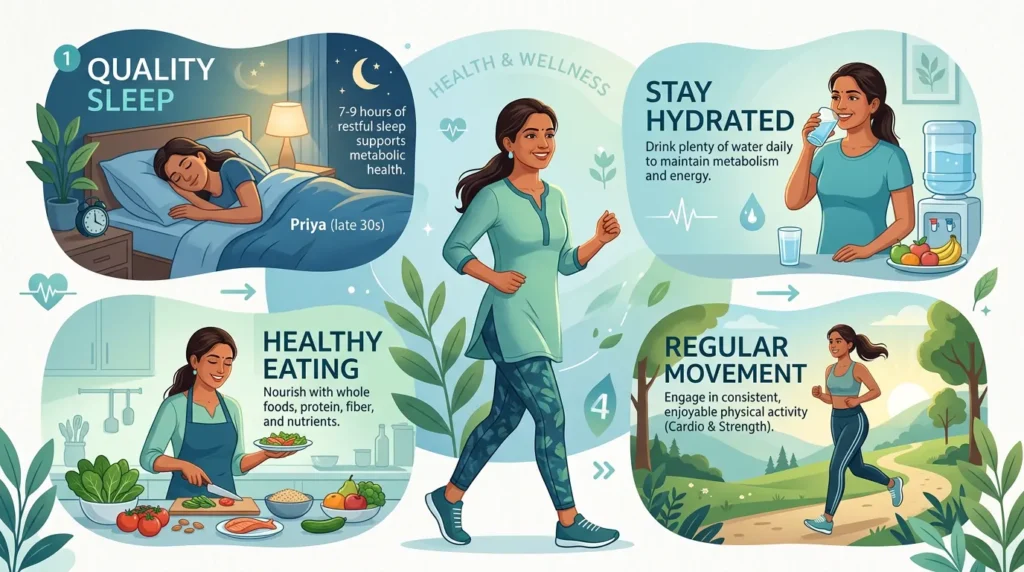
One of the biggest mistakes people make is expecting perfect progress.
Sustainable fat loss depends on:
- Consistency
- Patience
- Healthy habits
- Long-term behavior changes
Small daily habits matter more than extreme short-term efforts.
Conclusion
A calorie deficit is the foundation of fat loss, but sustainable results depend on much more than eating fewer calories.
Healthy nutrition, strength training, daily movement, good sleep, and stress management all play important roles in long-term success.
👉 The key message is simple:
Consistency and healthy habits create sustainable fat loss — not extreme restriction.
Focusing on realistic lifestyle changes can help support healthier weight management and long-term wellness naturally.
FAQs
1. What is a calorie deficit?
A calorie deficit happens when the body burns more calories than it consumes.
2. Do you need to count calories to lose fat?
Not always. Healthy habits and portion awareness can also support fat loss.
3. Why does weight fluctuate during fat loss?
Water retention, hormones, sleep, and digestion can affect scale weight temporarily.
4. Is strength training important during fat loss?
Yes, strength training helps preserve muscle and supports metabolism.
5. How fast should healthy fat loss happen?
Around 0.5–1% of body weight per week is considered realistic and sustainable.
📞 For personalized weight management and lifestyle guidance, contact Dr. Rajender’s Lifestyle Clinic at 8179630411 and start your healthy transformation journey today.