

Introduction
Watermelon is one of the most refreshing fruits enjoyed during summer, but it offers far more than just hydration. Research shows that watermelon may support heart health, improve blood pressure, and provide important nutrients that benefit overall wellness.
This juicy fruit is naturally rich in:
- Water
- Vitamins
- Antioxidants
- Potassium
- Lycopene
Watermelon is also low in calories, making it a healthy addition to a balanced diet.
Recent studies suggest that watermelon may help lower the risk of cardiovascular disease and improve blood vessel health naturally.
Why Watermelon Is Good for Your Health

Watermelon contains powerful nutrients that support overall body function.
Important nutrients found in watermelon include:
- Vitamin C
- Vitamin A
- Potassium
- Magnesium
- Lycopene
- Citrulline
These nutrients may help improve:
- Hydration
- Immunity
- Heart health
- Blood circulation
- Skin health
How Watermelon Supports Heart Health
One of the biggest health benefits of watermelon is its positive effect on cardiovascular health.
Research shows watermelon contains an amino acid called L-citrulline, which may help:
- Improve blood flow
- Relax blood vessels
- Support healthy blood pressure levels
Better blood circulation may reduce strain on the heart and improve overall cardiovascular wellness.
Watermelon and Blood Pressure

High blood pressure is one of the major risk factors for heart disease.
Studies suggest watermelon may help:
- Lower blood pressure
- Reduce arterial stiffness
- Improve blood vessel function
This may be linked to compounds that support nitric oxide production, helping blood vessels relax naturally.
Watermelon and Hydration
Watermelon is made up of nearly 91% water.
This makes it an excellent fruit for hydration, especially during hot weather.
Proper hydration helps support:
- Energy levels
- Digestion
- Circulation
- Temperature regulation
Eating water-rich fruits like watermelon may help maintain healthy fluid balance naturally.
Watermelon Nutrition Facts
According to nutritional data, 100 grams of watermelon contains approximately:
- 30 calories
- 91 grams of water
- 7.5 grams of carbohydrates
- 0.6 grams of protein
- Small amounts of fiber and healthy nutrients
Watermelon is naturally low in fat and calories, making it a refreshing snack option.
Other Health Benefits of Watermelon
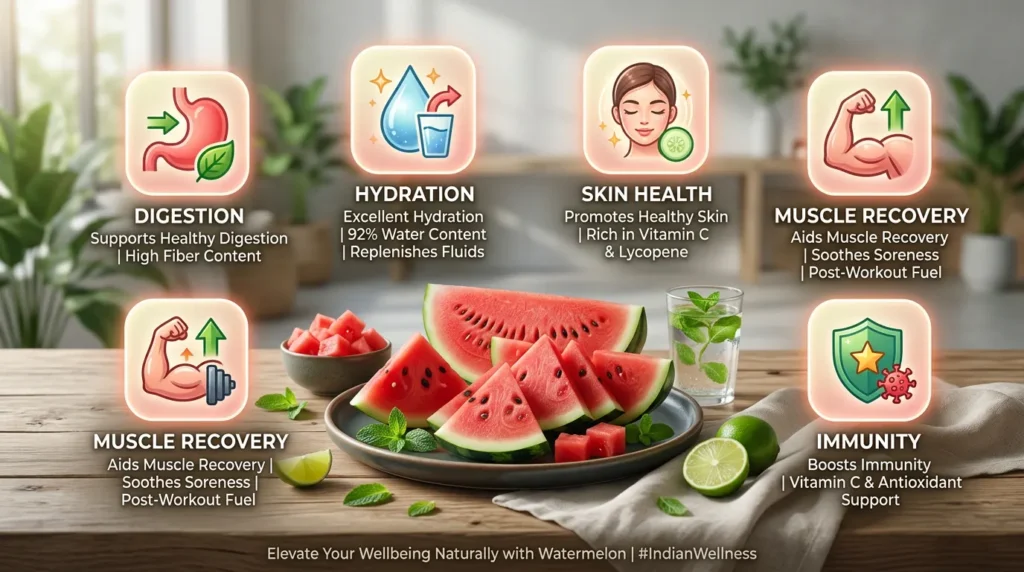
1. Supports Digestion
Water content and fiber may help improve digestion and bowel regularity.
2. May Reduce Inflammation
Antioxidants like lycopene help fight oxidative stress and inflammation.
3. Supports Muscle Recovery
Some studies suggest citrulline may help reduce muscle soreness after exercise.
4. Promotes Skin Health
Vitamin C and hydration support healthy skin function.
Best Ways to Add Watermelon to Your Diet
Watermelon can be enjoyed in many healthy ways.
Simple ideas include:
- Fresh watermelon slices
- Smoothies
- Watermelon salads
- Watermelon with yogurt
- Frozen watermelon pops
- Grilled watermelon
Pairing watermelon with protein-rich foods like Greek yogurt or nuts may help improve meal balance.
Is Watermelon Good for Weight Loss?
Watermelon is low in calories and high in water content, which may help improve fullness.
It can be a healthier alternative to:
- Sugary desserts
- Processed snacks
- High-calorie beverages
However, portion control is still important for balanced nutrition.
Can People with Diabetes Eat Watermelon?
People with diabetes can enjoy watermelon in moderation.
Pairing watermelon with:
- Protein
- Fiber
- Healthy fats
may help slow blood sugar spikes.
Balanced portion sizes are important for blood sugar management.
Conclusion
Watermelon is more than a refreshing summer fruit. Its nutrients, antioxidants, hydration benefits, and heart-supportive compounds may help improve overall health naturally.
👉 The key message is simple:
Watermelon can support hydration, heart health, and healthy nutrition when included as part of a balanced diet.
Adding fresh fruits like watermelon to your meals may help support long-term wellness and cardiovascular health.
FAQs
1. Is watermelon good for heart health?
Yes, watermelon contains citrulline, potassium, and antioxidants that support cardiovascular health.
2. Can watermelon lower blood pressure?
Research suggests watermelon may help improve blood vessel function and support healthy blood pressure.
3. Is watermelon hydrating?
Yes, watermelon contains over 90% water and supports hydration.
4. Can diabetics eat watermelon?
Yes, in moderation and preferably paired with protein or fiber-rich foods.
5. Is watermelon good for weight loss?
Watermelon is low in calories and may help improve fullness due to its high water content.
Healthy eating habits can make a big difference in your heart health, hydration, and overall wellness. Adding nutrient-rich fruits like watermelon to a balanced lifestyle may help support better long-term health naturally.
📞 For personalized nutrition and lifestyle guidance, contact Dr. Rajender’s Lifestyle Clinic at 8179630411 and start your journey toward better health today.