
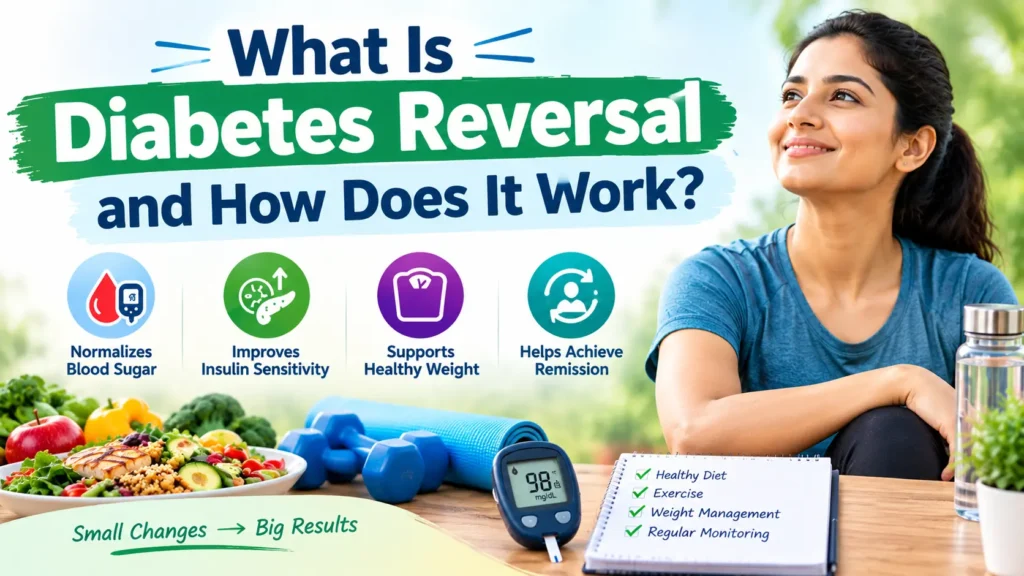
What Is Diabetes Reversal and How Does It Work?: The term “diabetes reversal” is commonly used when discussing improvements in type 2 diabetes. However, medically, the term remission is often more accurate.
Diabetes remission refers to blood glucose levels returning below the diabetes range without glucose-lowering medication for a sustained period.
How Does Type 2 Diabetes Develop?
Type 2 diabetes is closely associated with insulin resistance.
Insulin allows glucose to move from the bloodstream into cells. When the body becomes resistant to insulin, glucose remains elevated in the bloodstream.
Over time, the pancreas may struggle to produce enough insulin to compensate.
How Can Lifestyle Changes Help?
Lifestyle changes can target several factors associated with type 2 diabetes.
Nutrition can help improve blood glucose management and support healthy body weight.
Physical activity allows muscles to use glucose more efficiently and can improve insulin sensitivity.
For people carrying excess weight, weight loss can also improve metabolic health.
Is Diabetes Reversal Permanent?
Not necessarily.
Remission does not mean that a person can permanently stop paying attention to their health. Blood sugar levels can rise again if weight is regained or unhealthy lifestyle patterns return.
Therefore, maintaining healthy habits is important even after blood glucose improves.
What Is Diabetes Reversal and How Does It Work?: Is Medication Still Necessary?
Some people continue to require medication even after making substantial lifestyle changes.
Others may eventually need fewer medications under medical supervision.
Medication decisions should always be made with a healthcare professional.
Conclusion
Diabetes reversal is best understood as a structured process of improving metabolic health. Nutrition, exercise, weight management, sleep, stress management, and appropriate medical care can work together to improve type 2 diabetes outcomes.
