
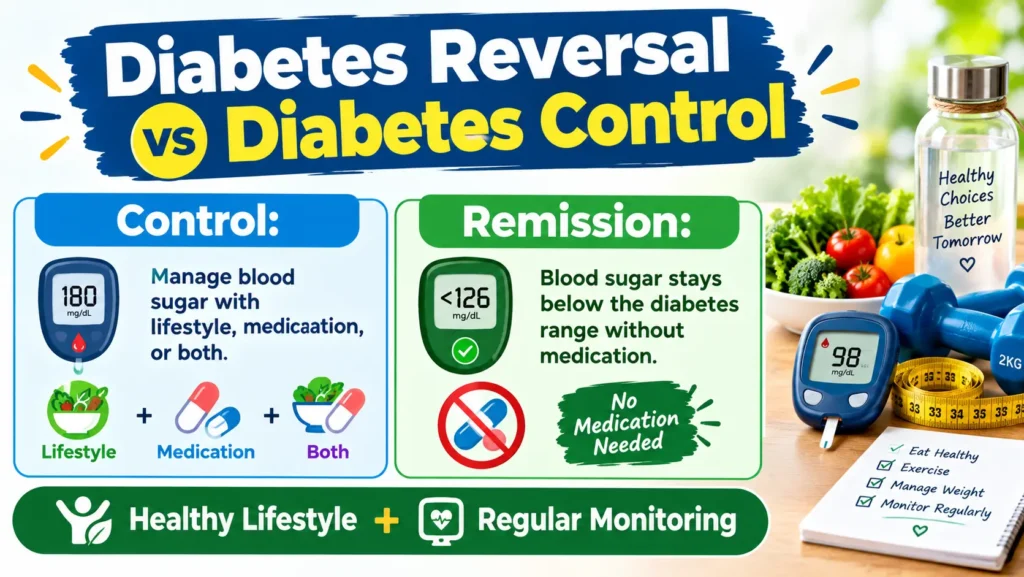
Diabetes Reversal vs Diabetes Control: What Is the Difference?: The terms “diabetes control” and “diabetes reversal” are often used interchangeably, butabetes control generally means keeping blood glucose. However, maintaining those improvements requires ongoing attention to nutrition, physical activity, weight management, and they do not mean exactly the same thing. Understanding the difference can help people set realistic health goals.
What Is Diabetes Control?
Diabetes control generally means keeping blood glucose within an appropriate target range through lifestyle changes, medication, or a combination of both. A person can have well-controlled diabetes while still taking medication.
What Is Diabetes Remission?
Diabetes remission generally refers to blood glucose levels returning below the diabetes range without glucose-lowering medication for a sustained period. Remission is different from a permanent cure.
Diabetes Reversal vs Diabetes Control: What Is the Difference?: How Can Lifestyle Help?
Nutrition, exercise, weight management, sleep, and stress management can improve metabolic health. For some people, these changes can lead to substantial improvements in blood glucose.
Does Everyone Achieve Remission?
No.
The possibility of remission varies depending on factors such as diabetes duration, pancreatic function, body weight, insulin resistance, genetics, and treatment history.
Why Is Monitoring Important?
Even when blood sugar improves, ongoing monitoring is important because diabetes can return. Maintaining healthy lifestyle habits and attending regular medical appointments can help identify changes early.
Conclusion
Diabetes control means managing blood glucose effectively, while remission describes a specific state in which blood glucose remains below the diabetes range without glucose-lowering medication for a sustained period.
Both require a long-term commitment to metabolic health.

One Response