
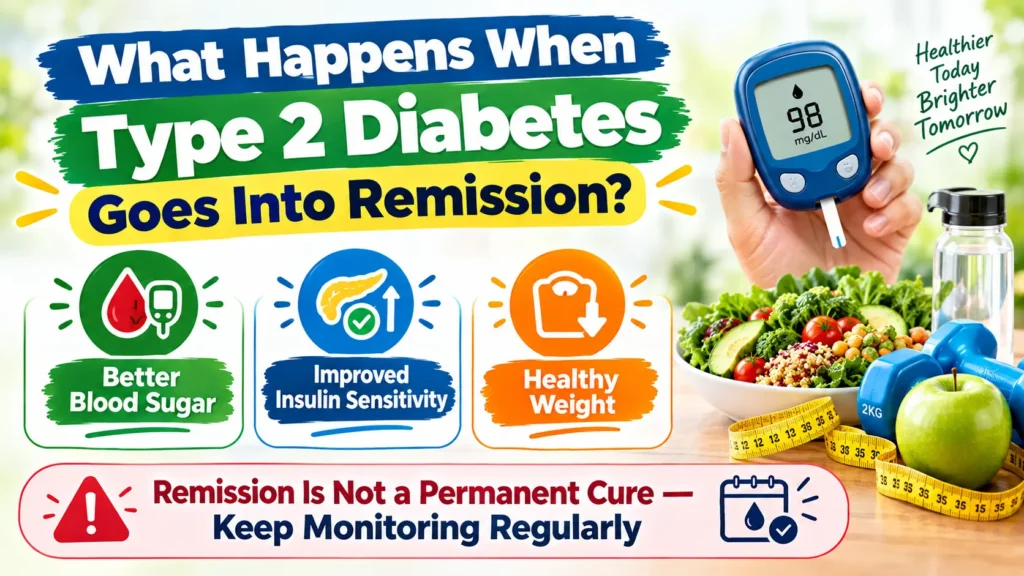
What Happens to the Body When Type 2 Diabetes Is Reversed?: When type 2 diabetes improves significantly or enters remission, several aspects of metabolic health may improve. The changes are usually the result of sustained lifestyle improvements and, when appropriate, medical treatment.
Blood Sugar Levels Improve
One of the most noticeable changes is improved blood glucose control. Fasting and post-meal glucose levels may decrease, while HbA1c can move toward a healthier range.
Insulin Sensitivity May Improve
Lifestyle changes, particularly weight management and regular physical activity, can improve how the body responds to insulin. Better insulin sensitivity allows cells to use glucose more effectively.
Read Also: Can Lifestyle Changes Reverse Type 2 Diabetes?
Body Weight May Improve
For people with excess body weight, sustainable weight loss can improve metabolic health. Reducing excess abdominal fat may also help reduce insulin resistance.
Energy and Physical Health
Improved blood glucose control and regular physical activity may support better energy levels and physical wellbeing. However, individual experiences vary.
Does Remission Mean Diabetes Is Gone Forever?
No.
Remission does not necessarily mean that diabetes has been permanently cured. Blood glucose levels can increase again if underlying metabolic problems return. Continued healthy habits and regular monitoring remain important.
What Happens to the Body When Type 2 Diabetes Is Reversed?: Can Medication Be Reduced?
Some people may require less diabetes medication after significant metabolic improvement. However, medication changes should always be made under medical supervision.
Conclusion
When type 2 diabetes enters remission, blood glucose and metabolic health can improve substantially. However, maintaining those improvements requires ongoing attention to nutrition, physical activity, weight management, and regular medical monitoring.
Read Also:

One Response