
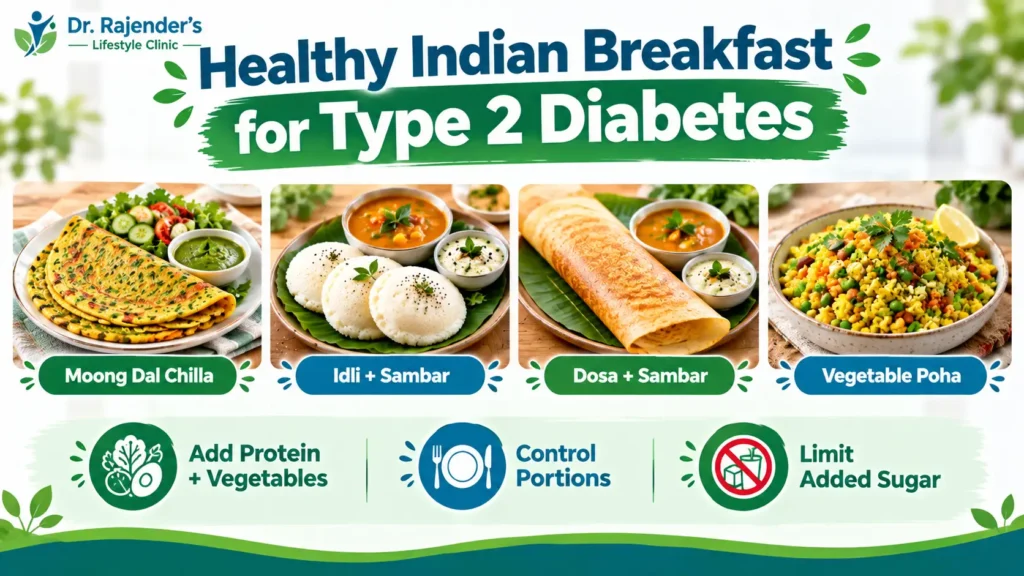
Best Indian Breakfast for Diabetes: Indian breakfast does not have to be removed from the diet just because you have Type 2 diabetes. The key is to consider the carbohydrate content, portion size, preparation method, and what foods are included with the meal.
Moong Dal Chilla
Moong dal chilla is one practical option because it provides protein along with carbohydrate. Add vegetables and unsweetened curd if appropriate.
Idli with Sambar
Idli can also be included in a diabetes-friendly meal. Instead of eating a large number of idlis alone, use a suitable portion and pair them with sambar and vegetables. Sambar can add pulses and vegetables to the meal.
Dosa with Sambar
Dosa is another option, but portion size and preparation matter. Pairing dosa with sambar and a protein-rich side can make the meal more balanced. Avoid making the meal mainly dosa plus high-calorie chutneys.
Poha and Upma
Vegetable poha or vegetable upma can be included in suitable portions. Adding peanuts, sprouts, curd, eggs, or another protein source may improve the overall balance depending on your dietary preferences.
Foods to Limit
Other options include vegetable oats, eggs with vegetables, paneer or tofu with vegetables, and unsweetened curd with nuts and a whole fruit portion.
Personalized Portions
Breakfast foods that are better limited include sweetened tea or coffee, biscuits, pastries, sugary cereals, and heavily sweetened porridges.
Conclusion
There is no single Indian breakfast that is ideal for everyone with diabetes. Your needs can vary depending on glucose control, medications, body weight, activity level, and other medical conditions.
The goal is not to eliminate familiar foods. Instead, adjust portions, add vegetables and protein, reduce added sugar, and choose minimally processed foods more often.
If your goal is Type 2 diabetes remission, a personalized plan is preferable to following a generic “diabetes breakfast” list. Remission is not guaranteed and should be monitored medically.
Read Also:

2 Responses