
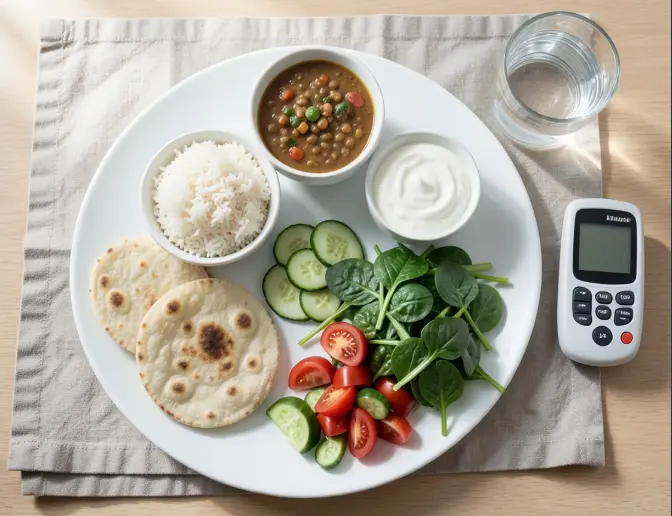
How to Reduce Post-Meal Blood Sugar Naturally: Blood sugar naturally rises after eating because the digestive system breaks down carbohydrates into glucose, which enters the bloodstream. The amount and duration of the rise can vary depending on the type and quantity of food, meal composition, physical activity, and an individual’s insulin response.
For people who experience frequent post-meal blood sugar elevations, making practical changes to meals and daily routines may help support better glucose management.
Control Carbohydrate Portions
The amount of carbohydrate you eat can have a significant effect on post-meal blood sugar. Large portions of foods such as rice, roti, bread, potatoes, sweets, and other carbohydrate-rich foods may cause a larger glucose rise.
Instead of completely avoiding carbohydrates, focus on appropriate portions based on your individual nutrition and diabetes management plan. Portion control can make meals more balanced while helping avoid excessive glucose fluctuations.
Add Vegetables and Protein
Adding non-starchy vegetables and protein to meals can make them more balanced. Vegetables such as leafy greens, cucumber, tomatoes, beans, cauliflower, and other non-starchy options can provide fiber and nutrients.
Protein sources such as dal, eggs, fish, chicken, paneer, tofu, or curd can also be included according to individual dietary preferences and health needs. Combining these foods with a controlled carbohydrate portion may help create a more balanced meal.
Choose Whole Foods
Choosing minimally processed and higher-fiber foods more often can support healthier eating patterns. Whole foods are generally preferable to highly refined foods and foods high in added sugar.
When choosing fruit, whole fruit is generally a better option than fruit juice because whole fruit contains fiber and usually takes longer to consume. However, portion size still matters, particularly for people monitoring their blood glucose.
How to Reduce Post-Meal Blood Sugar Naturally: Walk After Meals
Light physical activity after eating may help muscles use glucose for energy. A short, comfortable walk after a meal can be a practical way to include movement in your daily routine.
The appropriate amount and intensity of activity can vary between individuals. If you have health conditions or physical limitations, choose activities that are suitable for your fitness level and medical needs.
Avoid Sugary Drinks
Sugary beverages can raise blood glucose quickly because they contain easily absorbed carbohydrates and may be consumed in large quantities without creating much fullness.
Limit soft drinks, sweetened juices, energy drinks, sweetened tea or coffee, and other beverages containing added sugar. Water and unsweetened beverages are generally better everyday choices.
Monitor Your Response
If recommended by your healthcare professional, checking blood glucose before and after meals can help you understand how different foods and portion sizes affect your glucose levels.
Keeping a simple record of meals, portions, activity, and glucose readings may help identify patterns. Do not make medication changes based only on individual home readings without professional guidance.
Managing post-meal blood sugar is usually about the overall meal and daily routine rather than relying on one special food, home remedy, or supplement. Appropriate carbohydrate portions, vegetables, protein, whole foods, regular physical activity, and limiting sugary drinks can all support better glucose management.
If your post-meal blood sugar frequently remains high, discuss your readings and eating patterns with a healthcare professional. An individualized plan can help identify possible causes and support appropriate diabetes management.
Need Help Managing Blood Sugar?
At Dr. Rajender’s Lifestyle Clinic, you can discuss your blood sugar readings, nutrition, physical activity, and lifestyle habits with a healthcare professional and work towards a sustainable approach to blood sugar management.
Book a consultation with Dr. Rajender’s Lifestyle Clinic for personalized guidance based on your health needs.
Read Also:

One Response