
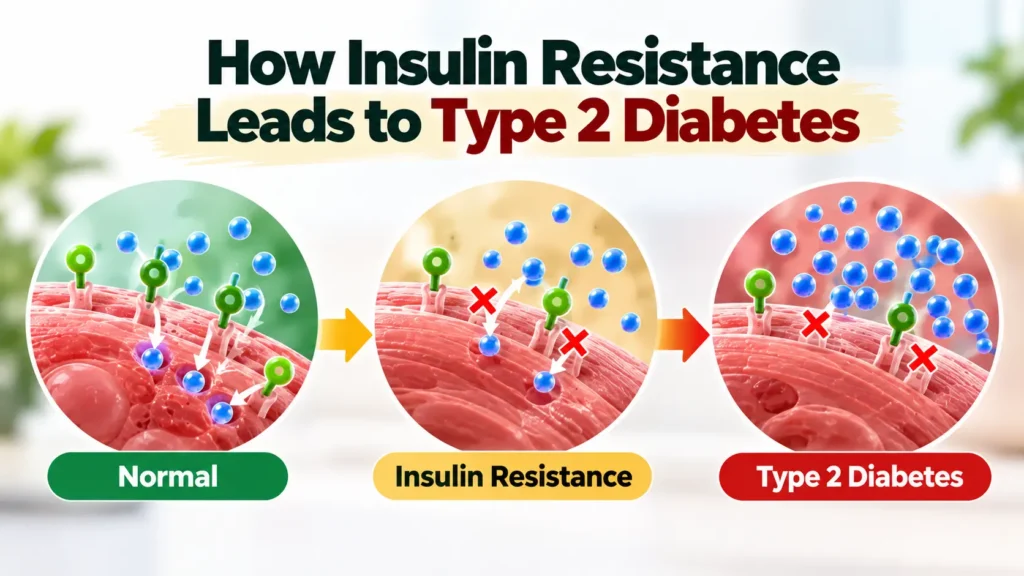
How Insulin Resistance Leads to Type 2 Diabetes: Insulin resistance is closely associated with the development of type 2 diabetes. It occurs when the body’s cells become less responsive to insulin, making it more difficult for glucose to move from the bloodstream into cells.
Insulin resistance does not mean that a person already has diabetes. However, when it persists and the pancreas cannot produce enough insulin to compensate, blood glucose can increase.
Step 1: Cells Become Less Responsive to Insulin
After eating, carbohydrates are converted into glucose and enter the bloodstream. The pancreas releases insulin to help cells take up glucose.
With insulin resistance, muscle, fat and other cells respond less effectively to insulin.
As a result, the body may require more insulin to achieve the same glucose-lowering effect.
Step 2: The Pancreas Produces More Insulin
In response to insulin resistance, the pancreas may increase insulin production.
This compensation can help maintain blood glucose within the normal range for a period of time.
A person can therefore have insulin resistance before developing abnormal blood glucose levels.
Step 3: Insulin Resistance May Progress
If insulin resistance continues, the demand placed on the pancreas can remain high.
Over time, the pancreas may not be able to produce enough insulin to fully compensate for the body’s insulin resistance.
When this happens, blood glucose can begin to rise.
Step 4: Prediabetes May Develop
Blood glucose levels that are higher than the normal range but not high enough to meet diabetes criteria are generally classified as prediabetes.
Prediabetes can be an important warning stage because it indicates increased metabolic risk.
Not everyone with prediabetes will develop type 2 diabetes, particularly when appropriate lifestyle and medical measures are taken.
Step 5: Type 2 Diabetes Can Develop
If insulin resistance and inadequate insulin production continue, blood glucose can rise into the diabetes range.
Type 2 diabetes is therefore associated with both insulin resistance and an inability of the pancreas to produce sufficient insulin relative to the body’s needs.
Can Lifestyle Changes Help?
Lifestyle changes can support insulin sensitivity and blood glucose management.
Regular physical activity helps muscles use glucose for energy. Walking, aerobic exercise and strength training can all contribute to a more active lifestyle.
A balanced diet with appropriate portions, vegetables, protein and fiber-rich foods can support healthy blood glucose.
For people with excess weight, gradual weight loss may also improve insulin sensitivity.
Importance of Sleep and Stress Management
Sleep and stress can also influence metabolic health. Poor sleep may affect appetite and glucose regulation, while long-term stress can influence hormones and lifestyle behaviors.
Maintaining healthy sleep habits and finding effective ways to manage stress can support a comprehensive lifestyle approach.
Medical Monitoring Is Important
Blood glucose and HbA1c testing can help identify changes in glucose regulation. People with risk factors for diabetes may benefit from regular medical evaluation.
If diabetes is diagnosed, treatment may include lifestyle changes and medications when appropriate. Medication should not be stopped or changed without medical guidance.
Conclusion
Insulin resistance can contribute to the progression from normal glucose regulation to prediabetes and, in some people, type 2 diabetes. The process often develops gradually and involves both reduced insulin sensitivity and changes in insulin production.
Early attention to nutrition, physical activity, weight management and metabolic health can support better blood glucose control.
For personalized guidance on insulin resistance, prediabetes, type 2 diabetes and lifestyle-based metabolic care, consult Dr. Rajender’s Lifestyle Clinic, Banjara Hills, Hyderabad.
Read Also:

One Response