
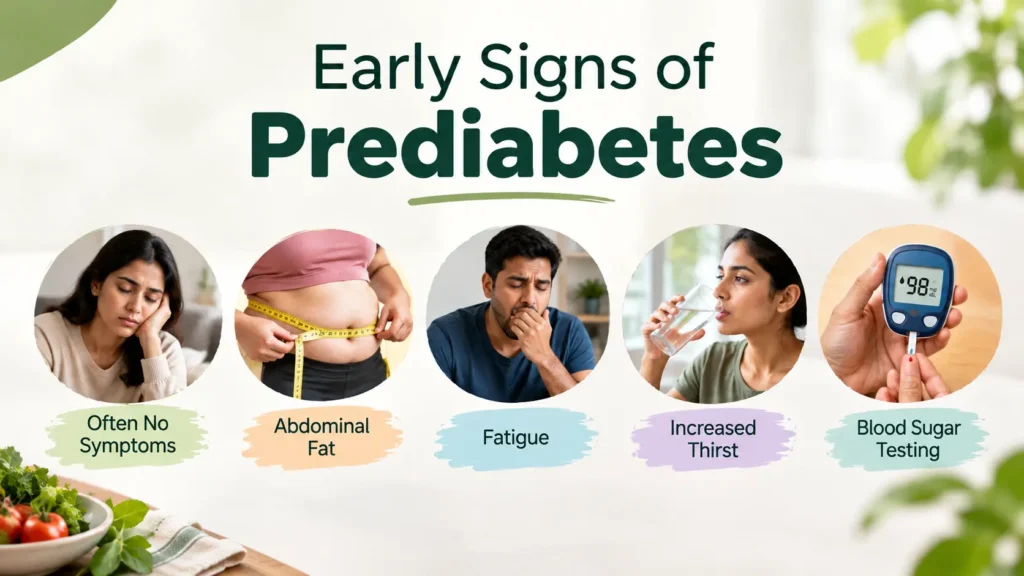
Early Signs of Prediabetes: Prediabetes occurs when blood glucose levels are higher than normal but not high enough to meet the criteria for diabetes. One of the challenges with prediabetes is that it often does not cause obvious symptoms.
A person may have prediabetes for years without realizing it.
Does Prediabetes Have Symptoms?
Many people with prediabetes have no clear symptoms. This means that relying only on how you feel may not be enough to identify the condition.
Some people may experience symptoms associated with elevated blood glucose, but these are not specific to prediabetes.
Possible Signs
Some people may notice:
- Increased thirst
- Increased urination
- Fatigue
- Increased hunger
- Difficulty managing weight
- Blurred vision
These symptoms can also occur due to other conditions and do not confirm prediabetes.
Increased Abdominal Fat
Excess abdominal fat is associated with insulin resistance and increased metabolic risk.
A growing waist circumference can therefore be a reason to discuss blood glucose and metabolic health with a healthcare professional.
Early Signs of Prediabetes: Family History
Having a close family member with type 2 diabetes can increase the risk of prediabetes.
Genetic factors cannot be changed, but lifestyle factors such as diet and physical activity can often be addressed.
Physical Inactivity
Low levels of physical activity can increase the risk of insulin resistance and abnormal blood glucose.
Regular walking, aerobic exercise and strength training can support insulin sensitivity.
Previous High Blood Sugar
People who have previously had elevated blood glucose, including during pregnancy in certain circumstances, may have an increased risk of future metabolic problems.
Regular follow-up can therefore be important.
How Is Prediabetes Diagnosed?
Blood glucose testing is needed to determine whether a person has prediabetes.
Healthcare professionals may use tests such as fasting blood glucose or HbA1c depending on individual circumstances.
Why Early Detection Matters
Identifying prediabetes early can provide an opportunity to improve lifestyle habits and monitor blood glucose before diabetes develops.
Healthy eating, regular exercise and weight management can support better metabolic health.
Conclusion
Prediabetes often has no obvious symptoms, making blood glucose testing important for people with risk factors. Increased abdominal fat, physical inactivity, family history and previous abnormal blood glucose can increase risk.
For personalized evaluation and lifestyle guidance for prediabetes and blood sugar management, consult Dr. Rajender’s Lifestyle Clinic, Banjara Hills, Hyderabad.
Read Also:

One Response