

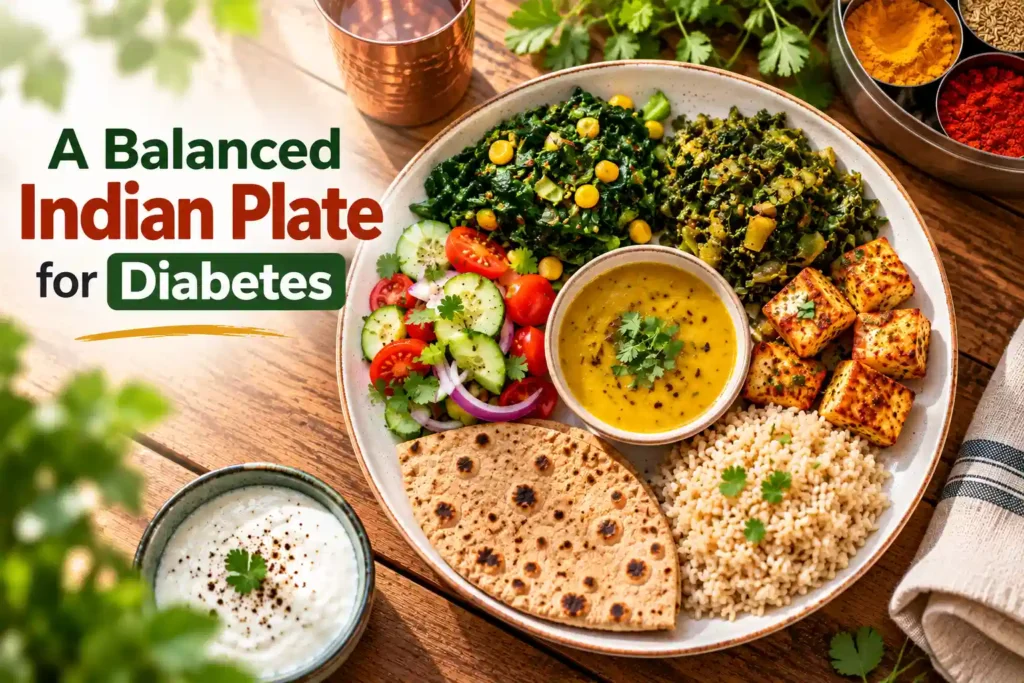
What Is a Balanced Plate for Diabetes?
A balanced plate can make diabetes-friendly eating easier and more practical.
Instead of completely avoiding traditional Indian foods, the goal is to create meals that contain appropriate portions of vegetables, protein and carbohydrate-rich foods.
The right meal pattern can vary depending on your blood sugar levels, medications, body weight, activity and nutritional requirements.
How to Build a Diabetes-Friendly Indian Plate
Fill Half the Plate With Vegetables
Non-starchy vegetables can provide fiber, vitamins, minerals and volume.
Examples include:
- Spinach
- Cucumber
- Beans
- Cauliflower
- Cabbage
- Gourds
- Tomato
- Okra
- Brinjal
Try to include a variety of vegetables across different meals.
Add a Protein-Rich Food
Protein can be obtained from foods such as dal, beans, eggs, fish, chicken, paneer or curd, depending on your dietary preferences.
Including protein can make meals more balanced and may help with fullness.
Choose the Right Portion of Carbohydrates
Rice, roti, millet and other grains can provide carbohydrates.
Instead of completely eliminating carbohydrates, focus on choosing an appropriate portion and combining them with vegetables and protein.
Indian Foods That Can Fit Into a Diabetes-Friendly Plate
A diabetes-friendly meal can still include familiar Indian foods.
For example:
- Dal with vegetables and a suitable portion of rice
- Vegetable curry with roti and paneer
- Grilled fish with vegetables and a controlled carbohydrate portion
- Egg-based meal with vegetables and roti
- Curd with a balanced meal, where appropriate
The exact combination and portion should depend on individual requirements.
How Portion Size Affects Blood Sugar
Portion size is an important part of diabetes nutrition.
Eating a large quantity of even a nutritious carbohydrate source can increase the total carbohydrate intake of a meal.
Instead of focusing only on whether a food is “good” or “bad,” consider how much you are eating and what other foods are included.
Common Mistakes When Planning a Diabetes-Friendly Meal
Eating Too Much Rice or Roti
Large portions can increase the carbohydrate content of the meal.
Not Eating Enough Vegetables
A meal dominated by rice, roti or other grains may lack adequate vegetables and fiber.
Skipping Protein
Protein can be an important component of a balanced meal.
Drinking Sugary Beverages
Sugary drinks can add significant amounts of sugar and calories without providing the same fullness as whole foods.
Sample Indian Plate for People With Type 2 Diabetes
A practical meal could include:
Vegetables: A generous serving of non-starchy vegetables
Protein: Dal, eggs, fish, chicken, paneer or another suitable source
Carbohydrate: An appropriate portion of rice, roti or another grain
Optional side: Unsweetened curd, if appropriate
The exact portions should be personalized.
How a Personalized Diet Can Support Diabetes Management
There is no single meal plan that works equally well for every person with diabetes.
Your diet may need to consider blood sugar patterns, medication, physical activity, body weight, food preferences and other health conditions.
A personalized plan can make healthy eating easier to maintain over the long term.
Dr. Rajender’s Lifestyle Clinic Approach to Personalized Nutrition
At Dr. Rajender’s Lifestyle Clinic, nutrition is considered an important part of lifestyle-based diabetes management.
The approach focuses on personalized nutrition, physical activity, lifestyle correction and continuous medical guidance rather than following a one-size-fits-all diet.
Frequently Asked Questions
What should a diabetes plate contain?
A balanced plate can include plenty of non-starchy vegetables, a suitable protein source and an appropriate portion of carbohydrate-rich foods.
Can diabetics eat rice on a diabetes plate?
Yes, rice can potentially be included in an appropriate portion depending on individual nutritional needs.
Is the plate method suitable for everyone with diabetes?
The general concept can be useful, but individual portions and food choices may need to be adjusted according to health conditions and treatment.
Can a balanced plate help control blood sugar?
A balanced meal with appropriate portions can support better blood sugar management as part of an overall diabetes care plan.
Should people with diabetes completely avoid carbohydrates?
Not necessarily. Carbohydrate requirements differ between individuals. The focus should be on appropriate portions and overall meal quality.
Conclusion
Building a balanced Indian plate can make diabetes-friendly eating easier without completely giving up familiar foods.
Focus on vegetables, suitable protein, appropriate carbohydrate portions and overall meal balance. Portion control and personalized nutrition can play an important role in long-term diabetes management.
Medical Disclaimer: This article is for general educational purposes and does not replace individualized medical advice. Do not stop or change diabetes medication without guidance from your healthcare professional.
Read Also:


2 Responses