

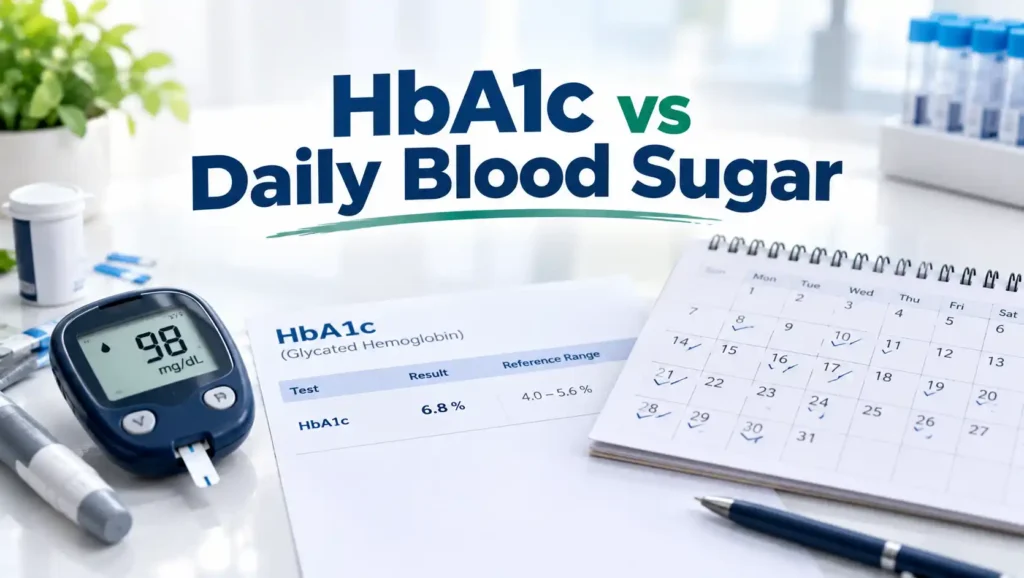
HbA1c vs Daily Blood Sugar: Why Both Matter: A single blood sugar reading gives information about your glucose level at that particular time. However, diabetes management also requires understanding how blood sugar has been behaving over a longer period.
This is where the HbA1c test becomes important. At Dr. Rajender’s Lifestyle Clinic, diabetes management can involve looking at both day-to-day glucose readings and longer-term markers such as HbA1c before making treatment decisions.
What Is HbA1c?
HbA1c, also called glycated hemoglobin, is a blood test used to assess average blood sugar over a longer period.
Glucose in the blood can attach to hemoglobin in red blood cells. Since red blood cells have a lifespan of roughly several months, HbA1c provides an indication of longer-term blood glucose exposure rather than showing only what happened on the day of the test.
This makes HbA1c an important tool for monitoring diabetes.
Why One Day of Blood Sugar May Not Tell the Whole Story
Consider a patient whose fasting blood sugar is around 150 mg/dL and whose post-meal reading is around 220 mg/dL on one particular day.
These readings are elevated. But should medication automatically be increased based only on those readings?
The transcript gives an example where the patient had poor sleep the previous night and had travelled before the fasting test. He had also consumed a small cup of tea before the test.
This illustrates an important point: one day’s glucose reading may be influenced by factors occurring around that particular day.
Therefore, treatment decisions should not necessarily be based on a single isolated reading.
Another Example: Normal Sugar But High HbA1c
Now consider another patient whose fasting blood sugar is around 110 mg/dL and whose post-breakfast reading is around 120 mg/dL.
Those numbers may appear relatively low. However, suppose the patient’s HbA1c is above 9%.
In this situation, the single-day readings do not represent the patient’s longer-term blood sugar control.
The transcript explains that the patient had eaten pesarattu for breakfast, which contains protein and comparatively less carbohydrate. As a result, the glucose reading on that particular day may not reflect the patient’s usual pattern.
This is why looking at HbA1c alongside individual glucose readings can provide a broader picture.
HbA1c Helps Monitor Long-Term Diabetes Control
HbA1c can be useful when evaluating whether a diabetes management plan is working over time.
It can help doctors assess the effect of:
- Dietary changes
- Lifestyle modifications
- Specific dietary approaches
- Lower-carbohydrate eating plans
- Diabetes medications
- Overall blood sugar management
Rather than focusing only on the glucose level on the day of an appointment, HbA1c provides information about longer-term control.
Why Consistent Diabetes Management Matters
The transcript also emphasizes that increasing HbA1c levels are associated with a greater risk of diabetes-related complications.
These complications can involve areas such as the:
- Eyes
- Kidneys
- Heart
- Nervous system
The important takeaway is that diabetes management should not be limited to achieving a good glucose reading on the day of a doctor’s visit.
Daily food choices, physical activity, sleep, medication adherence and other lifestyle factors can all contribute to overall diabetes management.
How Can You Work Toward Better HbA1c Control?
A sustainable approach is more useful than trying to improve blood sugar only before a medical appointment.
Focus on:
- Balanced meals
- Appropriate carbohydrate portions
- Adequate protein and vegetables
- Regular physical activity
- Consistent sleep
- Taking prescribed medicines as directed
- Regular blood sugar monitoring
- Periodic HbA1c testing as recommended by your doctor
At Dr. Rajender’s Lifestyle Clinic, diabetes care focuses on combining medical guidance with nutrition and sustainable lifestyle changes to support long-term metabolic health.
Final Takeaway
A single blood sugar test tells you what your glucose level looks like at a particular moment, while HbA1c provides a longer-term picture of blood sugar control.
For this reason, diabetes treatment decisions should be made using the overall clinical picture rather than automatically changing medication based on one unusually high or low reading.
If you have diabetes and are concerned about your HbA1c or fluctuating blood sugar levels, consult a qualified healthcare professional before changing your medication or diet.
Consult Dr. Rajender’s Lifestyle Clinic
Dr. Rajender’s Lifestyle Clinic, Banjara Hills, Hyderabad, provides personalized diabetes and lifestyle management. Dr. Rajender Ramagiri, Founder & Lead Physician, combines medical guidance with nutrition and sustainable lifestyle changes to support long-term metabolic health.
Book an appointment to discuss your blood sugar readings, HbA1c results and diabetes management plan.
FAQs
What does HbA1c tell you?
HbA1c provides an indication of longer-term blood sugar control, rather than only showing the glucose level at the time of a single blood test.
Is one high blood sugar reading enough to change diabetes medication?
A single reading may not provide the complete picture. Treatment decisions should be made by a healthcare professional after considering the patient’s overall glucose pattern and other relevant factors.
Why can blood sugar be normal but HbA1c be high?
A glucose test reflects the level at that particular time, while HbA1c reflects longer-term blood sugar exposure. Therefore, one normal reading may not represent the person’s usual glucose levels.
How often should HbA1c be checked?
The appropriate testing frequency depends on the individual’s diabetes status and treatment plan. Follow the schedule recommended by your healthcare professional.
Can diet affect HbA1c?
Diet is one factor that can influence blood sugar control over time. Consistent dietary and lifestyle changes can be part of an overall diabetes management plan.
Read Also:

