
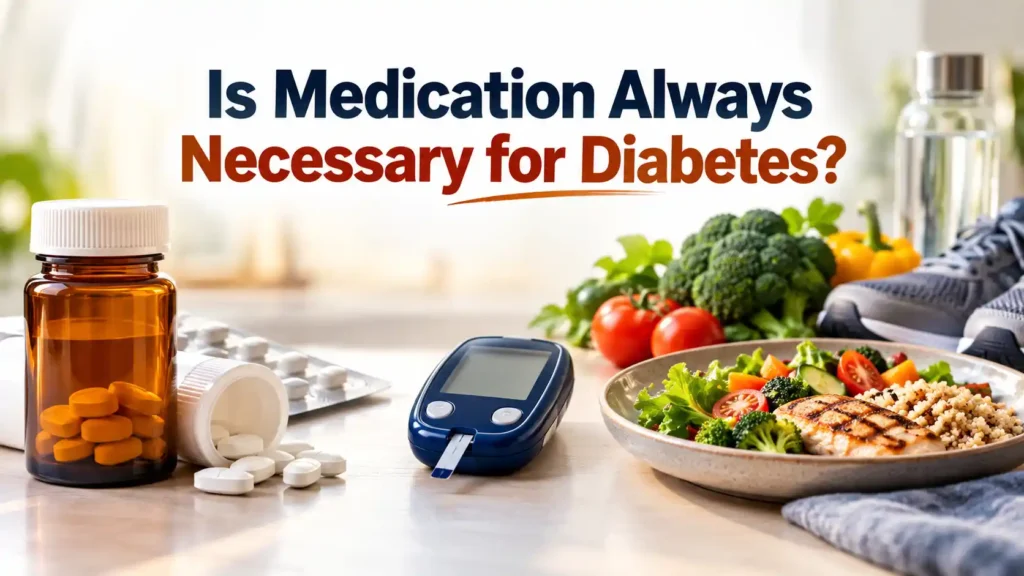
Is Diabetes Medication Always Necessary?: One of the most common questions people ask after being diagnosed with diabetes is, “Do I have to take diabetes medicine for the rest of my life?”
Another common question is whether starting medication means it can never be stopped.
The answer depends on the type of diabetes, stage of the condition, blood sugar control, pancreatic function and individual health factors.
Type 1 diabetes and Type 2 diabetes are different conditions, so their treatment and possibility of reversal are also different.
Type 1 Diabetes and Medication
In Type 1 diabetes, the pancreas produces very little or no insulin.
Because insulin is essential for controlling blood glucose, insulin treatment is necessary for people with Type 1 diabetes.
Diabetes reversal in Type 1 diabetes is not generally expected. Trying to stop insulin without medical supervision can be dangerous, particularly in children and young people.
Therefore, Type 1 diabetes should be managed with appropriate medical treatment and regular monitoring.
Can Type 2 Diabetes Be Reversed?
Type 2 diabetes is different.
It involves factors such as insulin resistance and inadequate insulin production relative to the body’s needs. Lifestyle changes can play an important role in improving blood sugar control and, in some people, reducing the need for diabetes medication.
This is often described as Type 2 diabetes reversal or remission, depending on the individual situation.
However, not every person will have the same response.
Some people may achieve substantial improvement, while others may experience partial improvement and require continued medication.
Understanding the Natural Course of Type 2 Diabetes
Type 2 diabetes can develop gradually through different stages.
1. Normal Blood Sugar
In the initial stage, blood glucose levels remain within the normal range.
However, factors such as family history, excess weight, physical inactivity, stress and unhealthy dietary habits can increase future risk.
2. Prediabetes
Blood sugar begins to rise above the normal range but has not yet reached the diagnostic range for diabetes.
This stage can last for months or years depending on lifestyle and other individual factors.
Healthy eating, regular physical activity, adequate sleep and weight management can help slow progression.
3. Type 2 Diabetes
As the condition progresses, blood glucose reaches the diabetic range.
At this stage, changes in pancreatic beta-cell function and insulin resistance can make blood sugar management more difficult.
Some people may need medication along with lifestyle changes.
4. Diabetes Complications
Long-term uncontrolled blood sugar can increase the risk of complications affecting different organs.
These may include:
- Diabetic eye disease
- Cardiovascular disease
- Stroke
- Kidney problems
- Diabetic neuropathy
- Burning or numbness in the feet
- Slow-healing wounds
The goal of diabetes management is to control blood sugar and reduce the risk of progression to complications.
Can Diabetes Medication Be Reduced?
In some people with Type 2 diabetes, improving diet, increasing physical activity, reducing excess weight and managing other lifestyle factors can lead to better blood sugar control.
As blood sugar improves, a doctor may determine that the dosage of medication can be reduced or that a particular medicine is no longer required.
However, medication should never be stopped or reduced on your own.
Blood sugar testing and regular medical assessment are important when making any changes to diabetes treatment.
Does Diabetes Reversal Mean a Permanent Cure?
Not necessarily.
Even after blood sugar improves significantly, Type 2 diabetes can return if the factors contributing to high blood sugar return.
For this reason, long-term lifestyle habits remain important.
A person who has achieved good blood sugar control should continue paying attention to:
- Balanced nutrition
- Carbohydrate intake
- Regular walking or exercise
- Healthy body weight
- Sleep
- Stress management
- Regular blood sugar monitoring
- Medical follow-up
Lifestyle Changes That Support Type 2 Diabetes Management
Lifestyle plays an important role in managing Type 2 diabetes.
Reduce Excess Carbohydrates
Pay attention to the amount and type of carbohydrate-containing foods in your daily meals.
Stay Physically Active
Regular walking and exercise can support better glucose management and overall metabolic health.
Manage Body Weight
For people who are overweight, appropriate weight reduction can support improvements in insulin sensitivity and blood sugar control.
Manage Stress and Sleep
Stress and poor sleep can make healthy lifestyle changes more difficult and may affect blood sugar management.
Monitor Blood Sugar
Regular monitoring helps understand whether dietary, exercise and treatment changes are working.
Can Everyone With Diabetes Stop Medication?
No.
Some people may continue to require medication despite making significant lifestyle changes. The need for medication depends on individual factors and how the body responds to treatment.
The goal should not simply be to stop medicines. The priority is safe and effective blood sugar control while reducing the risk of diabetes complications.
Final Takeaway
Diabetes medication is not automatically lifelong for every person with Type 2 diabetes, but it should never be stopped without medical guidance.
Type 1 diabetes generally requires insulin treatment because the body produces little or no insulin. Type 2 diabetes may improve substantially in some people through appropriate lifestyle changes, and some may eventually require less medication under medical supervision.
At Dr. Rajender’s Lifestyle Clinic, Banjara Hills, Hyderabad, diabetes care focuses on personalized nutrition, lifestyle correction, physical activity and continuous medical guidance. Treatment can be adjusted based on blood sugar response and individual needs.
FAQs
1. Is diabetes medication always necessary?
Not necessarily for every person with Type 2 diabetes. Some people may improve their blood sugar control significantly and require less medication, while others may need continued treatment.
2. Can Type 2 diabetes be reversed?
Some people with Type 2 diabetes can achieve significant improvement or remission through appropriate lifestyle and medical management. The response varies between individuals.
3. Can I stop diabetes medicine if my sugar becomes normal?
No. Normal blood sugar while taking medication does not mean the medicine can be stopped independently. Any medication change should be made by your treating doctor.
4. Can Type 1 diabetes be reversed?
Type 1 diabetes generally cannot be reversed and requires insulin treatment.
5. Can lifestyle changes reduce diabetes medication?
In some people with Type 2 diabetes, improvements in diet, physical activity, weight management and other lifestyle factors can improve blood sugar control and may allow medication to be reduced under medical supervision.
6. Can diabetes come back after reversal?
Yes. Type 2 diabetes can return if blood sugar rises again. Maintaining healthy lifestyle habits and regular monitoring remains important even after significant improvement.
7. What is the main goal of diabetes treatment?
The primary goal is safe blood sugar management and reducing the risk of long-term diabetes complications. Medication and lifestyle changes may both be part of an individual’s treatment plan.
Read Also:

One Response