
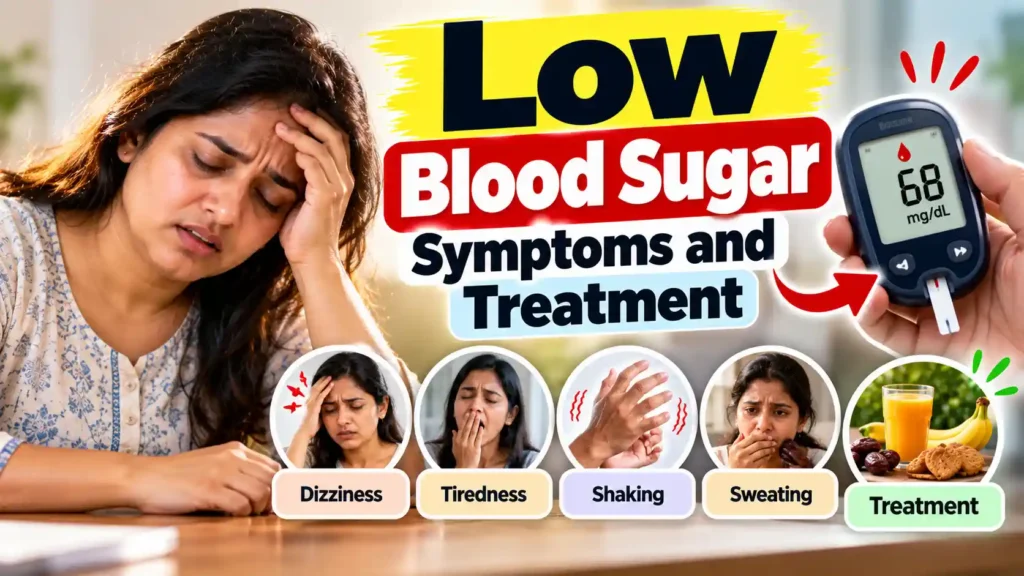
Low Blood Sugar Symptoms and Treatment:
Most diabetes advice focuses on lowering high sugar, but low blood sugar, called hypoglycaemia, can
be more immediately dangerous. A severe low can cause confusion, accidents, seizures, or loss of
consciousness within minutes. The good news is that lows are usually preventable, and easily treated if
recognised early. Everyone with diabetes, and their family members, should know the signs and the
steps.
What Counts as Low Blood Sugar?
A reading below 70 mg/dL is considered low. Below 54 mg/dL is clinically significant, and a low that
causes confusion or needs another person’s help is severe. Some people feel symptoms at higher
readings, especially if their sugar has been running very high.
Symptoms to Watch For
- Early: Sweating, trembling, hunger, palpitations, anxiety, pale skin, and tingling around the lips.
- Later: Headache, blurred vision, weakness, drowsiness, irritability, difficulty concentrating, and
slurred speech. - Severe: Confusion, seizures, and loss of consciousness.
- At night: Nightmares, night sweats, waking with a headache, or unusual morning tiredness.
Common Causes
- Insulin or sulfonylurea doses that are too high or taken without eating.
- Delayed or skipped meals, or eating less than usual.
- Unplanned or prolonged exercise.
- Alcohol, particularly on an empty stomach.
- Weight loss without adjusting medicines.
- Kidney problems, which slow the clearance of insulin and some tablets.
- Dosing mistakes, or taking medicines twice.
The Rule of 15: Treating a Mild Low
If you are awake and able to swallow, take about 15 grams of fast-acting carbohydrate: three to four
glucose tablets, half a glass (about 150 ml) of fruit juice or regular soft drink, or one tablespoon of sugar
or honey dissolved in water. Wait fifteen minutes, then check your sugar again. If it is still below 70
mg/dL, repeat. Once it recovers, have a snack or meal if the next meal is more than an hour away.
Avoid chocolate or fatty foods for the first treatment, since fat slows absorption.
Severe Hypoglycaemia: Emergency Steps
If a person is unconscious, having a seizure, or cannot swallow, do not put food or drink in the mouth,
because of the risk of choking. Place them on their side and call emergency services immediately. If a
glucagon injection or nasal glucagon has been prescribed, give it as trained. Family members and
colleagues should know where it is kept and how to use it.
Hypoglycaemia Unawareness
Some people stop feeling the early warning signs, especially after frequent lows or with long-standing
diabetes and nerve damage. Beta-blocker medicines can also mask symptoms. If you have
unawareness, your doctor may relax your targets, adjust medicines, and recommend a continuous
glucose monitor with alarms.
How to Prevent Lows
- Eat regular meals, and do not skip them when taking insulin or sulfonylureas.
- Check sugar before driving, exercise, and bed.
- Carry glucose tablets or sugar sachets everywhere.
- Adjust medicines with your doctor before major changes in diet or activity.
- Limit alcohol, and never drink on an empty stomach.
- Wear a medical ID if you use insulin.
- Keep a log, and tell your doctor about every low.
Driving and Safety
Do not drive if your sugar is below about 90 mg/dL, or if you feel unwell. Stop driving, treat the low, and
wait until you have fully recovered before restarting. Keep glucose in the car.
Care at Dr. Rajender’s Lifestyle Clinic
The clinic offers structured, evidence-based care for Type 2 diabetes, with personalised nutrition,
physical activity, lifestyle correction, and continuous medical guidance, including review of medicines to
reduce the risk of low sugar as lifestyle improves.
Book a Consultation
Visit https://www.drrajenderslifestyleclinic.com/ to learn more and book a consultation.
Frequently Asked Questions
What should I eat when my sugar is low?
Take fast-acting sugar such as glucose tablets, juice, or a spoon of sugar or honey. Recheck after
fifteen minutes and repeat if needed.
Can low sugar happen without insulin?
It can occur with sulfonylureas, skipped meals, alcohol, or kidney problems. Metformin alone rarely
causes it.
Is chocolate a good treatment for a low?
Not as the first choice. Fat slows sugar absorption, so glucose or juice works faster.
What should I do after treating a low?
Eat a snack or meal if the next meal is far away, note the episode, and inform your doctor so that
treatment can be reviewed.
Read Also:

One Response