
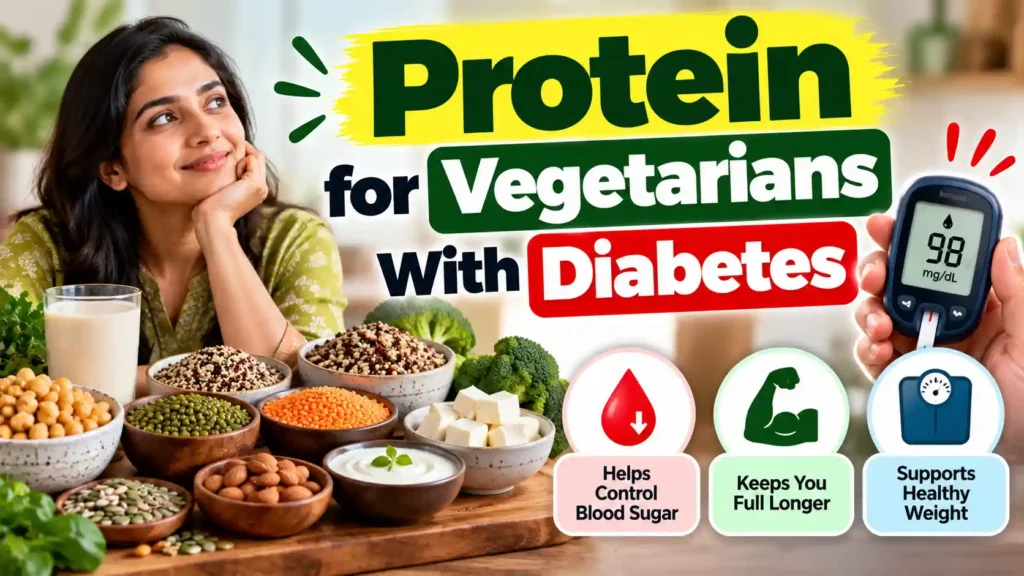
Protein for Vegetarians With Diabetes: Indian Sources
Protein plays a key role in diabetes care. It keeps you full, slows the rise of blood sugar after meals, and
protects muscle during weight loss. Yet many Indian vegetarian diets are heavy on rice and rotis, with
too little protein. If you are vegetarian and have diabetes, you can meet your needs with the right food
choices. This guide shows how.
Why Protein Matters in Diabetes
Adequate protein helps control hunger, reduces the urge for sweets and snacks, supports muscle, and
blunts the sugar spike when eaten with carbohydrates. Muscle is the body’s main site for glucose
disposal, so keeping it strong improves insulin sensitivity. Protein is particularly important for people
losing weight, women after menopause, and older adults.
How Much Protein Do You Need?
General guidance for healthy adults is about 0.8 grams per kilogram of body weight per day, and many
people with diabetes, especially those losing weight or older adults, benefit from a little more. However,
people with kidney disease may need to limit protein. Ask your doctor or nutritionist for your own target,
and spread protein across all meals instead of taking most at dinner.
Best Vegetarian Protein Sources
- Dals and pulses: Toor, moong, masoor, urad, chana, rajma, and chole. A cooked katori of dal gives
roughly 6 to 9 grams. - Paneer: About 18 grams per 100 grams, but also rich in fat, so use grilled or in moderation.
- Soy products: Soya chunks are very rich in protein, with about 50 grams per 100 grams dry weight.
Tofu provides roughly 8 to 12 grams per 100 grams. - Curd, buttermilk, and milk: A cup of milk gives about 8 grams, and curd provides moderate amounts.
- Sprouts: Moong, chana, and mixed sprouts add protein and fibre.
- Nuts and seeds: Peanuts, almonds, pumpkin seeds, and flaxseeds, in small handfuls.
- Besan and sattu: Roasted gram flour products make high-protein chilla and drinks.
- Eggs: For those who eat eggs, about 6 grams each.
Combining Foods Smartly
Traditional pairings such as dal with rice or roti, rajma with rice, and curd with millets provide a good mix
of amino acids across the day. You do not need to match them at every meal. Eating a variety of pulses,
dairy, nuts, and soy over the day usually covers protein quality.
A Sample Vegetarian Day
- Breakfast: Moong dal chilla with vegetables and mint chutney, and a cup of curd.
- Mid-morning: A small fruit with a handful of almonds.
- Lunch: Salad, dal, vegetable curry, one or two jowar or whole-wheat rotis, or a small bowl of millet
rice, and buttermilk. - Evening: Roasted chana or sprouts chaat.
- Dinner: Grilled paneer or tofu with vegetables, one roti, and a clear soup.
Protein Powders: Use With Care
Whole foods come first. If you add a protein powder, choose one without added sugar, check the label
for hidden carbohydrates, and avoid it if you have kidney disease unless your doctor approves. Powders
should supplement, not replace, meals.
Do Not Forget Vitamin B12
Vegetarian diets are low in vitamin B12, and long-term metformin can lower it further. Include milk, curd,
and paneer if you eat dairy, and ask your doctor to check your B12 and discuss supplements if needed.
Cooking Tips
Use less oil, and prefer pressure cooking, steaming, and grilling. Soak and sprout pulses to improve
digestibility. Add vegetables to dals and rotis. Avoid deep-fried protein options such as pakoras and
cutlets as everyday choices.
Care at Dr. Rajender’s Lifestyle Clinic
The clinic offers personalised nutrition as part of structured, evidence-based care for Type 2 diabetes,
thyroid disorders, hypertension, PCOS, obesity, and metabolic conditions, with physical activity, lifestyle
correction, and continuous medical guidance.
Book a Consultation
Visit https://www.drrajenderslifestyleclinic.com/ to learn more and book a consultation.
Frequently Asked Questions
Can vegetarians get enough protein with diabetes?
Yes. Dals, pulses, paneer, soy, curd, sprouts, nuts, and eggs for those who eat them can meet protein
needs with planning.
Is paneer good for diabetes?
Paneer is rich in protein and low in carbohydrate, but it is also high in fat, so enjoy it grilled and in
moderate portions.
Is too much protein harmful?
Excess protein can strain the kidneys in people with kidney disease. Ask your doctor for the right
amount for you.
Do I need protein supplements?
Most people can meet needs from food. Supplements are optional and should be chosen carefully,
without added sugar.
Read Also:

One Response