
Travelling With Diabetes: A Practical Checklist
Diabetes should not stop you from exploring, visiting family, or going on a pilgrimage. With some
planning, you can travel safely and enjoy the trip. Changes in routine, time zones, meals, climate, and
activity can all affect blood sugar, so preparation is the key. Here is a practical checklist for travelling
with diabetes.
Before You Go
- Visit your doctor a few weeks before a long trip, and review your medicines, HbA1c, and
vaccinations. - Ask for a letter stating your diagnosis, medicines, and the need to carry insulin, needles, and glucose
supplies. - Learn how to adjust medicines for time zone changes, if you cross several zones.
- Check travel insurance for pre-existing conditions.
- Find out where hospitals and pharmacies are at your destination.
What to Pack
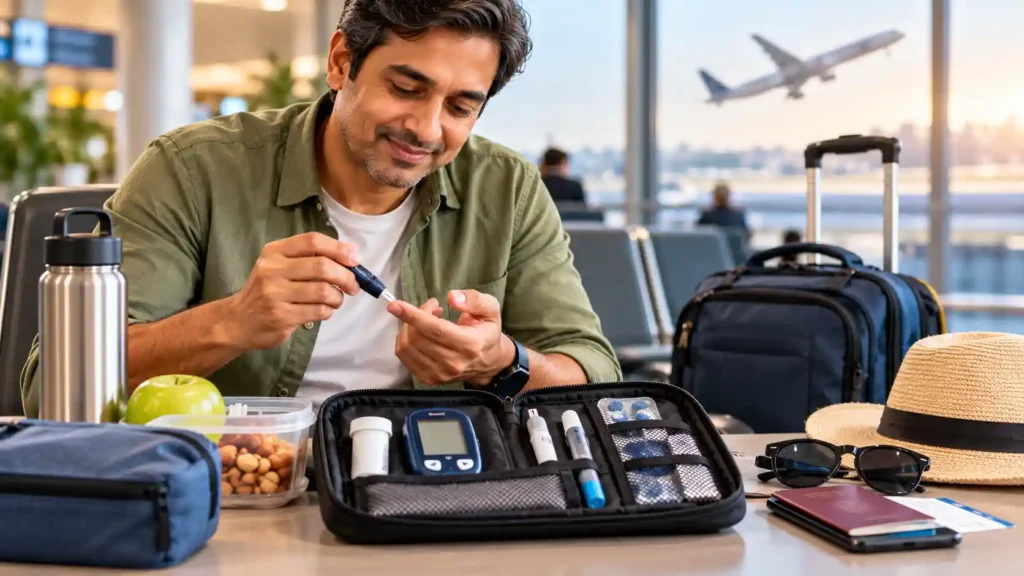
- Double the medicines you expect to need, split between two bags.
- Glucometer, strips, lancets, and spare batteries.
- Insulin and a cooling pouch, if you use insulin.
- Glucose tablets or sugar sachets for low sugar.
- Healthy snacks such as nuts, roasted chana, and fruit.
- A medical ID card or bracelet and your doctor’s letter.
- Comfortable, well-fitting shoes and cotton socks, plus a basic first-aid kit.
- A water bottle.
Insulin Storage on the Go
Keep insulin in your hand luggage, never in checked luggage, where it may freeze or overheat. Do not
leave it in a parked car or in direct sun. Use an insulated pouch, and avoid placing insulin directly on ice.
Unopened insulin needs refrigeration, while the pen in use is usually kept at room temperature, away
from heat, as the label advises.
Trains, Buses and Flights
Carry your own snacks and meals, since delays are common. Take your medicines at the right time
even if the schedule changes, and ask your doctor how to adjust for long journeys. Walk up and down
the aisle every one to two hours to improve circulation, and stay hydrated. At airport security, tell the
staff about your medical devices and supplies, and keep your letter handy.
Eating Away From Home
Choose simple, freshly cooked food, and avoid uncooked salads or unclean water in places with poor
hygiene. Stay with the plate method: vegetables and protein first, with a modest portion of rice or bread.
Do not skip meals when you take insulin or sulfonylureas. Carry snacks to cover delays.
Pilgrimages and Long Walking Trips
Pilgrimages often involve long queues, irregular meals, heat, crowds, and a lot of walking. Plan in
advance with your doctor, carry glucose, wear proper footwear, and check your feet daily. Drink water
regularly, and rest when you feel dizzy. Never walk barefoot on hot surfaces if your feet are numb.
Staying Well
Check your sugar more often than usual during travel. Heat, new foods, and activity can all change
readings. Be alert for low sugar if you walk more than usual, and for high sugar if you eat heavier meals.
If you develop vomiting or diarrhoea, follow your sick-day plan and seek medical help early, because
dehydration can be dangerous.
Time Zones and Insulin
When crossing multiple time zones, your insulin schedule may need adjustment. Your doctor can advise
you on how to shift your doses safely. Keep your watch on home time until you have a plan, and check
your sugar frequently during the transition.
Care at Dr. Rajender’s Lifestyle Clinic
The clinic offers structured, evidence-based care for Type 2 diabetes and related conditions, with
personalised nutrition, physical activity, lifestyle correction, and continuous medical guidance, including
advice on adjusting your plan safely before a trip.
Book a Consultation
Visit https://www.drrajenderslifestyleclinic.com/ to learn more and book a consultation.
Frequently Asked Questions
Can I carry insulin on a flight?
Yes. Carry insulin and supplies in hand luggage with your doctor’s letter and original packaging, and
inform security staff.
How do I keep insulin cool while travelling in India?
Use an insulated pouch or a cooling case, avoid direct heat and sunlight, and never place insulin in
direct contact with ice.
What should I do if my sugar drops while travelling?
Take fast-acting sugar such as glucose tablets or juice, recheck after fifteen minutes, and eat a snack.
Carry supplies at all times.
Should I check my sugar more often when I travel?
Yes. Changes in food, activity, and routine can shift your readings, so monitor more frequently.
Read Also:

One Response