
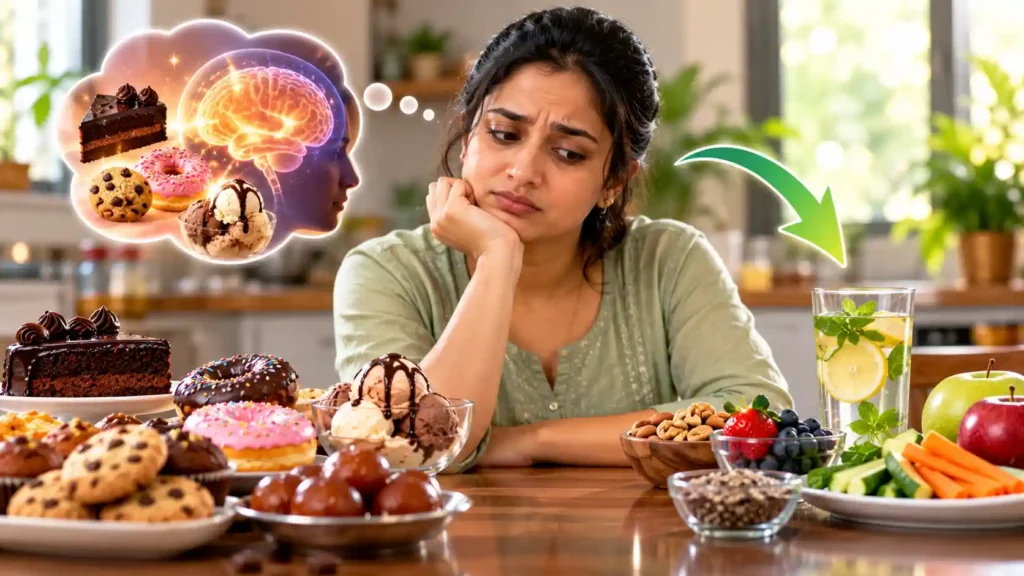
Sugar Cravings: Why They Happen and How to Stop Them
A sudden urge for something sweet after lunch, a late-night craving for ice cream, or a daily need for
sweet chai: sugar cravings are common, and they are especially troublesome for people with diabetes,
prediabetes, or weight concerns. Cravings are not a character flaw. They have biological, emotional,
and habit-driven causes. Understanding them is the first step to controlling them.
Why We Crave Sugar
Sugar triggers the brain’s reward system, so it feels good in the moment. The more you eat, the more
your taste buds and brain adapt, and the more you need to feel the same pleasure. Refined
carbohydrates are digested quickly, causing a rise and then a fall in blood sugar, and the fall can trigger
a strong craving for more.
Common Triggers
- Skipping meals or eating mostly refined carbohydrates.
- A lack of protein and fibre at meals.
- Poor or short sleep, which increases hunger hormones.
- Chronic stress, which raises cortisol and appetite.
- Emotional eating from boredom, loneliness, or anxiety.
- Habit and routine, such as sweets after every meal.
- Dehydration, which can feel like hunger.
- Hormonal changes, such as around periods or menopause, and conditions like PCOS and insulin
resistance.
Strategies That Work
- Eat balanced meals: Include protein, fibre, and healthy fats at each meal to keep sugar steady.
- Do not skip meals: Long gaps lead to intense cravings.
- Sleep seven to eight hours: Good sleep reduces appetite and cravings.
- Manage stress: Use walks, breathing exercises, and hobbies instead of food.
- Hydrate: Drink a glass of water first, and wait ten minutes.
- Move: A ten-minute walk often makes the craving fade.
- Brush your teeth: A fresh mouth discourages snacking.
- Keep sweets out of sight and out of the house when possible.
Smart Swaps
Instead of sweets, try a small piece of fruit with a few almonds, unsweetened curd with cinnamon and
fruit, roasted makhana, a handful of nuts, or a small piece of dark chocolate with high cocoa content. If
you need a sweet, enjoy a small portion after a balanced meal rather than on an empty stomach, which
causes a bigger spike.
Reduce Sugar Gradually
Taste buds adapt. Cut the sugar in tea or coffee step by step over a few weeks, and you will find that
sweetness becomes more noticeable at lower amounts. Reduce sugary drinks first, as they are the
biggest source of added sugar. Jaggery and honey are not healthier alternatives in terms of blood
sugar.
A Note About Artificial Sweeteners
Sweeteners can help some people reduce sugar, but they may keep the preference for sweet taste
alive, and evidence on long-term benefits is mixed. Use them in moderation and focus on lowering your
overall desire for sweet foods.
When Cravings Need a Doctor
See your doctor if cravings are intense and accompanied by excessive thirst, frequent urination, or
weight loss, which may signal high sugar, or by shakiness and sweating, which may signal low sugar.
Strong, uncontrollable urges to binge, followed by guilt, may indicate binge-eating disorder, which
responds to professional help. Cravings may also point to PCOS, thyroid problems, or nutritional
deficiencies.
Care at Dr. Rajender’s Lifestyle Clinic
The clinic offers structured, evidence-based care for Type 2 diabetes, PCOS, obesity, and metabolic
conditions, with personalised nutrition, physical activity, lifestyle correction, and continuous medical
guidance that addresses the root causes of cravings.
Book a Consultation
Visit https://www.drrajenderslifestyleclinic.com/ to learn more and book a consultation.
Frequently Asked Questions
Why do I crave sweets after meals?
It is often a habit, or the result of a meal low in protein and fibre. Adding protein and vegetables and
taking a short walk can help.
Do cravings mean my sugar is low?
Sometimes, particularly if you also feel shaky or sweaty. Check your sugar if you take insulin or
sulfonylureas.
Can poor sleep increase sugar cravings?
Yes. Short sleep raises hunger hormones and the desire for sugary, high-calorie food.
Is jaggery better than sugar?
Jaggery still raises blood sugar, so it is not a safer alternative for people with diabetes.
Read Also:

One Response