
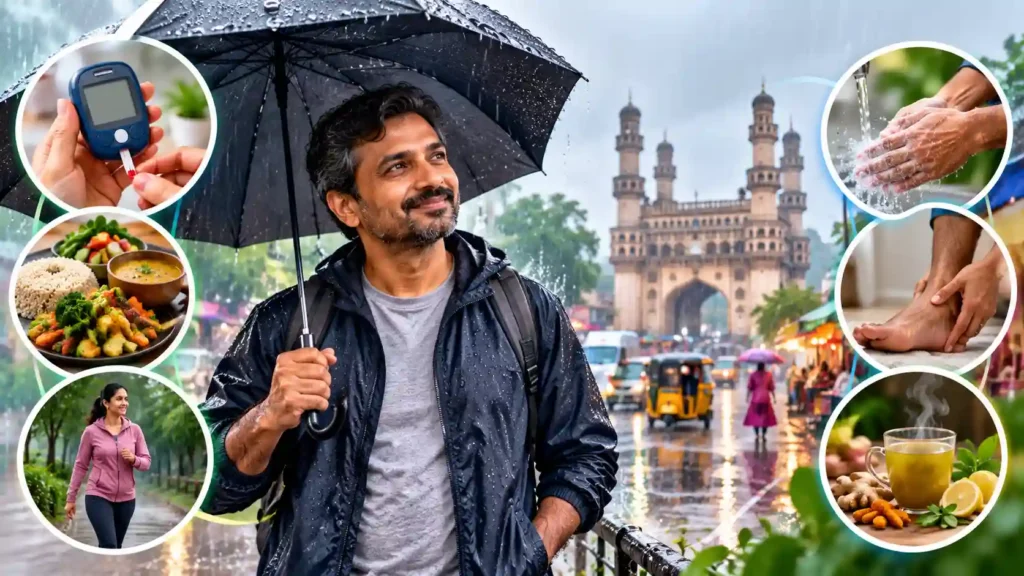
Monsoon Care for Diabetes in Hyderabad
When the monsoon arrives in Hyderabad, the heat eases and the air feels fresh. For people with
diabetes, though, the rainy season brings its own risks: wet and dirty roads, fungal infections,
waterborne illnesses, mosquito-borne fevers, and a temptation to eat hot, fried snacks. With a few
precautions, you can enjoy the rains safely.
Why the Monsoon Is Challenging
Infections are more common during the rains, and they are harder on people with diabetes. Fever and
illness raise blood sugar, and reduce appetite, increasing the risk of dehydration and low sugar in those
on insulin or sulfonylureas. Wet footwear and damp skin encourage fungus. Waterlogged streets
increase the risk of cuts and contaminated water exposure.
Protect Your Feet
- Avoid walking barefoot, and avoid wading through standing water. Dirty water can contain germs that
enter through tiny cuts. - Wear closed, waterproof shoes or sturdy sandals, with clean socks.
- Dry your shoes and socks thoroughly, and rotate pairs so that they are not damp.
- Dry your feet carefully after rain, especially between the toes.
- Check your feet every day for cuts, blisters, redness, and white, soggy skin.
- See a doctor for any wound that is not healing.
Prevent Fungal and Skin Infections
Humidity encourages fungus in the groin, underarms, skin folds, and between the toes. Wear loose,
cotton clothes, change out of wet clothes quickly, keep skin folds dry, and use antifungal powder or
cream as prescribed. Recurrent infections can be a sign that your blood sugar is high.
Food and Water Safety
- Drink boiled or filtered water.
- Eat freshly cooked, hot food, and avoid food that has been standing.
- Be careful with street food, cut fruits, and salads in places where hygiene is doubtful.
- Wash fruits and vegetables well.
- Avoid ice from unknown sources.
Diarrhoea and vomiting can cause dehydration and affect blood sugar. Follow sick-day rules and seek
help early.
Mosquitoes and Fevers
Dengue, malaria, and other fevers are common in the monsoon. Prevent them by removing stagnant
water around your home, using nets and repellents, and wearing full-sleeved clothes. If you develop
fever, check your blood sugar more often, drink fluids, and see a doctor. Fever in diabetes should not be
ignored.
Mirchi Bajji and the Rainy-Day Craving
Nothing says monsoon in Hyderabad like hot chai and mirchi bajji. You do not have to give them up
completely, but keep portions small and infrequent, avoid reheated oil, and pair them with something
protein-rich. Better rainy-day snacks include roasted chana, boiled and tempered chickpeas, sprouts
chaat, roasted corn in small portions, vegetable soup, and unsweetened tea with nuts.
Keep Exercise Going
When it rains, move indoors. Walk at home, use a treadmill, climb stairs, do yoga or strength exercises,
or dance. Even ten minutes after meals helps. If you walk outdoors, wear proper footwear and avoid
slippery or flooded paths.
Medicines, Insulin and Power Cuts
Keep a stock of medicines, strips, and insulin, since heavy rain may disrupt access to pharmacies. If
you use insulin, plan for power cuts by keeping a cool pack or insulated pouch, and follow storage
instructions. Unopened insulin should be kept cool, and insulin in use should be kept away from heat.
Mood and Routine
Rainy, gloomy days can affect mood and motivation. Keep a routine for meals, medicines, sleep, and
activity. Stay in touch with family and friends, and watch for low mood, which can affect diabetes care.
Care at Dr. Rajender’s Lifestyle Clinic
The clinic offers structured, evidence-based care for Type 2 diabetes, hypertension, thyroid disorders,
and metabolic conditions, with personalised nutrition, physical activity, lifestyle correction, and
continuous medical guidance, including seasonal advice for staying well.
Book a Consultation
Visit https://www.drrajenderslifestyleclinic.com/ to learn more and book a consultation.
Frequently Asked Questions
Why do fungal infections increase in the monsoon?
Humidity and damp skin and shoes create ideal conditions for fungus, and high blood sugar makes
infections more likely.
Is it safe to walk in the rain with diabetes?
Light walking is fine with proper footwear, but avoid walking barefoot or through flooded water, and dry
your feet afterwards.
How should I treat fever if I have diabetes?
Check blood sugar more often, drink fluids, and see a doctor early. Do not stop medicines without
advice.
Can I eat bajji during the monsoon?
Occasionally, in small portions, and not with reheated oil. Choose roasted or steamed snacks most
days.
Read Also:

One Response