

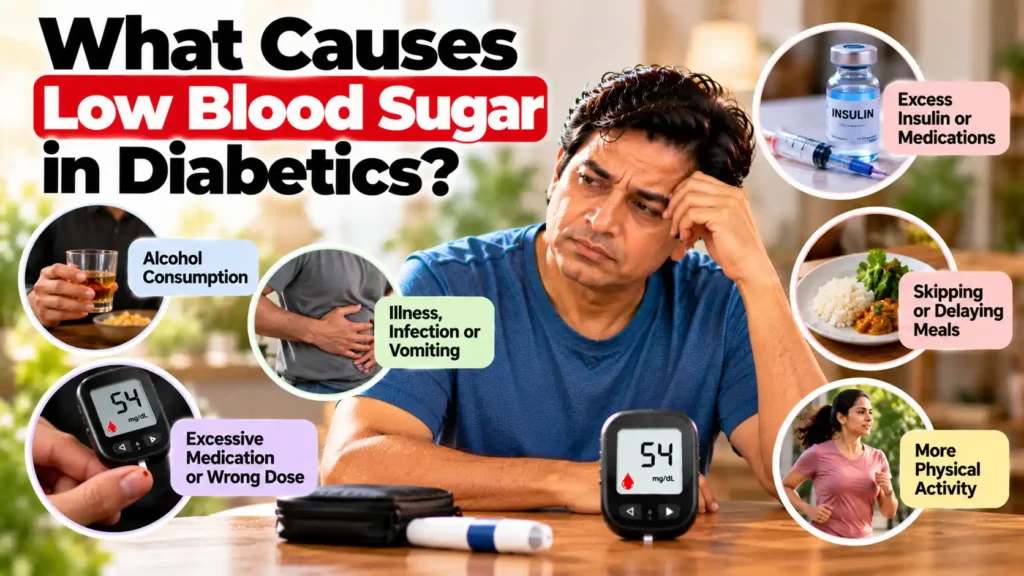
What Causes Low Blood Sugar in Diabetics?: People with diabetes often focus on controlling high blood sugar. However, low blood sugar, also known as hypoglycemia, can be dangerous and requires prompt attention.
Low blood sugar can occur when diabetes medication continues to lower glucose even though a person has eaten less than usual, skipped a meal or changed their eating routine. Certain medications, alcohol consumption and underlying health conditions can also contribute.
According to the American Diabetes Association, a blood glucose level below 70 mg/dL is considered low. Levels below 54 mg/dL are more serious and require immediate attention. American Diabetes Association
At Dr. Rajender’s Lifestyle Clinic, diabetes management involves appropriate medication use, nutrition and sustainable lifestyle changes to support long-term metabolic health.
What Are the Symptoms of Low Blood Sugar?
Recognising the early warning signs can help people respond before the condition becomes more serious.
Common symptoms include:
- Shaking or trembling hands.
- Excessive sweating.
- Anxiety, nervousness or restlessness.
- A fast or pounding heartbeat.
- Blurred vision or difficulty seeing clearly.
- Dizziness, weakness or confusion.
If blood sugar falls severely, the brain may not receive enough glucose to function normally. This can lead to seizures, loss of consciousness or other life-threatening complications.
Symptoms alone cannot confirm that blood sugar is low. If possible, check your glucose level when symptoms occur.
Why Does Blood Sugar Drop in Diabetic Patients?
1. Skipping Meals or Eating Less Food
One of the important causes discussed in the video is a mismatch between food intake and diabetes medication.
For example, a person may usually eat breakfast and take diabetes medication according to that routine. If they suddenly skip breakfast or eat much less than usual, their medication may lower blood sugar excessively.
Fasting for religious or other reasons can also require advance planning, particularly for people taking insulin or certain glucose-lowering medicines.
Do not change your food intake or medication schedule without discussing the change with your healthcare professional.
2. Taking Too Much Diabetes Medication
Insulin and certain diabetes tablets can cause hypoglycemia.
The transcript specifically mentions insulin and glimepiride as medicines associated with low blood sugar. A recent increase in medication dosage may also contribute if the dose no longer matches the person’s food intake or other needs.
If you experience repeated low readings, contact your doctor for a medication review. Do not independently halve your dose or stop all diabetes medicines.
3. Drinking Alcohol Without Eating Enough
Alcohol can interfere with the liver’s ability to release glucose into the bloodstream. The risk may be greater when someone drinks without eating enough food or takes medication that can cause hypoglycemia.
The transcript highlights excessive alcohol consumption at night as a possible reason for blood sugar dropping.
People with diabetes should discuss alcohol-related risks with their healthcare professional, especially if they have experienced previous low glucose episodes.
4. Kidney or Liver Problems
Kidney and liver conditions can affect glucose regulation and how the body handles certain medicines.
Some people with diabetes may develop kidney problems without obvious early symptoms. If blood sugar begins dropping repeatedly despite following the same meal and medication routine, an assessment may be needed.
Your doctor may review your medications and recommend kidney function tests or other investigations according to your symptoms and medical history.
5. Other Medical Conditions
The transcript also mentions pancreatic conditions and disorders involving glands such as the adrenal glands as possible causes of abnormal glucose regulation.
These are not the most common explanations for every episode of low blood sugar. Repeated or unexplained episodes should be evaluated rather than assuming that medication is always the cause.
Can Blood Sugar Drop While You Are Sleeping?
Yes. Low blood sugar can occur during the night, especially in people using insulin or certain glucose-lowering medicines.
Possible warning signs include:
- Disturbed sleep.
- Nightmares or unusual dreams.
- Sweating during sleep.
- Waking up feeling shaky, confused or unwell.
The video highlights nightmares and disturbed sleep as possible warning signs of nighttime hypoglycemia. However, these symptoms can have other causes, so they do not prove that blood sugar has dropped.
If you repeatedly experience these symptoms, check your glucose when possible and discuss the pattern with your healthcare professional.
What Should You Do When Blood Sugar Is Low?
Knowing how to respond can help prevent a low-glucose episode from becoming more serious.
Step 1: Check Your Blood Sugar
Use your glucometer if available. A reading below 70 mg/dL is considered low.
If you have symptoms and cannot check immediately, follow the emergency plan recommended by your healthcare professional rather than delaying necessary treatment.
Step 2: Take Fast-Acting Glucose if You Are Awake and Can Swallow
For an alert person who can swallow safely, the American Diabetes Association recommends the 15-15 rule: take 15 grams of fast-acting carbohydrate, wait 15 minutes and check blood sugar again. If it remains below 70 mg/dL, repeat the treatment.
Suitable options can include glucose tablets or gel according to their label, or an appropriate measured amount of sugar or regular juice. Read the ADA treatment guidance.
Once blood sugar has recovered, follow your healthcare professional’s advice about eating a snack or meal to help prevent another drop.
Step 3: Get Emergency Help for Severe Symptoms
If someone has a seizure, becomes unconscious or cannot swallow safely, do not put glucose, sugar, food or liquids into their mouth. This could cause choking.
Call emergency services. If prescribed glucagon is available and someone knows how to use it, they should follow the person’s emergency treatment plan.
Step 4: Find Out Why It Happened
Treating the immediate low is only the first step. Repeated episodes require a medical review to determine whether meals, medication, alcohol or another health condition is contributing.
Your doctor may need to adjust your treatment plan or investigate possible underlying causes.
How Can Diabetic Patients Prevent Low Blood Sugar?
The following habits can help reduce the risk of hypoglycemia:
- Eat meals according to your treatment plan and avoid unexpectedly skipping meals.
- Discuss fasting or major changes in food intake with your healthcare professional.
- Take insulin and other medicines exactly as prescribed.
- Keep glucose tablets or another suitable fast-acting carbohydrate available.
- Monitor glucose as advised, particularly if you have experienced previous low readings.
- Discuss repeated episodes, nighttime symptoms or changes in appetite with your doctor.
- Ask whether kidney function or other medical tests are needed if lows keep occurring.
People with diabetes should know both how to manage high blood sugar and how to recognise and treat low blood sugar safely.
Conclusion
What causes low blood sugar in diabetics? Common causes include missing meals, eating less than usual while taking the same medication, taking too much insulin or certain diabetes tablets, drinking alcohol without sufficient food and some underlying health conditions.
Shaking, sweating, a fast heartbeat, blurred vision and confusion can be warning signs. Severe hypoglycemia may cause seizures or loss of consciousness and requires emergency assistance.
Check blood sugar when possible, treat a low promptly and seek medical advice for repeated episodes. Never change your medication dosage independently.
Consult Dr. Rajender’s Lifestyle Clinic
Dr. Rajender’s Lifestyle Clinic, Banjara Hills, Hyderabad, offers personalized diabetes and lifestyle management.
Dr. Rajender Ramagiri, Founder & Lead Physician, holds MBBS, MEM and FCCS (USA) credentials. His approach combines medical guidance with nutrition and sustainable lifestyle changes to support long-term metabolic health.
Consult the clinic to discuss recurrent low blood sugar, medication reviews, meal planning and an individualized diabetes management routine.
Frequently Asked Questions
1. What blood sugar level is considered low?
A blood glucose reading below 70 mg/dL is considered low. A reading below 54 mg/dL indicates a more serious level of hypoglycemia.
2. What are the first signs of low blood sugar?
Early signs can include shaking, sweating, hunger, anxiety, a fast heartbeat, dizziness and blurred vision. Symptoms vary between individuals.
3. Can diabetes tablets cause low blood sugar?
Yes. Certain medicines, including sulfonylureas such as glimepiride, can cause hypoglycemia. Insulin can also cause low blood sugar.
4. Can skipping breakfast cause low blood sugar?
It can, particularly if you take insulin or medication that lowers blood sugar. Discuss meal changes with your healthcare professional instead of changing medication yourself.
5. Why does blood sugar drop at night?
Nighttime hypoglycemia can occur because of insulin or certain diabetes medicines. Repeated nighttime symptoms should be discussed with your healthcare professional.
6. Can kidney problems cause low blood sugar?
Kidney disease can affect glucose regulation and the handling of certain diabetes medicines. Repeated unexplained low readings may warrant kidney function testing and a medication review.
7. What should I do if blood sugar is low?
If you are awake and can swallow safely, use the recommended fast-acting carbohydrate treatment and recheck your glucose after 15 minutes. Severe symptoms such as unconsciousness or seizures require emergency help.
Read Also:


One Response