

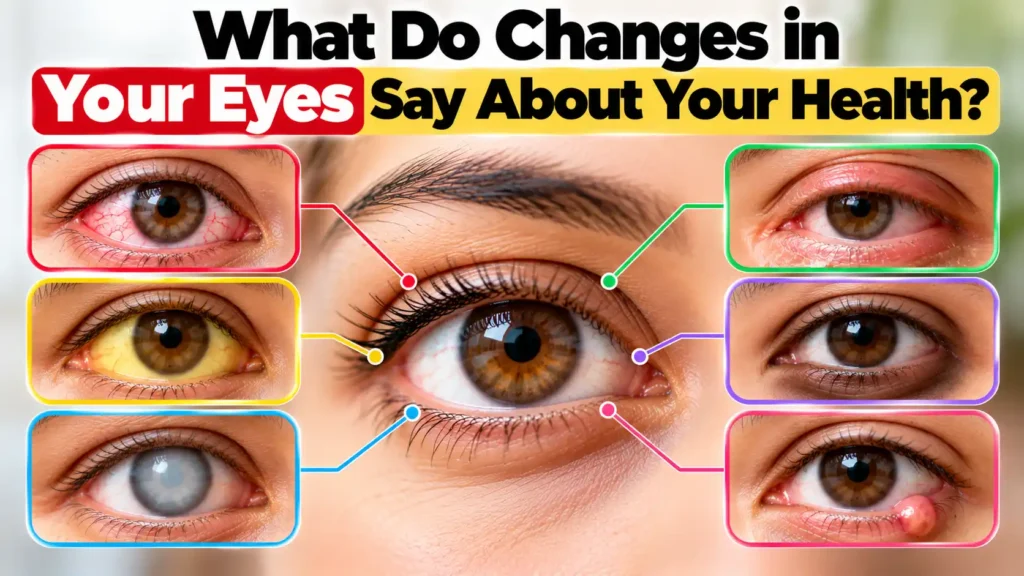
What Do Changes in Your Eyes Say About Your Health?
Your eyes do more than help you see the world. Changes in your vision, eye colour, appearance or comfort can sometimes provide clues about your health.
Some changes occur because of tiredness, screen use or minor irritation. Others may be associated with conditions affecting the eyes, blood sugar, thyroid gland, liver or nervous system.
However, eye symptoms alone cannot confirm a particular disease. An examination by a qualified healthcare professional is often needed to determine the cause.
Here are 12 eye changes you should understand and know when to seek medical advice.
1. What Causes Sudden Blurred Vision?
Blurred vision can occur for several reasons, including changes in blood glucose, refractive errors and eye conditions.
In people with diabetes, prolonged high blood sugar can damage the small blood vessels in the retina, leading to diabetic retinopathy. Early diabetic eye disease may not produce noticeable symptoms, which makes regular eye examinations important.
The National Institute of Diabetes and Digestive and Kidney Diseases explains that diabetic eye disease can cause blurred or wavy vision, dark areas and changes in how colours appear.
Important: Sudden blurred vision or sudden loss of vision requires urgent medical assessment. Do not assume that it is simply caused by tiredness or fluctuating blood sugar.
2. Why Do the Whites of Your Eyes Turn Yellow?
Yellowing of the whites of the eyes can be a sign of jaundice. It occurs when bilirubin, a yellow substance produced during the breakdown of red blood cells, accumulates in the body.
Possible causes include liver disease, hepatitis, bile duct problems and certain blood disorders.
Yellow eyes should not be ignored, particularly when accompanied by yellow skin, dark urine, pale stools or abdominal discomfort.
Seek urgent medical assessment if you notice unexplained yellowing of the whites of your eyes. The underlying cause needs to be identified before treatment can be chosen.
3. Why Does Your Eyelid Keep Twitching?
Eyelid twitching is common and usually temporary. It may be associated with:
- Lack of sleep or fatigue.
- Stress and anxiety.
- Excessive caffeine intake.
- Eye strain or irritation.
Occasional twitching does not automatically indicate a magnesium deficiency or a serious neurological disorder.
Rest, reducing excessive caffeine and taking breaks from screens may help. If twitching continues for several weeks, spreads to other parts of your face or occurs with weakness, eye redness or drooping eyelids, seek medical advice.
4. Why Are Your Eyes Dry or Watery?
Dry eyes can cause burning, irritation, redness or a sensation that something is inside the eye. Sometimes, dry eyes also produce excessive watering as a reflex response to irritation.
Possible contributing factors include prolonged screen use, environmental conditions, certain medications and problems affecting tear production.
Persistent dry eyes may sometimes occur alongside autoimmune conditions such as Sjögren’s syndrome.
Take regular breaks from screens and avoid direct airflow towards your eyes. If symptoms continue, an eye specialist can assess the cause and recommend suitable treatment.
5. What Does Tunnel Vision Mean?
Tunnel vision occurs when central vision remains relatively clear but peripheral vision becomes reduced.
One possible cause is glaucoma, a group of conditions that damage the optic nerve. Certain forms of glaucoma can progress without noticeable symptoms until significant damage has occurred.
Tunnel vision is not a symptom to ignore. Arrange prompt assessment by an eye specialist, especially if your field of vision has recently changed.
Regular eye examinations can help identify glaucoma before it causes substantial vision loss.
6. What Do Black Spots and Flashes of Light in Your Vision Mean?
Small floating spots, threads or cobweb-like shapes are called floaters. They can occur as the eye’s internal gel changes with age.
However, a sudden increase in floaters, flashes of light or a dark shadow moving across your vision can indicate a retinal tear or retinal detachment.
According to the National Eye Institute, retinal detachment is a medical emergency because delayed treatment can lead to permanent vision loss.
Seek immediate eye care if you suddenly notice many new floaters, flashes or a curtain-like shadow over your vision.
7. Why Are Your Eyes Bulging Outward?
Eyes that appear to protrude more than usual can sometimes be associated with thyroid eye disease, which is commonly linked to Graves’ disease.
Other symptoms can include dry or irritated eyes, puffiness around the eyelids, double vision, light sensitivity and a sensation of pressure around the eyes.
The National Eye Institute describes bulging eyes as one of the main symptoms of Graves’ eye disease.
New or worsening eye protrusion should be medically evaluated. Sudden changes in vision or severe eye pain require urgent attention.
8. What Does a Brown or Greenish Ring Around the Cornea Mean?
A brownish, golden or greenish-brown ring around the edge of the cornea can sometimes be a Kayser–Fleischer ring.
These rings are associated with copper accumulation in the body and can occur in Wilson’s disease, a rare inherited condition that affects the liver and other organs, including the nervous system.
Not every visible ring around the eye is a Kayser–Fleischer ring. A specialist examination is needed to identify its cause.
If a clinician suspects Wilson’s disease, further medical investigations may be required.
9. Why Are Your Eyes Constantly Red?
Red eyes can result from irritation, allergies, dry eyes or infections. Persistent redness can also occur with uveitis, an inflammatory condition affecting structures inside the eye.
Uveitis may cause redness, eye pain, blurred vision, watering and sensitivity to light.
If redness persists, returns repeatedly or is accompanied by pain or changes in vision, arrange an eye examination. Avoid assuming that every red eye is harmless or treating it with unprescribed eye drops.
10. What Does Severe Eye Pain With Rainbow Halos Mean?
Severe eye pain accompanied by blurred vision, redness, nausea or rainbow-coloured halos around lights can be a warning sign of acute angle-closure glaucoma.
This condition can cause a rapid increase in pressure inside the eye and damage the optic nerve.
The National Eye Institute’s glaucoma guidance advises immediate medical attention for symptoms such as intense eye pain, nausea, redness and blurred vision associated with angle-closure glaucoma.
This is an emergency. Seek immediate medical care rather than trying home remedies or waiting for the symptoms to disappear.
11. What Does a Change in Colour Vision Mean?
If colours suddenly look faded, less vivid or different from usual, the problem may involve the retina, optic nerve or other parts of the visual system.
Diabetic eye disease and certain optic nerve conditions can affect colour vision. Changes in colour perception can also have other causes.
Do not attribute new colour-vision problems to ageing alone. Seek medical assessment, particularly when the change is sudden or occurs alongside blurred vision or other neurological symptoms.
12. Why Do Your Eyes Become Sensitive to Light?
Light sensitivity, also known as photophobia, occurs when ordinary light causes discomfort or pain.
It can be associated with migraines, eye irritation, certain infections and inflammatory conditions such as uveitis. Prolonged screen use may also contribute to visual discomfort.
Reduce glare and take regular screen breaks if your symptoms are mild. However, significant light sensitivity accompanied by eye pain, redness or blurred vision needs prompt medical evaluation.
If severe headache, fever, neck stiffness or sudden vision loss occurs with light sensitivity, seek emergency medical care.
How Can You Protect Your Eye Health?
Simple habits can help maintain eye comfort and support overall health.
Follow the 20-20-20 Rule
When using a computer or mobile screen, take a break approximately every 20 minutes. Look at an object around 20 feet away for at least 20 seconds.
This habit may help reduce screen-related eye strain.
Eat a Balanced Diet
Include a variety of vegetables, fruits and other nutrient-rich foods in your daily meals. Dark leafy greens contain lutein and zeaxanthin, nutrients associated with eye health.
Carrots and other colourful vegetables can also contribute useful nutrients. However, food alone cannot treat conditions such as retinal detachment, glaucoma or diabetic retinopathy.
Maintain Good Eye Hygiene
Avoid rubbing your eyes unnecessarily and follow appropriate contact lens hygiene if you wear contact lenses.
Do not put homemade herbal preparations, Triphala water, ghee, oils or other non-prescribed substances into your eyes. These products are not substitutes for sterile, appropriate eye treatments and may cause irritation or infection.
Manage Diabetes and Other Health Conditions
High blood sugar and blood pressure can contribute to damage affecting the eyes. Follow your prescribed treatment plan and attend recommended eye examinations.
People with diabetes may develop eye disease before noticing any changes in their vision, so screening remains important even when eyesight seems normal.
Conclusion
What do changes in your eyes say about your health? Blurred vision, yellow eyes, persistent redness, dark spots, tunnel vision, bulging eyes and changes in colour perception can have different causes.
Some changes are minor, while others may indicate conditions that need urgent medical attention. Sudden vision loss, new flashes and floaters, severe eye pain or a painful red eye should never be ignored.
Maintain healthy daily habits, manage underlying medical conditions and arrange appropriate eye examinations. Most importantly, do not rely on eye symptoms or home remedies alone to diagnose or treat a serious health problem.
Consult Dr. Rajender’s Lifestyle Clinic
Dr. Rajender’s Lifestyle Clinic, Banjara Hills, Hyderabad, offers personalised diabetes and lifestyle management.
Dr. Rajender Ramagiri, Founder & Lead Physician, holds MBBS, MEM and FCCS (USA) credentials. His approach combines medical guidance with nutrition and sustainable lifestyle changes to support long-term metabolic health.
For diabetes-related eye concerns, consult your healthcare team and an eye specialist for appropriate assessment and screening.
Frequently Asked Questions
1. Can your eyes show signs of diabetes?
Yes. Diabetes can damage the blood vessels in the retina, causing diabetic retinopathy. Early stages may not cause noticeable symptoms, which is why regular diabetic eye examinations are important.
2. Why do the whites of the eyes turn yellow?
Yellowing can indicate jaundice, which may occur when bilirubin builds up due to liver disease, bile duct problems or certain blood conditions. Seek urgent medical assessment.
3. Are eye floaters dangerous?
Some floaters are common, especially with ageing. A sudden increase in floaters, flashes of light or a curtain-like shadow over vision can indicate retinal detachment and requires immediate eye care.
4. Does frequent eyelid twitching mean a serious disease?
Usually not. Common causes include fatigue, stress and excessive caffeine. Persistent twitching or twitching accompanied by weakness, facial spasms or drooping eyelids should be evaluated.
5. Can bulging eyes be caused by thyroid problems?
Yes. Thyroid eye disease, often associated with Graves’ disease, can cause bulging eyes, dryness, puffiness and double vision. Medical assessment is important.
6. What should I do if I have severe eye pain and blurred vision?
Seek emergency medical care, especially if you also have a red eye, nausea or rainbow halos around lights. These symptoms can indicate acute angle-closure glaucoma.
7. Can home remedies improve eye health?
Healthy eating, screen breaks and suitable hygiene can support eye comfort. However, homemade liquids, oils and herbal mixtures should not be put into the eyes, and serious symptoms require professional assessment.
Read Also:


One Response