
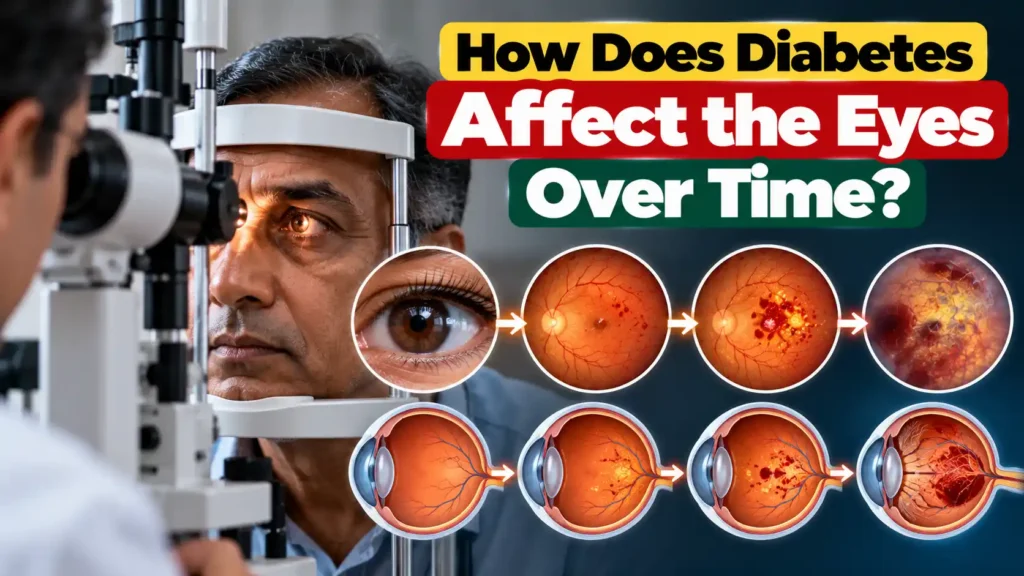
How Does Diabetes Affect the Eyes Over Time?: Diabetes can affect several parts of the body, including the eyes. When blood glucose remains elevated over time, it can damage the small blood vessels and other structures that help maintain healthy vision.
Some diabetes-related eye problems develop gradually without noticeable symptoms. Others can cause sudden changes in vision that require urgent medical attention.
The good news is that regular eye examinations and appropriate diabetes management can help reduce the risk of vision loss. People with diabetes should not wait until their eyesight becomes blurry before arranging recommended eye screening.
1. Diabetic Retinopathy
Diabetic retinopathy is an eye condition caused by damage to the small blood vessels in the retina. The retina is the light-sensitive tissue at the back of the eye that helps you see.
Over time, damaged blood vessels may leak fluid or blood. In more advanced disease, abnormal blood vessels can develop and cause serious complications.
Possible symptoms in later stages include:
- Blurred or fluctuating vision.
- Dark spots or floaters.
- Areas of missing vision.
- Difficulty seeing clearly.
Early diabetic retinopathy may cause no symptoms at all. This is why routine screening is essential.
2. Diabetic Macular Oedema
The macula is the central part of the retina responsible for detailed vision, such as reading and recognising faces.
Diabetes can cause fluid to accumulate in this area, leading to diabetic macular oedema. This may cause blurred or distorted central vision.
Eye specialists can detect the condition during an examination and recommend appropriate treatment when necessary.
3. Cataracts
A cataract occurs when the natural lens inside the eye becomes cloudy. People with diabetes may develop cataracts earlier or have a higher risk of developing them than people without diabetes.
Symptoms may include cloudy vision, glare, difficulty seeing at night, and frequent changes in glasses prescription.
An eye examination can determine whether a cataract is present and whether treatment is needed.
4. Glaucoma
Glaucoma refers to a group of eye conditions that damage the optic nerve. Some forms are associated with increased pressure inside the eye.
People with diabetes may have an increased risk of certain types of glaucoma. Early glaucoma often causes no obvious symptoms, so regular eye care is important.
Why Can Vision Become Blurry When Blood Sugar Changes?
Blood glucose fluctuations can temporarily affect the fluid balance in the eye’s lens, causing vision to become blurry.
However, blurry vision should not automatically be attributed to changing glucose levels. It can also indicate a more serious eye condition.
If your vision changes suddenly, seek prompt medical assessment. Sudden loss of vision, a sudden increase in floaters, flashes of light, or a curtain-like shadow across your vision requires urgent eye care.
How Often Should People With Diabetes Have Eye Examinations?
The recommended schedule depends on diabetes type, pregnancy status, previous eye findings, and individual risk.
As general guidance:
- Type 2 diabetes: A comprehensive dilated eye examination is generally recommended at the time of diagnosis.
- Type 1 diabetes: The first comprehensive eye examination is generally recommended within five years of onset.
- Ongoing screening: Many people need an examination every year, although an eye specialist may recommend a different interval based on findings.
- Pregnancy: People with pre-existing diabetes who are pregnant or planning pregnancy should discuss eye screening and follow-up with their healthcare team.
A retinal photograph may be used as part of a screening programme, but an abnormal or unclear result may require a comprehensive examination.
How Can You Protect Your Vision?
Practical steps include:
- Manage blood glucose according to your treatment plan.
- Keep blood pressure and cholesterol within individually recommended targets.
- Attend regular dilated eye examinations.
- Avoid tobacco.
- Seek prompt care for new or sudden visual symptoms.
- Follow an eye specialist’s recommendations if retinopathy or another eye condition is detected.
Lifestyle changes are important, but they do not replace eye examinations or treatments prescribed by an ophthalmologist.
Frequently Asked Questions
1. Can diabetes cause blindness?
Advanced diabetic retinopathy and other diabetes-related eye conditions can cause serious vision loss. Regular screening and timely treatment can reduce this risk.
2. Can diabetic retinopathy occur without symptoms?
Yes. Early diabetic retinopathy often causes no noticeable symptoms, which is why routine eye examinations matter.
3. Can blurry vision from diabetes improve?
Temporary blurriness related to glucose fluctuations may improve when glucose levels stabilise. However, persistent or sudden changes need medical assessment to identify the cause.
4. Does controlling blood sugar protect the eyes?
Good glucose management can reduce the risk of diabetic eye disease and slow its progression. Blood pressure management and regular screening are also important.
5. Should people with diabetes see an eye specialist every year?
Many people need annual screening, but the recommended frequency can vary. Follow the schedule advised by your eye specialist.
Conclusion
Diabetes can affect vision through diabetic retinopathy, macular oedema, cataracts, and glaucoma. Some of these conditions develop silently, making regular eye examinations essential even when eyesight seems normal.
For comprehensive diabetes management and guidance on preventing complications, consult Dr. Rajender’s Lifestyle Clinic, Banjara Hills, Hyderabad. Coordinate your diabetes care with regular examinations by a qualified eye specialist.
Read Also:

2 Responses