
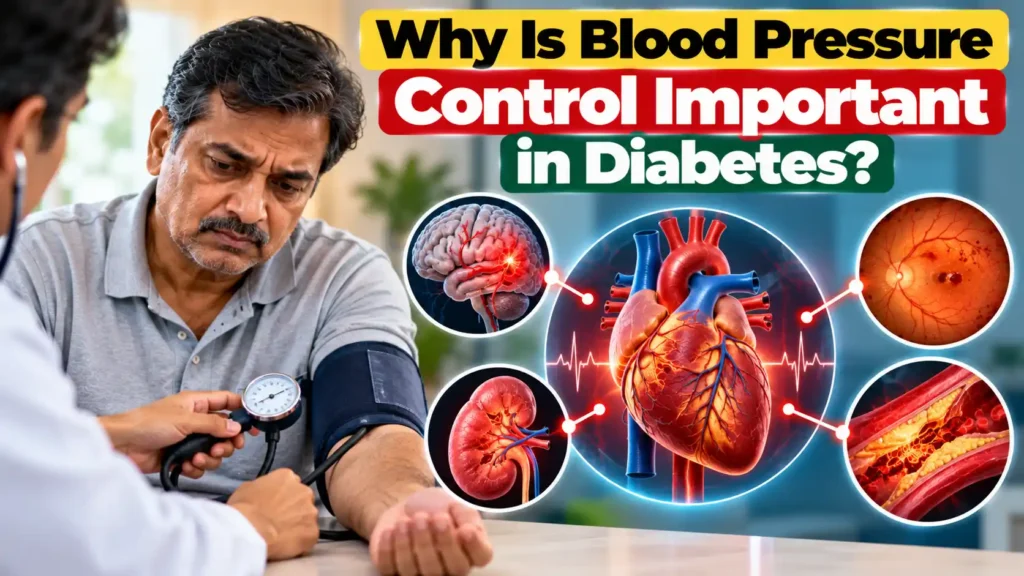
Why Is Blood Pressure Control Important in Diabetes?: Diabetes and high blood pressure frequently occur together. Both conditions can damage blood vessels, and having them together increases the risk of heart disease, stroke, kidney disease, and other complications.
High blood pressure often has no noticeable symptoms. A person may feel completely well while blood pressure remains above their recommended target.
Controlling blood pressure is an essential part of diabetes care because it helps protect the heart, kidneys, eyes, and blood vessels.
How Does High Blood Pressure Affect People With Diabetes?
1. It Increases Cardiovascular Risk
Diabetes can increase cardiovascular risk, and high blood pressure places additional stress on the blood vessels and heart.
Over time, this combination can contribute to heart attacks, strokes, and other vascular problems. Managing both conditions helps address multiple risk factors rather than focusing only on glucose.
2. It Can Damage the Kidneys
The kidneys contain delicate blood vessels that help filter waste from the blood. High blood pressure can damage these structures and contribute to declining kidney function.
Diabetes and hypertension together can increase the risk of chronic kidney disease.
3. It Can Affect Eye Health
High blood pressure can contribute to damage in the small blood vessels of the retina. When diabetes is also present, protecting these vessels becomes particularly important.
Regular eye examinations and management of both glucose and blood pressure are important.
4. It Can Increase the Risk of Stroke
High blood pressure is a major risk factor for stroke. Managing blood pressure, cholesterol, blood glucose, and tobacco exposure can help reduce overall cardiovascular risk.
What Is the Ideal Blood Pressure for Someone With Diabetes?
Blood pressure targets should be individualised.
For many adults with diabetes, clinicians may aim for a blood pressure below 130/80 mmHg when it can be achieved safely. However, the appropriate target depends on factors such as age, cardiovascular risk, kidney function, side effects, and the risk of dizziness or falls.
Do not change medication or assume that one target is appropriate for everyone. Your healthcare professional can help determine a suitable goal.
How Can You Monitor Blood Pressure at Home?
Home monitoring can help identify patterns and provide useful information for medical appointments.
For more reliable readings:
- Use a validated upper-arm blood pressure monitor with the correct cuff size.
- Avoid smoking, caffeine, and exercise for about 30 minutes before measuring.
- Empty your bladder and sit quietly for five minutes.
- Keep your back supported, feet flat on the floor, and arm supported at heart level.
- Take two readings about one minute apart, if advised, and record the results.
- Share your readings with your healthcare professional.
One high reading does not always mean you have persistent hypertension. Repeated measurements and clinical assessment help determine the next steps.
Lifestyle Steps That Support Blood Pressure Control
1. Reduce Excess Sodium
Pickles, papad, salty snacks, packaged foods, and some restaurant dishes can contain substantial sodium. Reducing excess salt can help many people manage blood pressure.
Use herbs, spices, lemon, and other flavourings to add taste without relying entirely on salt.
2. Eat a Balanced Diet
Include a variety of vegetables, fruit in appropriate portions, whole grains, and suitable protein sources. The exact diet may need adjustment if you have kidney disease or other conditions requiring dietary restrictions.
3. Be Physically Active
Regular activity can help support blood pressure, glucose management, and cardiovascular health. Choose activities appropriate for your health and increase activity gradually if you have been inactive.
4. Manage Weight When Appropriate
For people with excess weight, sustained weight loss may help lower blood pressure. Weight goals should be realistic and based on individual medical needs.
5. Limit Alcohol and Avoid Tobacco
Avoiding tobacco is important for cardiovascular health. If you drink alcohol, discuss its risks and any medication interactions with your healthcare professional.
6. Take Medication as Prescribed
Many people require medication to control blood pressure. Do not stop treatment when readings improve unless your clinician advises a change.
When Is High Blood Pressure an Emergency?
Very high blood pressure accompanied by symptoms such as chest pain, shortness of breath, severe headache, confusion, sudden weakness, or changes in vision requires emergency medical assessment.
If your reading is around 180/120 mmHg or higher, repeat it after a brief rest if you can do so safely. If it remains that high, seek urgent medical advice; if concerning symptoms are present, call emergency services immediately.
Frequently Asked Questions
1. Can diabetes cause high blood pressure?
Diabetes and high blood pressure share several risk factors and often occur together. Kidney disease, insulin resistance, genetics, and other factors may contribute.
2. Can blood pressure be controlled without medication?
Some people improve their blood pressure through lifestyle changes, but others need medication. Never delay or stop prescribed treatment without medical advice.
3. Does high blood pressure cause symptoms?
Often, no. Many people with hypertension feel well, so regular measurement is important.
4. Should people with diabetes check blood pressure at home?
Home monitoring may be helpful, particularly for people with diagnosed hypertension or treatment changes. Ask your healthcare professional how often to measure it.
5. Why are kidney tests important when diabetes and hypertension occur together?
Both conditions can affect kidney function. Urine albumin and eGFR tests can help identify kidney damage and guide treatment.
Conclusion
Blood pressure control is a major part of diabetes management. It helps reduce the risk of heart disease, stroke, kidney damage, and eye complications. Regular monitoring, a balanced diet, physical activity, and appropriate medication can all contribute to safer blood pressure levels.
If you have diabetes and high blood pressure, Dr. Rajender’s Lifestyle Clinic, Banjara Hills, Hyderabad, offers evidence-based medical and lifestyle guidance to support your overall metabolic and cardiovascular health.
Read Also:

One Response