
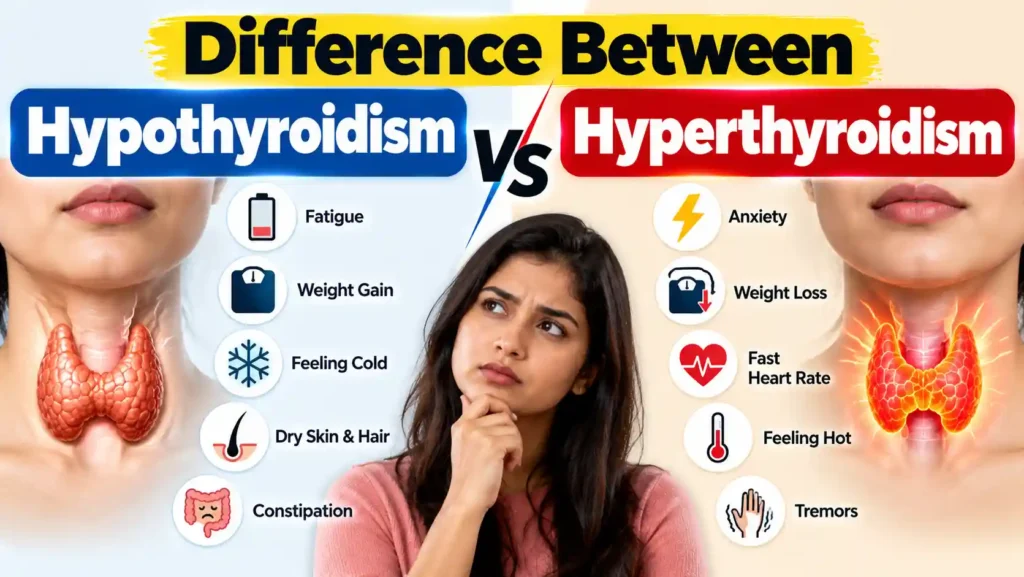
Difference Between Hypothyroidism and Hyperthyroidism: The thyroid gland plays an important role in regulating metabolism, body temperature, heart rate, digestion, and energy use. When thyroid hormone production becomes abnormal, it can affect many body systems.
Two common thyroid disorders are hypothyroidism and hyperthyroidism. Although their names sound similar, they generally involve opposite patterns of thyroid hormone activity.
Hypothyroidism occurs when the body has insufficient thyroid hormone, while hyperthyroidism occurs when the body has excessive thyroid hormone activity. Both can cause significant symptoms and require appropriate medical assessment.
Understanding the differences can help you recognise potential warning signs and know when to seek thyroid testing.
What Is Hypothyroidism?
Hypothyroidism, also known as an underactive thyroid, occurs when the thyroid gland does not produce enough thyroid hormone.
Thyroid hormones help regulate how the body uses energy. When their levels are insufficient, several processes can slow down.
Common causes include:
- Hashimoto’s thyroiditis, an autoimmune condition.
- Previous thyroid surgery or radioactive iodine treatment.
- Certain medications.
- Some forms of thyroid inflammation.
- Inadequate iodine intake in settings where iodine deficiency occurs.
Common symptoms of hypothyroidism
Symptoms may include:
- Fatigue and low energy.
- Increased sensitivity to cold.
- Constipation.
- Dry skin and hair thinning.
- Weight gain or difficulty managing weight.
- Muscle aches or weakness.
- Low mood or difficulty concentrating.
- Heavier or irregular menstrual periods.
These symptoms can occur in other conditions, so testing is needed to establish the cause.
What Is Hyperthyroidism?
Hyperthyroidism occurs when the thyroid gland produces too much thyroid hormone. This can cause many body functions to become overactive.
Common causes include:
- Graves’ disease, an autoimmune condition.
- Overactive thyroid nodules.
- Some forms of thyroid inflammation that release stored hormone.
- Excess thyroid hormone medication.
Thyroiditis can produce a temporary period of high thyroid hormone levels without the gland necessarily making more hormone. This distinction can affect treatment.
Common symptoms of hyperthyroidism
Symptoms may include:
- A rapid or irregular heartbeat.
- Anxiety, irritability, or restlessness.
- Increased sweating and heat intolerance.
- Trembling hands.
- Unintended weight loss despite normal or increased appetite.
- Frequent bowel movements.
- Difficulty sleeping.
- Muscle weakness.
- Changes in menstrual patterns.
Some people develop a visible enlargement of the thyroid gland, known as a goitre. Eye symptoms can occur in Graves’ disease.
Hypothyroidism vs Hyperthyroidism: Key Differences
| Feature | Hypothyroidism | Hyperthyroidism |
|---|---|---|
| Thyroid activity | Usually too little hormone production | Excess thyroid hormone activity |
| Energy | Fatigue or sluggishness | Restlessness or feeling unusually energetic |
| Weight pattern | Possible weight gain | Possible unintended weight loss |
| Temperature sensitivity | Often feels cold | Often feels hot |
| Heart rate | May be slower | May be faster or irregular |
| Bowel habits | Constipation may occur | More frequent bowel movements may occur |
| Skin | Often dry | May feel warm or moist |
| Sleep | May feel sleepy or tired | Insomnia or difficulty sleeping may occur |
| Common blood test pattern | High TSH and low free T4 in primary overt disease | Low TSH and high free T4 and/or T3 in typical overt disease |
| Common treatment | Thyroid hormone replacement | Depends on cause; may include antithyroid medicines, radioactive iodine, or surgery |
These are common patterns, not rules that apply to every person. Thyroid test interpretation depends on the clinical situation, medications, pregnancy, and the specific thyroid disorder.
How Are Thyroid Disorders Diagnosed?
TSH testing
TSH is often the first blood test used to assess thyroid function.
In primary hypothyroidism, TSH is commonly elevated because the pituitary gland is trying to stimulate the thyroid. In typical overt hyperthyroidism, TSH is suppressed because thyroid hormone levels are excessive.
Free T4 and T3 testing
Free T4 helps determine the amount of circulating unbound thyroxine. T3 testing can be particularly helpful when hyperthyroidism is suspected and T4 is not elevated.
Additional tests when needed
Thyroid antibody testing may help identify autoimmune causes. Ultrasound or other investigations may be recommended if there is a thyroid nodule, goitre, or another specific concern.
A single symptom or laboratory value should not be used in isolation to diagnose a thyroid disorder.
Can Both Conditions Affect Weight and Metabolism?
Yes, but in different ways.
Hypothyroidism may reduce energy expenditure and contribute to modest weight gain, some of which can be related to fluid retention. Hyperthyroidism can increase energy expenditure and lead to weight loss, sometimes accompanied by muscle loss.
However, body weight is influenced by appetite, diet, physical activity, sleep, medicines, and other health conditions. Thyroid disease is not the only possible explanation for a weight change.
Why Is Treatment Different?
Treatment for hypothyroidism
Levothyroxine is commonly prescribed to replace the thyroid hormone the body is not producing adequately. The dose is adjusted using thyroid tests and individual clinical factors.
Treatment for hyperthyroidism
Treatment depends on the underlying cause and may include antithyroid medication, radioactive iodine, or surgery. Beta-blockers may sometimes be used to control symptoms such as palpitations and tremors while the cause is being treated.
Do not start, stop, or adjust thyroid medication without medical advice. Treatments suitable for one thyroid disorder may be inappropriate for the other.
When Should You Seek Medical Advice?
Arrange an assessment if you have persistent fatigue, unexplained weight changes, unusual sensitivity to heat or cold, tremors, or changes in your heart rate.
Seek urgent medical care for chest pain, fainting, severe shortness of breath, or a very rapid or irregular heartbeat accompanied by significant symptoms.
Frequently Asked Questions
1. Can hypothyroidism turn into hyperthyroidism?
A person’s thyroid condition can change in certain circumstances, such as during some forms of thyroiditis or after treatment. However, hypothyroidism does not routinely turn into hyperthyroidism.
2. Which is more serious: hypothyroidism or hyperthyroidism?
Both can be serious if untreated. The risks depend on severity, duration, age, pregnancy status, heart health, and the underlying cause.
3. Can thyroid disease cause hair loss?
Yes. Both hypothyroidism and hyperthyroidism can contribute to hair thinning or shedding, although many other causes are possible.
4. Can I have a thyroid problem with mild symptoms?
Yes. Some people have few symptoms, particularly in the early stages. Blood testing may identify a thyroid abnormality before symptoms become obvious.
5. Do thyroid disorders require lifelong treatment?
Some do, particularly permanent hypothyroidism. Other thyroid conditions may be temporary or managed differently depending on the cause. Your clinician can explain the likely course of your condition.
Conclusion
Hypothyroidism and hyperthyroidism affect the body differently because they involve different patterns of thyroid hormone activity. Hypothyroidism commonly causes fatigue and cold intolerance, while hyperthyroidism may cause palpitations, heat intolerance, and unintended weight loss.
Symptoms alone cannot establish the diagnosis. Thyroid blood tests and clinical assessment help determine the cause and guide appropriate treatment.
Looking for thyroid care in Hyderabad?
Dr. Rajender’s Lifestyle Clinic in Banjara Hills, Hyderabad, provides medical guidance for thyroid disorders and related metabolic concerns. Schedule a consultation to discuss your symptoms, thyroid test results, and individual care needs.
Read Also:
