
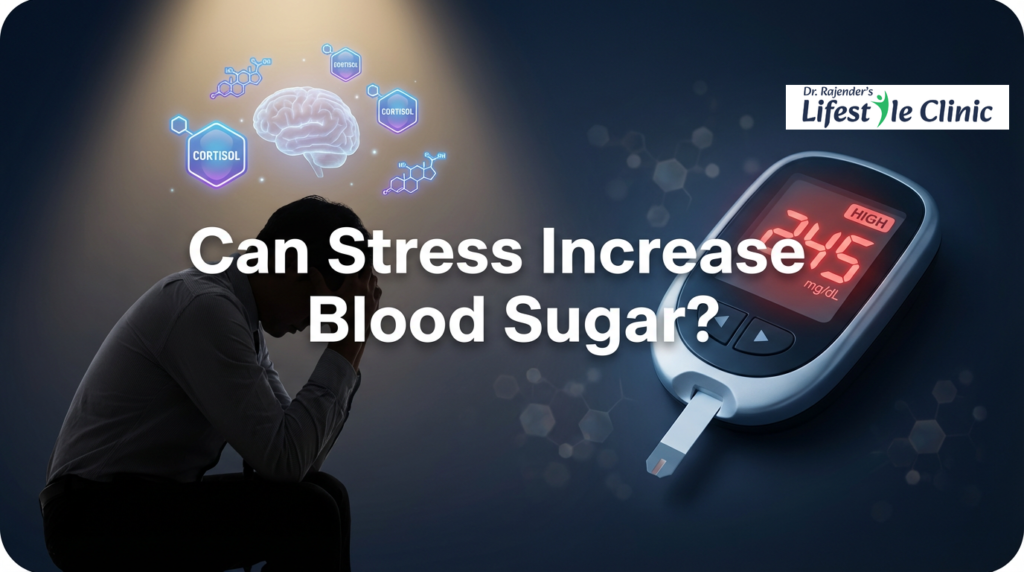
Simple Guide to Stress, Hormones, and Diabetes Control
By Dr. Rajender’s Lifestyle Clinic – Diabetes Reversal & Metabolic Health Experts
Introduction
Many people ask an important question: Can stress increase blood sugar?
The answer is yes. Stress is one of the hidden causes of high blood sugar, insulin resistance, and diabetes complications. At Dr. Rajender’s Lifestyle Clinic, we always treat stress along with diet and exercise because stress and blood sugar are strongly connected.
If your sugar levels are high even when your diet is good, stress may be the reason.
Let’s understand in simple words.
How Stress and Blood Sugar Are Connected
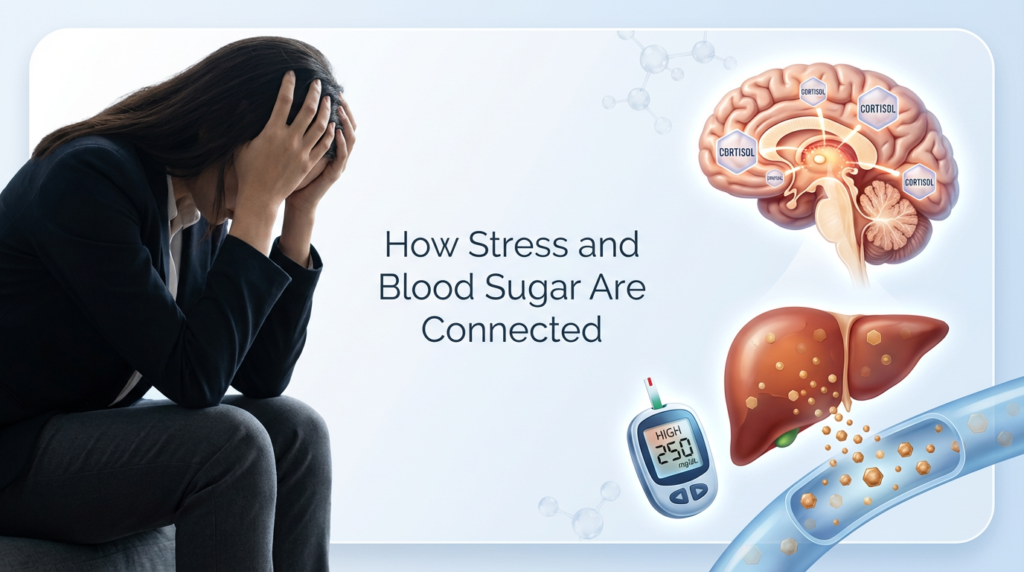
When you are stressed, your body releases stress hormones like cortisol and adrenaline.
These hormones tell your liver to release glucose into the blood. This was useful in ancient times during danger. But today, constant mental stress keeps sugar levels high.
So yes, stress can increase blood sugar.
Why Can Stress Increase Blood Sugar?
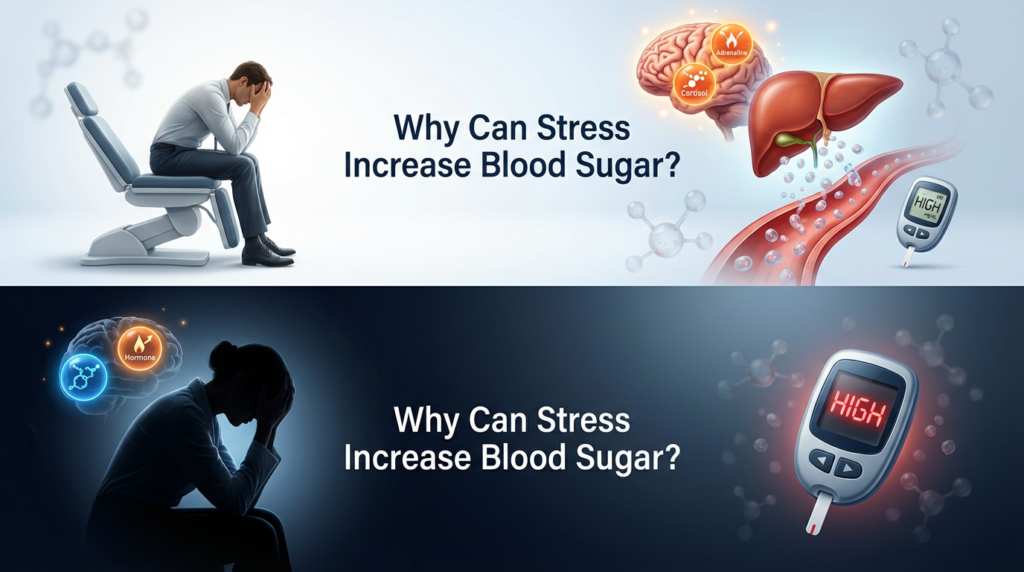
There are four main reasons.
1. Stress Hormones Raise Blood Sugar
Cortisol and adrenaline increase glucose production in the liver.
Result:
• High fasting sugar
• High post-meal sugar
• Higher HbA1c
This is the main reason stress increases blood sugar.
2. Stress Causes Insulin Resistance
When stress is high, body cells stop responding to insulin.
This is called insulin resistance.
So sugar stays in blood instead of entering cells.
This shows how stress and diabetes are connected.
3. Stress Causes Emotional Eating
When people are stressed, they eat more sweets, snacks, junk food, or rice.
This increases weight and sugar levels.
So stress increases blood sugar through diet habits.
4. Stress Reduces Physical Activity
Stressed people sleep late, skip exercise, and feel tired.
Less muscle activity means less glucose burning.
This also increases blood sugar.
Common Signs Stress Is Raising Your Sugar
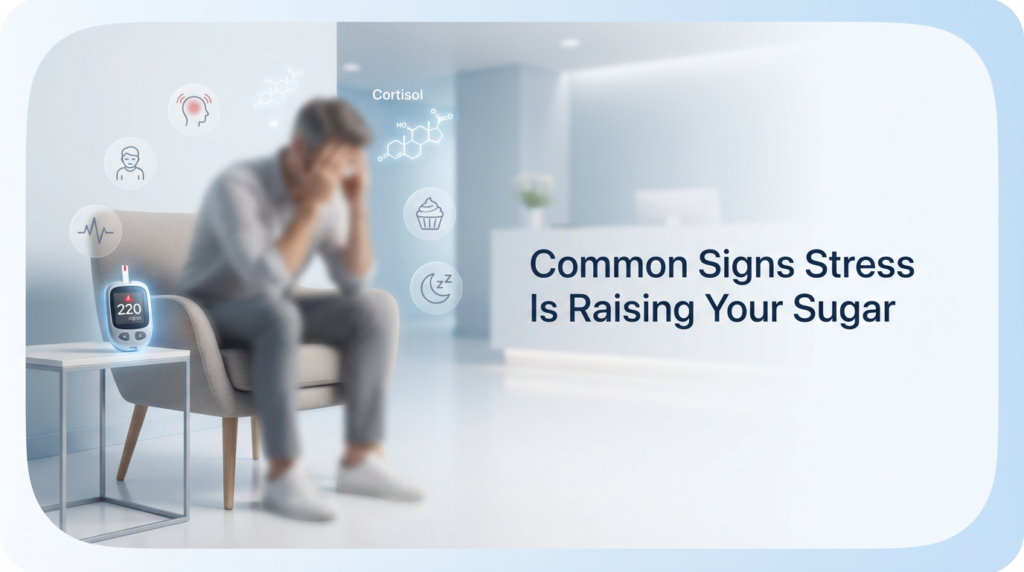
If you see these signs, stress may be increasing your blood sugar.
• High fasting sugar
• Sudden sugar spikes
• Sugar cravings
• Poor sleep
• Headache or anxiety
• Belly fat
• Tiredness
Many patients at Dr. Rajender’s Lifestyle Clinic see sugar improvement after stress control.
Types of Stress That Increase Blood Sugar

1. Emotional Stress
Work pressure, family problems, financial worries.
2. Physical Stress
Infection, injury, surgery.
3. Mental Stress
Overthinking, anxiety, depression.
4. Lifestyle Stress
Poor sleep, late nights, irregular meals.
All these can increase blood sugar.
Stress and Prediabetes
Stress can worsen prediabetes and turn it into Type 2 diabetes.
People under constant stress have higher insulin resistance.
So stress control helps prevent diabetes.
Table: Stress vs Blood Sugar
| Stress Factor | Effect on Sugar |
|---|---|
| High cortisol | High fasting sugar |
| Poor sleep | Insulin resistance |
| Emotional eating | Weight gain |
| No exercise | Sugar spike |
| Anxiety | Hormonal imbalance |
How to Reduce Stress and Control Blood Sugar
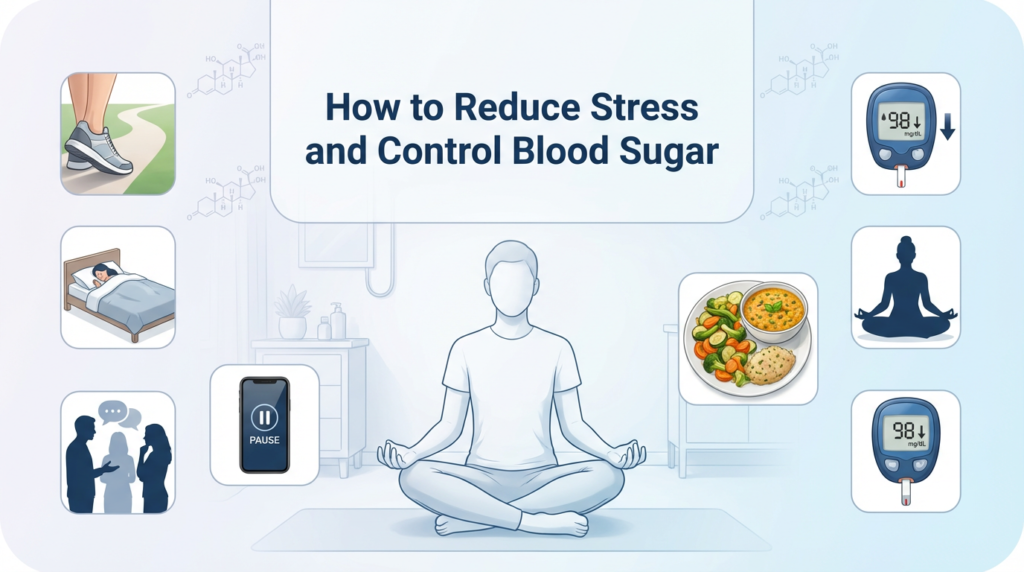
At Dr. Rajender’s Lifestyle Clinic, we teach simple stress-control methods.
1. Deep Breathing
10 minutes breathing reduces cortisol.
Try slow breathing morning and night.
2. Daily Walking
Walking lowers stress hormones and improves insulin sensitivity.
15–30 minutes daily is enough.
3. Good Sleep
Sleep 7–8 hours.
Poor sleep increases stress and blood sugar.
4. Talk and Share Problems
Talking to family or counselor reduces stress.
Mental health is important in diabetes control.
5. Limit News and Mobile Use
Too much screen time increases anxiety.
Take digital breaks.
6. Healthy Diet
Eat vegetables, dal, nuts, seeds, and small grain portions.
Avoid sugary drinks and junk food.
Good diet reduces stress and blood sugar.
7. Meditation and Prayer
Meditation reduces cortisol and improves sugar control.
Even 10 minutes daily helps.
Can Stress Increase Blood Sugar Suddenly?
Yes.
Stress can cause sudden sugar spikes even without eating.
Many people see high readings after anger, fear, or tension.
Does Long-Term Stress Cause Diabetes?
Yes.
Long-term stress increases insulin resistance, belly fat, and high sugar levels.
This can lead to Type 2 diabetes.
How Fast Does Stress Affect Blood Sugar?
Stress hormones can increase sugar within minutes.
This is why people see sudden spikes during tension.
Can Stress Affect Fasting Sugar?
Yes.
Stress hormones increase liver glucose release at night.
So fasting sugar becomes high.
Simplified Version for Patients
👉 Stress increases blood sugar
👉 Stress hormones raise fasting sugar
👉 Stress causes cravings
👉 Stress increases belly fat
👉 Stress worsens diabetes
Control stress to control sugar.
FAQ – Can Stress Increase Blood Sugar?
1. Can stress raise blood sugar without eating?
Yes. Stress hormones release glucose from the liver.
2. Does anxiety increase blood sugar?
Yes. Anxiety increases cortisol and insulin resistance.
3. Can stress cause diabetes?
Long-term stress increases risk of Type 2 diabetes.
4. How to reduce stress for diabetes?
Sleep well, walk daily, meditate, eat healthy food.
5. Why is my sugar high when I am worried?
Stress hormones increase glucose release.
6. Can meditation lower blood sugar?
Yes. Meditation reduces cortisol.
7. Does anger increase blood sugar?
Yes. Emotional stress raises sugar suddenly.
8. Can stress increase fasting sugar?
Yes. Stress hormones act overnight.
9. Can stress stop diabetes reversal?
Yes. Stress increases insulin resistance.
10. How to check if stress affects sugar?
Monitor sugar during stressful days.
Conclusion
Now you know the answer to can stress increase blood sugar — and the answer is yes.
Stress raises cortisol, causes insulin resistance, increases cravings, and worsens diabetes.
At Dr. Rajender’s Lifestyle Clinic, we treat diabetes by correcting stress, sleep, diet, and exercise together.
Start today:
✔ Sleep on time
✔ Walk daily
✔ Reduce stress
✔ Eat healthy
Small changes bring big sugar improvement.