
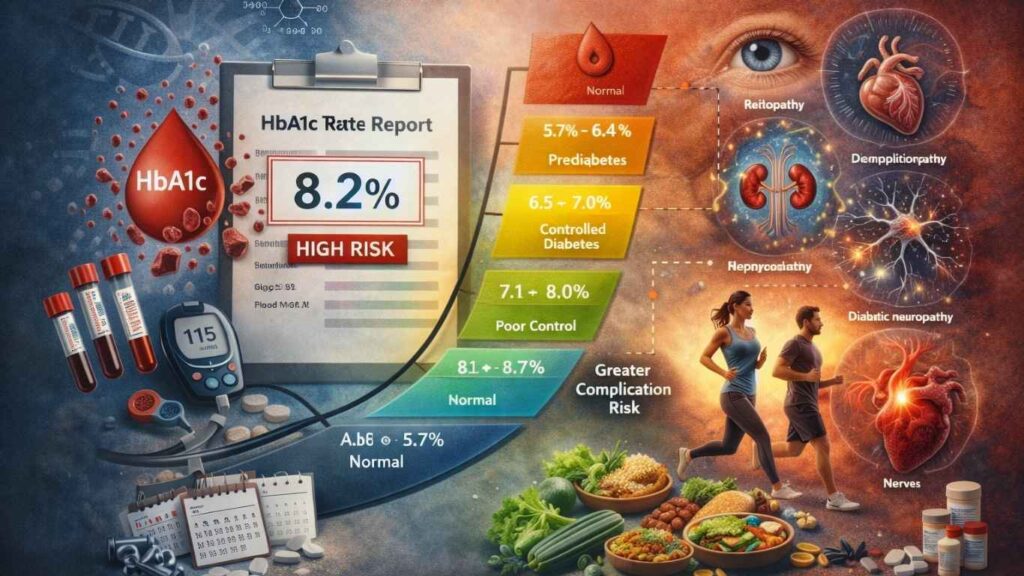
Many people with diabetes check their fasting and post-meal blood sugar regularly—but when the doctor talks about HbA1c, confusion often follows. Patients commonly ask, “My sugar was normal this week, then why is my HbA1c still high?”
HbA1c is one of the most important indicators of long-term blood sugar control. Understanding this report helps patients track progress accurately and make informed lifestyle decisions instead of reacting to single sugar readings.
What Is HbA1c?
HbA1c (Glycated Hemoglobin) measures:
- The average blood sugar level over the past 2–3 months
- The percentage of hemoglobin coated with glucose
Since red blood cells live about 90–120 days, HbA1c reflects long-term sugar behavior, not daily fluctuations.
HbA1c is not about today’s sugar—it reflects your average blood sugar over the last 2–3 months.
That’s why occasional normal readings don’t always mean long-term control.
Why HbA1c Is More Important Than Daily Sugar Readings
Daily sugar readings can vary due to:
- Stress
- Sleep
- Food intake
- Physical activity
HbA1c shows the overall trend, helping doctors assess:
- Treatment effectiveness
- Risk of complications
- Need for medication adjustment
This makes HbA1c the gold standard for diabetes monitoring.
HbA1c Value Ranges Explained
| HbA1c Level | Meaning |
|---|---|
| Below 5.7% | Normal |
| 5.7% – 6.4% | Prediabetes |
| 6.5% – 7.0% | Controlled Diabetes |
| 7.1% – 8.0% | Poor Control |
| Above 8.0% | High Risk |
Why HbA1c Can Be High Even When Sugar Seems Normal
Many patients get confused when recent readings look good.
Possible reasons:
- High sugars earlier in the past 2–3 months
- Frequent post-meal spikes
- Night-time sugar elevation
- Inconsistent lifestyle habits
Short-term improvements take time to reflect in HbA1c results.
How HbA1c Relates to Diabetes Complications
Higher HbA1c levels increase the risk of:
- Eye damage
- Kidney disease
- Nerve pain
- Heart disease
Every 1% reduction in HbA1c significantly lowers complication risk, making even small improvements meaningful.
Can HbA1c Be Reduced Naturally?
Yes. Many patients reduce HbA1c through lifestyle correction.
Key contributors:
- Balanced, low-glycemic diet
- Regular physical activity
- Strength training
- Weight reduction
- Stress and sleep management
Medication may still be needed initially but can often be reduced under medical supervision.
How Long Does It Take to See HbA1c Improvement?
- Noticeable improvement usually appears after 8–12 weeks
- Consistency matters more than perfection
- Sudden changes won’t reflect immediately
This is why doctors advise testing HbA1c every 3 months.
Common HbA1c Myths
❌ “If fasting sugar is normal, HbA1c will be normal”
✔️ Post-meal spikes matter equally
❌ “HbA1c changes in a few days”
✔️ It reflects long-term trends
❌ “Medication alone controls HbA1c”
✔️ Lifestyle plays a major role
Who Needs HbA1c Testing?
- All diabetic patients
- People with prediabetes
- High-risk individuals (family history, obesity, PCOS)
Early tracking helps prevent disease progression.
Final Thoughts
HbA1c is not just a number—it’s a summary of your daily habits over months. Understanding it empowers patients to focus on consistent lifestyle improvement rather than short-term sugar fluctuations.
With structured care, HbA1c reduction is achievable and sustainable.