
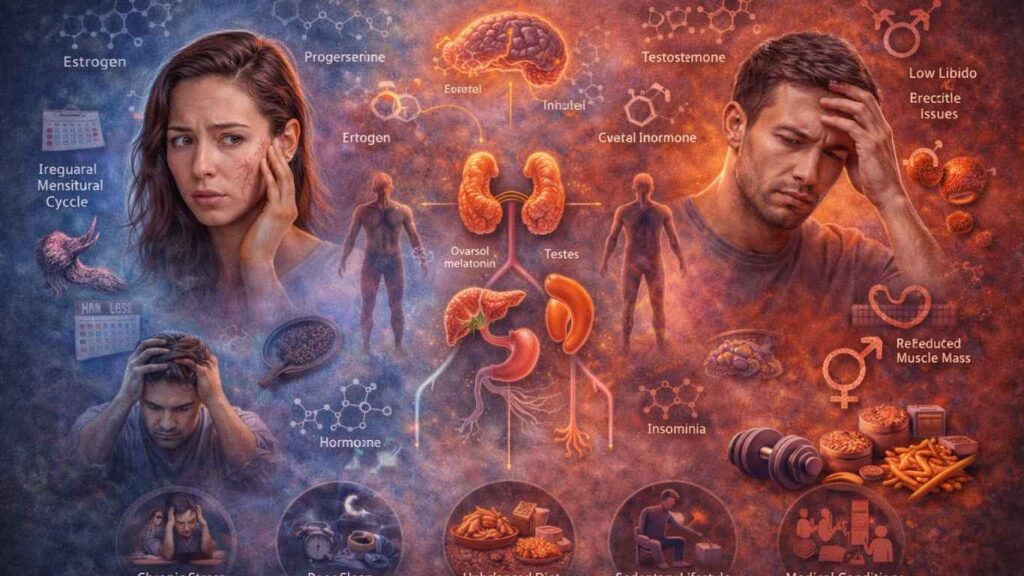
Hormones act as the body’s internal messengers, controlling everything from metabolism and energy levels to mood, sleep, weight, and reproductive health. When hormones are balanced, the body functions smoothly. But when they fall out of sync, the effects can be widespread and confusing.
Hormonal imbalance is increasingly common today due to stress, poor lifestyle habits, disrupted sleep, and metabolic disorders. Understanding the symptoms early—and addressing the root causes—can prevent long-term health complications.
Hormonal imbalance doesn’t affect just one organ—it affects the entire body.
From energy, mood, and sleep to weight, metabolism, and fertility, even small hormonal shifts can cause wide-ranging symptoms.
What Is Hormonal Imbalance?
Hormonal imbalance occurs when there is too much or too little of one or more hormones in the bloodstream. Even small changes can create noticeable symptoms because hormones influence almost every organ system.
Common hormones affected include:
- Insulin
- Cortisol
- Thyroid hormones
- Estrogen
- Progesterone
- Testosterone
Common Symptoms of Hormonal Imbalance (Men & Women)
1. Unexplained Weight Gain or Difficulty Losing Weight
Hormonal imbalance often causes weight gain despite diet and exercise.
Possible reasons:
- Insulin resistance
- Thyroid dysfunction
- High cortisol levels
- Low testosterone or estrogen imbalance
Belly fat is a particularly strong indicator of hormonal disruption.
2. Constant Fatigue and Low Energy
Feeling tired even after adequate rest may signal:
- Thyroid imbalance
- Adrenal fatigue
- Poor insulin regulation
This fatigue is often persistent and not relieved by sleep alone.
3. Mood Swings, Anxiety, or Low Motivation
Hormones strongly influence brain chemistry.
Imbalances can cause:
- Irritability
- Anxiety
- Low mood
- Brain fog
- Reduced concentration
These symptoms are often mistaken for stress or depression alone.
4. Sleep Disturbances
Hormones like cortisol and melatonin regulate sleep cycles.
Signs include:
- Difficulty falling asleep
- Frequent night awakenings
- Poor sleep quality
- Feeling unrefreshed in the morning
Poor sleep further worsens hormonal imbalance, creating a vicious cycle.
5. Changes in Appetite and Cravings
Hormonal imbalance can increase:
- Sugar cravings
- Carb dependency
- Emotional eating
This is often driven by insulin resistance and cortisol imbalance.
Hormonal Imbalance Symptoms Specific to Women
Irregular Menstrual Cycles
- Missed periods
- Heavy or painful periods
- PMS symptoms
Often linked to PCOS, thyroid imbalance, or estrogen dominance.
Acne and Hair Changes
- Adult acne
- Excess facial hair
- Hair thinning or hair fall
These symptoms suggest androgen or insulin imbalance.
Fertility Issues
Hormonal imbalance can interfere with ovulation and conception, even when other health parameters appear normal.
Hormonal Imbalance Symptoms Specific to Men
Reduced Muscle Mass and Strength
Low testosterone leads to:
- Muscle loss
- Increased fat accumulation
- Reduced stamina
Low Libido and Erectile Issues
Hormonal imbalance can affect sexual health due to:
- Low testosterone
- Poor insulin sensitivity
- Chronic stress
Mood Changes and Irritability
Men often experience:
- Reduced motivation
- Irritability
- Emotional withdrawal
These symptoms are frequently underdiagnosed.
What Causes Hormonal Imbalance?
1. Chronic Stress
Prolonged stress increases cortisol, which:
- Raises blood sugar
- Promotes fat storage
- Suppresses other hormones
2. Poor Sleep
Sleep deprivation disrupts:
- Insulin sensitivity
- Growth hormone release
- Melatonin balance
Even one week of poor sleep can alter hormones significantly.
3. Unbalanced Diet
Diets high in:
- Refined carbohydrates
- Sugar
- Processed foods
…increase insulin resistance and inflammation.
4. Sedentary Lifestyle
Lack of physical activity reduces insulin sensitivity and affects metabolism-related hormones.
5. Underlying Medical Conditions
- PCOS
- Thyroid disorders
- Diabetes
- Obesity
These conditions often overlap and worsen each other.
Natural Solutions to Restore Hormonal Balance
1. Nutrition That Supports Hormones
- Adequate protein intake
- High-fiber vegetables
- Healthy fats
- Reduced sugar and refined carbs
Balanced meals stabilize insulin and cortisol levels.
2. Regular Physical Activity
- Strength training improves insulin sensitivity
- Movement reduces stress hormones
- Exercise supports testosterone and growth hormone
3. Stress Management
Simple practices help:
- Deep breathing
- Mindfulness
- Light outdoor activity
- Structured daily routines
Consistency matters more than intensity.
4. Sleep Optimization
- Fixed sleep schedule
- Reduced screen exposure at night
- 7–8 hours of quality sleep
Sleep is a hormonal reset tool, not a luxury.
5. Medical Evaluation When Needed
If symptoms persist, doctors may evaluate:
- Thyroid profile
- Insulin levels
- Cortisol
- Reproductive hormones
Early diagnosis prevents long-term complications.
Final Thoughts
Hormonal imbalance does not happen overnight—and it doesn’t resolve with shortcuts. The body responds best to consistent lifestyle correction combined with medical guidance.
By identifying symptoms early and addressing root causes, hormonal balance can often be restored naturally, improving energy, weight, mood, and overall health.