
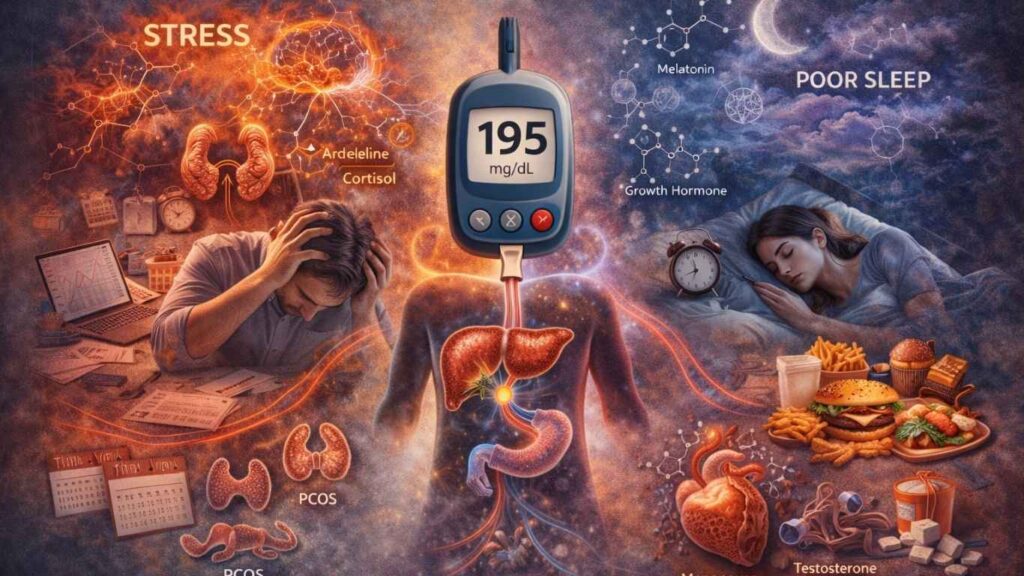
Many people with diabetes focus only on food and medication, yet still struggle with uncontrolled blood sugar. What often goes unnoticed is the powerful role played by stress, sleep quality, and hormonal balance.
Even with a perfect diet, chronic stress and poor sleep can push blood sugar levels higher. Modern medicine now recognizes diabetes as a hormonal and lifestyle-driven metabolic condition, not just a dietary one.
Blood sugar is not controlled by food alone.
Chronic stress, poor sleep, and hormonal imbalance can raise glucose levels—even when diet and medication are “perfect.”
The Hidden Hormonal Side of Blood Sugar
Blood sugar is regulated not only by insulin but also by several other hormones:
- Cortisol (stress hormone)
- Adrenaline
- Growth hormone
- Melatonin
When these hormones are imbalanced, glucose control becomes difficult—even with medication.
How Stress Raises Blood Sugar
Stress activates the body’s fight-or-flight response.
What happens during stress:
- Cortisol is released
- Liver releases stored glucose
- Insulin resistance increases
This response is helpful in emergencies—but harmful when stress becomes chronic.
Common Sources of Chronic Stress
- Work pressure
- Financial worries
- Poor emotional health
- Irregular schedules
- Information overload
Many people live in constant stress without realizing its metabolic impact.
Poor Sleep: A Silent Blood Sugar Disruptor
Sleep is a metabolic reset mechanism.
Effects of poor sleep:
- Increased insulin resistance
- Higher fasting blood sugar
- Increased hunger hormones
- Reduced satiety signals
Even one night of poor sleep can elevate sugar levels the next day.
Night-Time Hormonal Changes
Poor sleep disrupts:
- Melatonin production
- Growth hormone release
- Cortisol rhythm
This causes higher morning sugar levels—often called the dawn phenomenon.
Hormonal Imbalance and Blood Sugar
Hormones like thyroid, estrogen, testosterone, and cortisol affect glucose metabolism.
Examples:
- Thyroid imbalance slows metabolism
- PCOS increases insulin resistance
- Low testosterone raises belly fat
- Menopause alters glucose handling
These factors explain why some patients struggle despite “doing everything right.”
Why Stress Eating Makes It Worse
Stress often triggers:
- Cravings for sugar and carbs
- Emotional eating
- Late-night snacking
This creates a cycle of stress, poor food choices, and rising blood sugar.
Lifestyle Strategies to Control Stress-Induced Sugar Spikes
1. Structured Sleep Routine
- Fixed sleep and wake times
- Avoid screens before bed
- Minimum 7 hours of sleep
Sleep consistency matters more than duration alone.
2. Stress Management Techniques
- Deep breathing
- Light physical activity
- Mindfulness or meditation
- Time management
Even small daily practices lower cortisol levels.
3. Balanced Daily Routine
- Regular meals
- Scheduled activity
- Predictable sleep pattern
The body responds well to routine.
4. Strength Training
Exercise reduces stress hormones and improves insulin sensitivity simultaneously.
Can Blood Sugar Improve Without Diet Changes?
Rarely. However, patients often see significant improvement in fasting sugar once sleep and stress are corrected—even before diet changes show full effect.
When to Seek Medical Advice
If blood sugar remains high despite:
- Proper diet
- Exercise
- Medication
Doctors may evaluate:
- Cortisol levels
- Thyroid function
- Sleep disorders
Final Thoughts
Diabetes control isn’t just about what’s on your plate—it’s about how your body responds to daily life. Stress, poor sleep, and hormonal imbalance quietly raise blood sugar and block progress.
Addressing these hidden factors creates long-term, sustainable sugar control.