
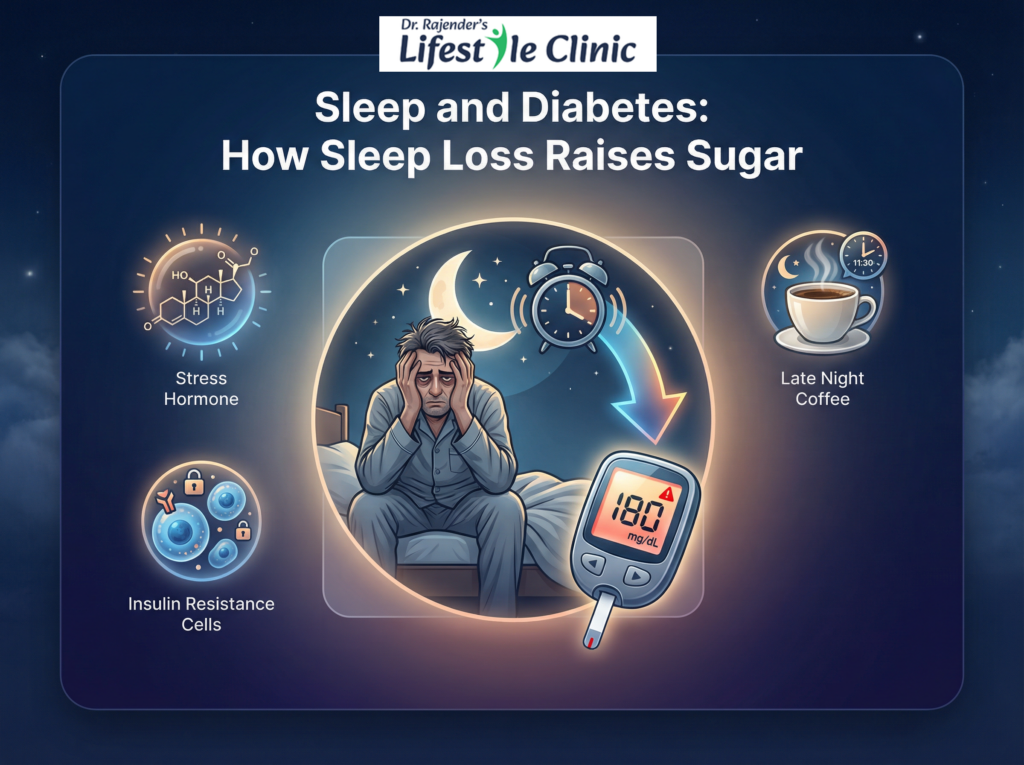
Sleep and Diabetes: How Lack of Sleep Raises Blood Sugar
Simple Guide to High Sugar, Insulin Resistance, and Better Sleep
By Dr. Rajender’s Lifestyle Clinic – Diabetes Reversal & Metabolic Health Experts
Introduction
The connection between sleep and diabetes is very important but often ignored. Many people with high blood sugar, prediabetes, or Type 2 diabetes don’t realize that poor sleep can increase insulin resistance and raise sugar levels.
If you are trying to control high sugar but still seeing high fasting sugar in the morning, your sleep may be the reason. At Dr. Rajender’s Lifestyle Clinic, we always include sleep correction in diabetes reversal plans because sleep and diabetes are strongly connected.
Let’s understand in simple words.
How Sleep and Diabetes Are Connected
The link between sleep and diabetes works through hormones, metabolism, and insulin.
When sleep is poor, your body cannot control sugar properly.
This happens in four main ways.
1. Poor Sleep Increases Insulin Resistance
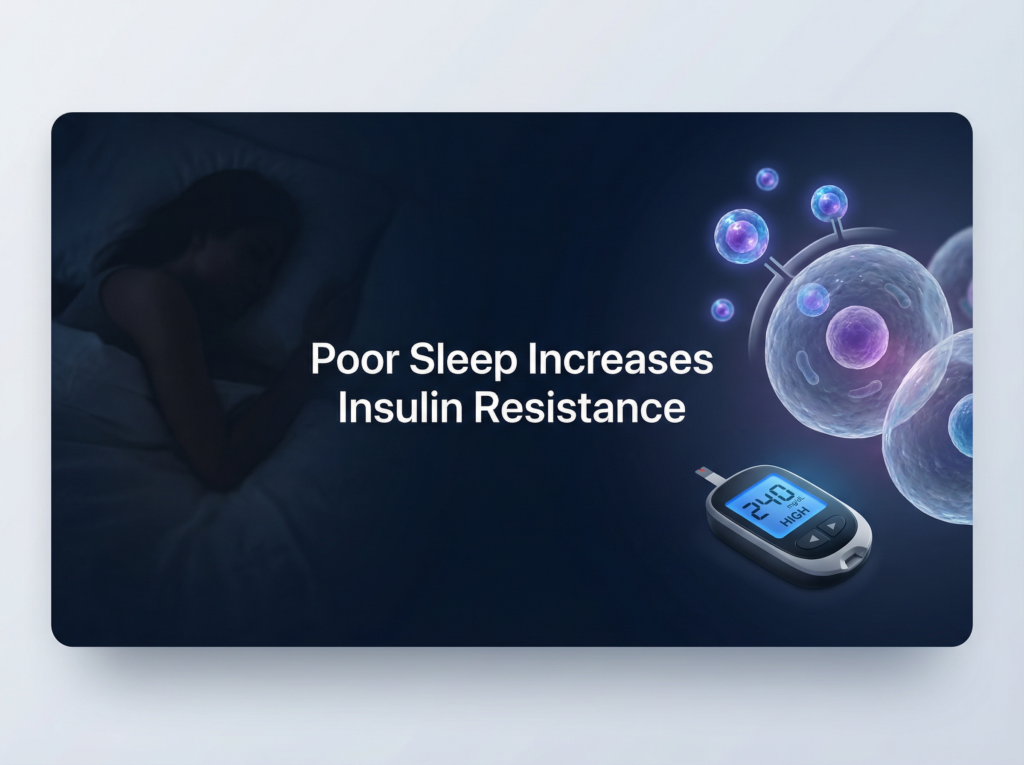
Insulin helps sugar enter cells.
When you don’t sleep enough, cells stop responding to insulin. This is called insulin resistance.
Result:
• Sugar stays in blood
• Fasting sugar increases
• HbA1c becomes high
Even one night of poor sleep can increase insulin resistance.
This shows how strongly sleep and diabetes are linked.
2. Lack of Sleep Increases Stress Hormones

Poor sleep increases cortisol and adrenaline.
These hormones make the liver release more glucose.
So morning sugar becomes high.
This is why many diabetics see high fasting sugar after late-night sleep.
Again, sleep and diabetes are connected through stress hormones.
3. Poor Sleep Increases Hunger and Sugar Cravings
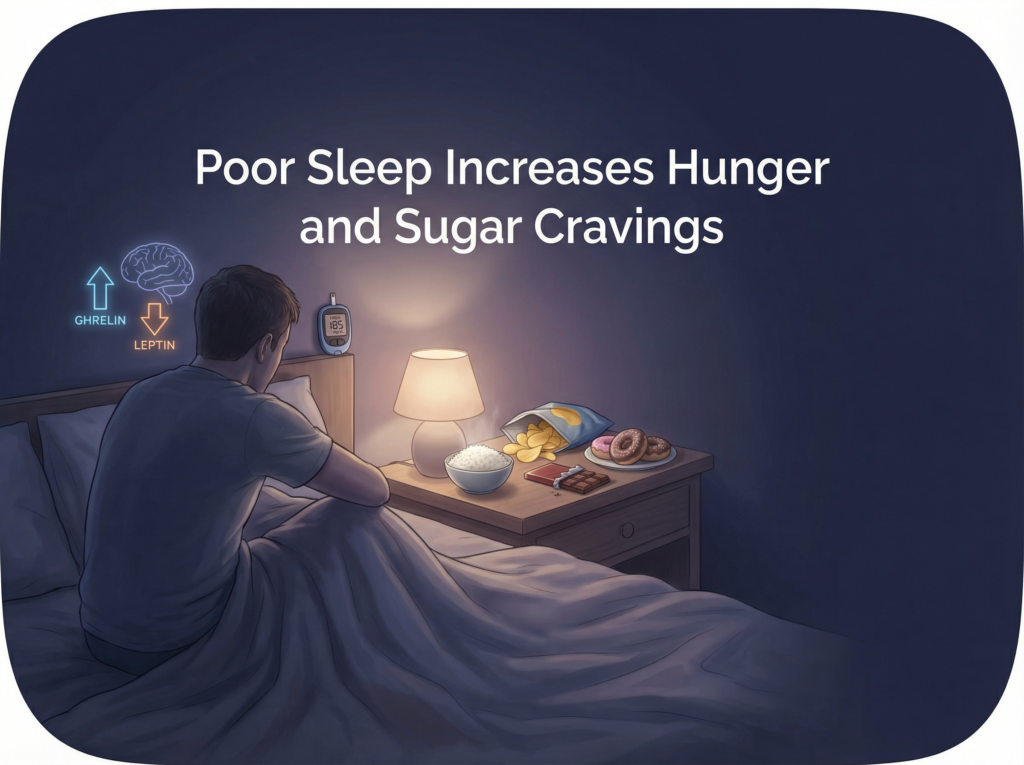
Sleep affects hunger hormones.
When sleep is low:
• Ghrelin increases (hunger hormone)
• Leptin decreases (fullness hormone)
You feel hungry and crave sweets.
You eat more rice, snacks, sweets, or junk food.
This increases weight and high blood sugar.
So sleep and diabetes also affect diet control.
4. Lack of Sleep Causes Belly Fat

Poor sleep increases fat storage around the stomach.
Belly fat increases insulin resistance.
This raises blood sugar levels.
Weight gain worsens diabetes.
So sleep and diabetes affect body weight too.
How Many Hours Should Diabetics Sleep?

Adults need 7–8 hours of good sleep daily.
Less than 6 hours increases diabetes risk.
More than 9 hours may also indicate poor sleep quality.
Sleeping before 10–11 pm improves metabolism.
Proper timing improves sleep and diabetes control.
Signs Poor Sleep Is Affecting Your Sugar
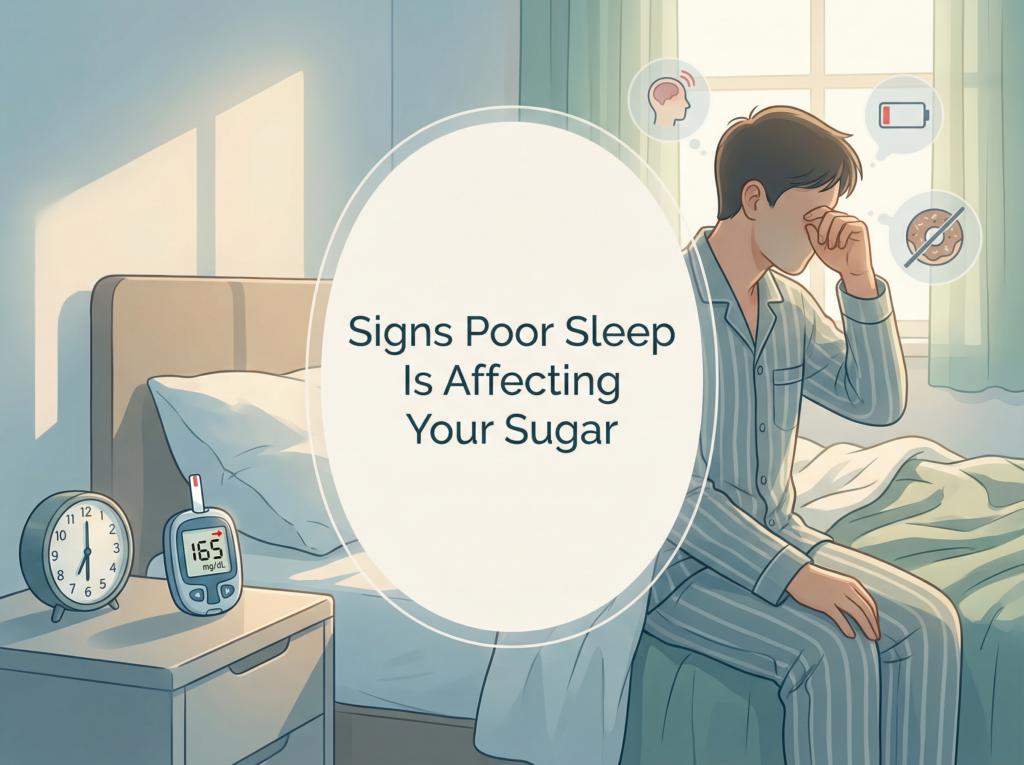
• High fasting sugar
• Morning headache
• Daytime tiredness
• Sugar cravings
• Weight gain
• Mood swings
If you see these signs, check your sleep.
Sleep and Prediabetes
People with prediabetes must improve sleep early.
Poor sleep increases risk of Type 2 diabetes.
Good sleep improves insulin sensitivity and prevents diabetes.
So sleep and diabetes prevention are connected.
How to Improve Sleep and Diabetes Control
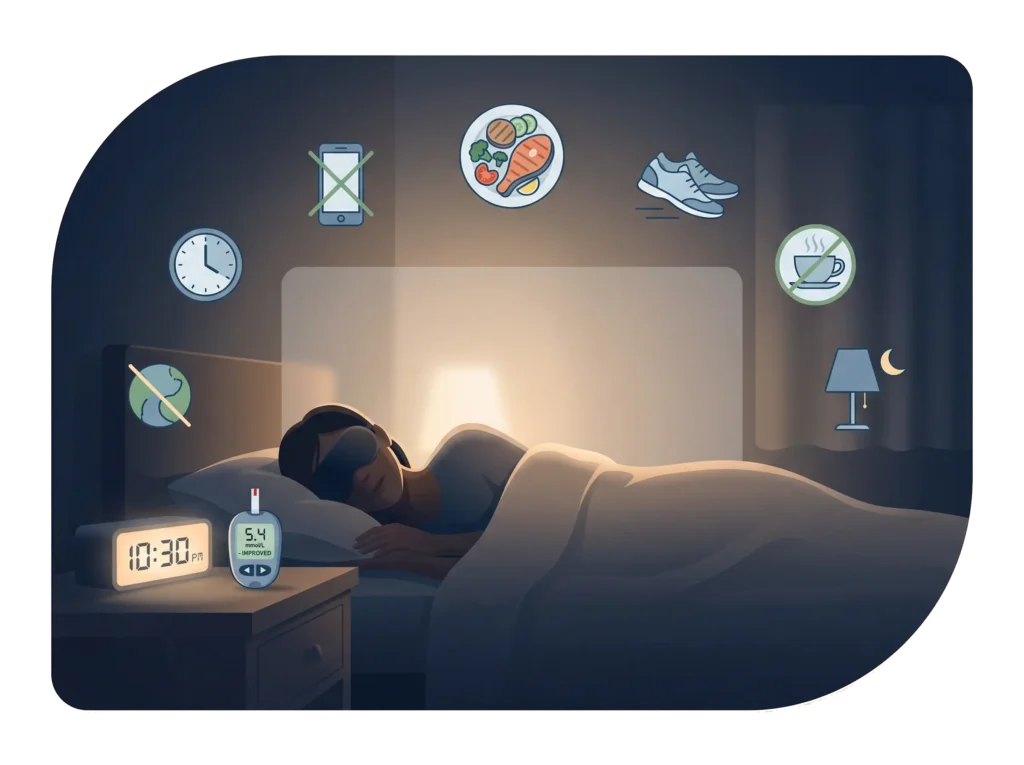
At Dr. Rajender’s Lifestyle Clinic, we teach simple sleep hygiene.
1. Fixed Sleep Timing
Sleep and wake at same time daily.
Body clock becomes balanced.
Better sleep improves sugar control.
2. Avoid Mobile Before Bed
Blue light reduces melatonin hormone.
Stop phone or TV 1 hour before sleep.
This improves sleep and diabetes control.
3. Light DinnerHeavy dinner raises night sugar.
Eat dinner 2–3 hours before sleep.
Choose vegetables, dal, and small grain portion.
4. Walk After Dinner
10–15 minutes walking helps digestion.
It reduces sugar spikes.
Walking improves sleep and diabetes outcomes.
5. Reduce Tea and Coffee
Avoid caffeine after evening.
Caffeine disturbs sleep.
6. Dark Quiet Room
Dark room improves sleep hormones.
Use comfortable bedding.
Good environment improves sleep and diabetes.
Can Better Sleep Reduce Blood Sugar?
Yes.
Good sleep helps:
• Lower fasting sugar
• Improve insulin sensitivity
• Reduce cravings
• Improve weight loss
• Reduce stress
Many patients at Dr. Rajender’s Lifestyle Clinic see sugar improvement after fixing sleep.
Table: Sleep vs Blood Sugar
| Sleep Habit | Effect on Sugar |
|---|---|
| 7–8 hrs sleep | Stable sugar |
| Less than 6 hrs | High fasting sugar |
| Late-night eating | Sugar spike |
| Mobile before bed | Poor sleep |
| Walking after dinner | Better sugar control |
Simplified Version for Patients
👉 Poor sleep increases high sugar
👉 Lack of sleep causes cravings
👉 Sleep 7–8 hours daily
👉 Avoid mobile at night
👉 Walk after dinner
Good sleep helps control diabetes.
FAQ – Sleep and Diabetes
1. Can lack of sleep raise blood sugar?
Yes. Poor sleep increases insulin resistance and fasting sugar.
2. How many hours should diabetics sleep?
7–8 hours daily.
3. Why is morning sugar high?
Poor sleep increases stress hormones.
4. Can good sleep reduce HbA1c?
Yes. Good sleep improves insulin sensitivity.
5. Does sleep affect weight gain?
Yes. Poor sleep increases hunger hormones.
6. Can naps help diabetes?
Short naps help, but night sleep is more important.
7. Does snoring affect diabetes?
Sleep apnea increases diabetes risk.
8. Can sleep improve prediabetes?
Yes. Good sleep helps prevent diabetes.
9. Should diabetics sleep early?
Yes. Sleeping before 11 pm improves metabolism.
10. Is 5 hours sleep enough?
No. Less than 6 hours increases diabetes risk.
Conclusion
The connection between sleep and diabetes is strong. Poor sleep increases insulin resistance, raises high blood sugar, causes cravings, and leads to weight gain.
At Dr. Rajender’s Lifestyle Clinic, we treat diabetes by correcting sleep, diet, exercise, and lifestyle together.
Start today by sleeping on time. Small changes bring big health improvements.