
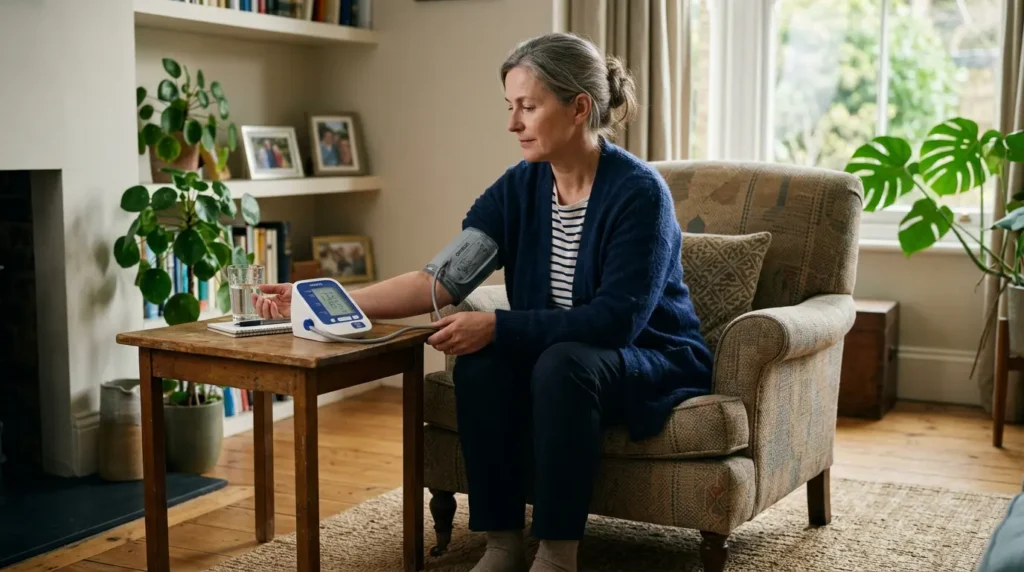
Introduction
Checking blood pressure at home has become an important part of monitoring health, especially for people with hypertension or those at risk of heart disease. Home monitoring helps detect early changes and manage blood pressure effectively.
However, many people unknowingly make small mistakes while measuring their blood pressure. These errors can lead to inaccurate readings, making blood pressure appear higher or lower than it actually is.
Understanding the correct way to measure blood pressure at home is essential for reliable results and better health management.
Why Accurate Blood Pressure Measurement Matters
Blood pressure readings guide treatment decisions and lifestyle changes. Incorrect readings can lead to:
- Misdiagnosis
- Unnecessary medication changes
- Poor management of hypertension
Even small errors in posture or technique can significantly affect readings.
10 Common Blood Pressure Mistakes
1. Letting Your Feet Hang
Keeping your feet unsupported can affect blood circulation and lead to inaccurate readings.
👉 Always keep your feet flat on the floor.
2. Crossing Your Legs
Crossing your legs can temporarily increase blood pressure.
👉 Sit with legs uncrossed and relaxed.
3. Checking BP with a Full Bladder
A full bladder can slightly raise blood pressure levels.
👉 Empty your bladder before measuring BP.
4. Sitting Without Back Support
Sitting without support can strain your body and affect readings.
👉 Sit comfortably with your back supported.
5. Placing the Cuff Over Clothing
This is one of the most common mistakes.
👉 The BP cuff should be placed directly on bare skin for accurate measurement.
6. Incorrect Cuff Position
Improper placement of the cuff tube can affect readings.
👉 The tube should align with the inner side of your arm.
7. Arm Not at Heart Level
Arm position plays a crucial role in BP accuracy.
👉 Keep your arm supported at heart level.
8. Talking During Measurement
Talking activates the nervous system and can increase blood pressure temporarily.
👉 Stay quiet and relaxed during measurement.
9. Drinking Tea or Coffee Before Checking BP
Caffeine can temporarily raise blood pressure.
👉 Avoid tea or coffee for at least 30 minutes before measuring.
10. Measuring After Stress or Exercise
Blood pressure naturally increases after activity or stress.
👉 Rest for 5 minutes before taking a reading.
How to Check Blood Pressure Correctly at Home
To get accurate readings, follow these simple steps:
- Sit quietly for at least 5 minutes
- Keep your feet flat on the floor
- Support your back properly
- Place your arm at heart level
- Use proper cuff placement
- Avoid talking during measurement
Following these steps reduces errors and improves reliability.
How Many Readings Should You Take?
Taking a single reading may not give an accurate picture.
👉 Recommended:
- Take at least two readings
- Maintain a gap of 5 minutes
- Calculate the average
This provides a more reliable assessment of your blood pressure.
Understanding Your Blood Pressure Numbers
Knowing your BP numbers helps in better health management.
Ideal Blood Pressure
- Below 130/80 mmHg for most adults
High Systolic (Upper Number)
- May indicate stiffness of large arteries
- Common with aging
High Diastolic (Lower Number)
- Linked to stress
- Associated with insulin resistance
Wide Gap Between Numbers
A large difference between systolic and diastolic values may indicate increased cardiovascular risk and should be evaluated.
Why These Mistakes Matter
Small mistakes can lead to:
- False high readings → unnecessary stress
- False low readings → missed diagnosis
Accurate measurement ensures correct diagnosis and treatment.
Conclusion
Checking blood pressure at home is a powerful tool for monitoring health. However, accuracy is key.
By avoiding common mistakes such as incorrect posture, improper cuff placement, and measuring at the wrong time, you can significantly improve the reliability of your readings.
👉 Correct technique leads to better understanding and better control of your blood pressure.
FAQs
1. What is the correct way to measure blood pressure at home?
Sit calmly, keep your feet flat, support your back, place your arm at heart level, and avoid talking.
2. Can crossing legs affect BP readings?
Yes, it can temporarily increase blood pressure.
3. Should I take multiple BP readings?
Yes, take two readings with a gap and calculate the average.
4. Does caffeine affect BP readings?
Yes, avoid tea or coffee before measuring BP.
5. What is the ideal blood pressure range?
Below 130/80 mmHg for most adults.