

Why Is Breakfast Planning Important for Diabetes?
Are you wondering what to eat for breakfast every Sunday, Monday or Tuesday? For people with diabetes, planning meals in advance can make it easier to maintain appropriate portions and choose balanced foods.
When meals are not planned, it can be tempting to eat whatever is available and consume larger portions. A structured breakfast plan can help you make more consistent food choices.
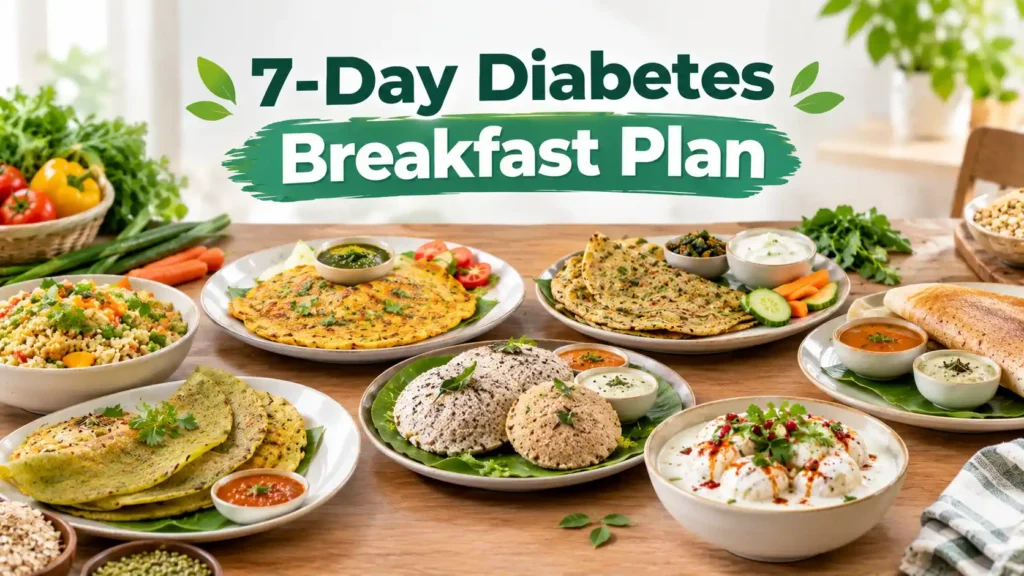
Here are 7 diabetes-friendly Indian breakfast ideas, one for each day of the week.
Day 1: Moong Dal Dosa or Pesarattu
Pesarattu, also known as moong dal dosa, is prepared using whole green gram. Because whole green gram contains fiber and protein, it can be a nutritious breakfast option.
The transcript suggests having around two pesarattus as a breakfast option.
To add flavor, you can use ingredients such as:
- Green chilies
- Ginger
- Cumin
- Other spices
Instead of loading the dosa with additional high-calorie ingredients such as ghee, cashews or a large portion of upma, keep the preparation simple.
Day 2: Vegetable Oats Upma
Oats are a source of soluble fiber. The transcript highlights soluble fiber as being useful for supporting healthy cholesterol levels.
You can make oats upma more nutritious by adding vegetables such as:
- Carrots
- Beans
- Other vegetables
This adds fiber, vitamins and minerals to the meal.
Choose a controlled portion and avoid using excessive oil while preparing the upma.
Day 3: Besan Chilla
Besan chilla, prepared using chickpea flour, is another Indian breakfast option.
The transcript highlights besan as having a relatively low glycemic index compared with some refined carbohydrate choices.
Besan chilla can be prepared with vegetables and spices to add flavor and nutrients.
Keeping the amount of oil controlled is important when preparing chilla.
Day 4: Multigrain Idli
Traditional rice-based idli can be relatively easy to digest, and eating a large number of idlis can provide a substantial amount of carbohydrates.
A multigrain idli can provide more variety by combining ingredients such as:
- Urad dal
- Toor dal
- Chana dal
- Moong dal
- Fenugreek seeds
- Suitable grains
The transcript suggests choosing multigrain idli as an alternative to eating large portions of traditional rice-based idli.
The key point is still portion control, even when choosing a multigrain option.
Day 5: Methi Roti or Methi Paratha
Methi roti, prepared using wheat flour and fenugreek leaves, can be another breakfast option.
The transcript discusses fenugreek as potentially helping slow carbohydrate digestion and absorption.
You can include one or two methi rotis depending on your individual dietary requirements.
For a diabetes-friendly preparation, avoid excessive oil or ghee while cooking.
Day 6: Steamed Dahi Vada
Steamed dahi vada is a lighter alternative to traditional deep-fried vada.
Instead of deep-frying the urad dal batter, the vada can be cooked using steam. The cooked vada can then be served with curd.
Curd provides protein and calcium, while fermented dairy foods can also contribute beneficial bacteria to the diet.
Avoid turning this into a deep-fried breakfast, as excessive oil can add unnecessary calories.
Day 7: Millet Dosa
Millet dosa is another breakfast option suggested in the transcript.
The batter can be prepared using millets and urad dal and fermented overnight.
Possible millet choices include:
- Ragi
- Jowar
- Foxtail millet
- Other suitable millets
Fermentation changes the characteristics of the batter and can add variety to the diet.
As with other breakfast choices, the quantity should be appropriate for your overall carbohydrate requirements.
Choose the Right Chutney
The side dish can also make a difference to the overall nutritional quality of breakfast.
Instead of relying on peanut or coconut chutney every day, the transcript suggests trying vegetable-based chutneys.
Some options include:
- Tomato chutney
- Coriander chutney
- Okra chutney
- Ridge gourd chutney
- Cabbage chutney
- Leafy-green chutney
Try to prepare chutneys without excessive oil or deep frying. Steaming or lightly cooking the vegetables can help retain their nutritional value while keeping the preparation lighter.
7-Day Diabetes Breakfast Plan at a Glance
| Day | Breakfast |
|---|---|
| Day 1 | Moong Dal Dosa / Pesarattu |
| Day 2 | Vegetable Oats Upma |
| Day 3 | Besan Chilla |
| Day 4 | Multigrain Idli |
| Day 5 | Methi Roti / Methi Paratha |
| Day 6 | Steamed Dahi Vada |
| Day 7 | Millet Dosa |
Important Tips for a Diabetes-Friendly Breakfast
A healthy breakfast is not only about choosing a particular food. Portion size, preparation method and the overall meal composition also matter.
Try to:
- Choose balanced breakfast options.
- Include protein and fiber where appropriate.
- Add vegetables whenever possible.
- Limit excessive oil, ghee and deep-fried ingredients.
- Avoid very large portions.
- Choose different grains and protein sources throughout the week.
- Monitor your blood glucose as advised by your healthcare professional.
At Dr. Rajender’s Lifestyle Clinic, nutrition and lifestyle strategies are personalized according to an individual’s metabolic health, dietary needs and diabetes management goals.
Final Takeaway
Planning your breakfast for the entire week can make healthy eating easier and more consistent. Instead of eating the same carbohydrate-heavy breakfast every day, you can introduce variety with pesarattu, oats upma, besan chilla, multigrain idli, methi roti, steamed dahi vada and millet dosa.
Remember that even diabetes-friendly foods should be eaten in appropriate portions. A balanced diet should include suitable amounts of carbohydrates, protein, vegetables, fiber and healthy fats.
Frequently Asked Questions
1. What is the best breakfast for diabetes?
There is no single breakfast that is best for everyone. Options such as pesarattu, vegetable oats upma, besan chilla, multigrain idli and millet dosa can be included in a balanced diabetes diet with appropriate portions.
2. Can diabetics eat pesarattu?
Pesarattu can be included as a diabetes-friendly breakfast option. It is made from whole green gram and provides protein and fiber.
3. Is oats upma good for diabetes?
Oats upma can be included in a diabetes diet, particularly when prepared with vegetables and controlled portions.
4. Can diabetic patients eat besan chilla?
Besan chilla can be a suitable breakfast option when prepared with an appropriate amount of oil and portion size.
5. Can diabetics eat idli?
Idli can be included in a diabetes diet, but portion size matters. The transcript suggests multigrain idli as an alternative to consuming large portions of traditional rice-based idli.
6. Is methi roti good for diabetes?
Methi roti can be included in a balanced diabetes breakfast. Using controlled amounts of oil or ghee is important.
7. Can diabetics eat millet dosa?
Millet dosa can be included in a diabetes-friendly meal plan. The quantity and ingredients used in the batter should be considered.
8. What chutney is good for a diabetic breakfast?
Vegetable-based chutneys such as tomato, coriander, okra, ridge gourd, cabbage or leafy-green chutneys can add variety and nutrients to breakfast.
9. Should diabetic patients avoid deep-fried breakfast foods?
Limiting deep-fried foods can help reduce excessive oil and calorie intake. Steamed or lightly cooked alternatives can be useful choices.
10. Is meal planning important for diabetes?
Yes. Planning meals in advance can make it easier to control portions, maintain variety and make consistent food choices.
Read Also:


One Response