
Introduction
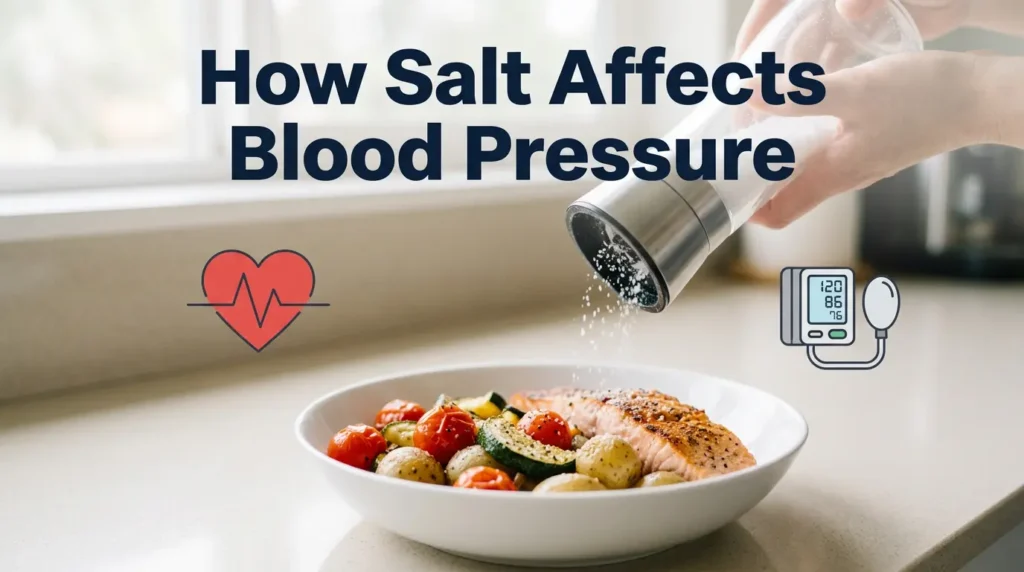
Salt is a common part of our daily diet, but excessive intake can have serious effects on health, especially blood pressure. Many people are unaware that even small increases in salt consumption can gradually raise blood pressure over time.
Understanding how salt affects the body can help prevent hypertension and reduce the risk of heart disease.
What is Blood Pressure?
Blood pressure is the force exerted by blood against the walls of the arteries.
It is measured in two numbers:
- Systolic pressure (upper number)
- Diastolic pressure (lower number)
High blood pressure, also known as hypertension, can damage blood vessels and increase the risk of heart-related problems
How Salt Raises Blood Pressure
1. Water Retention
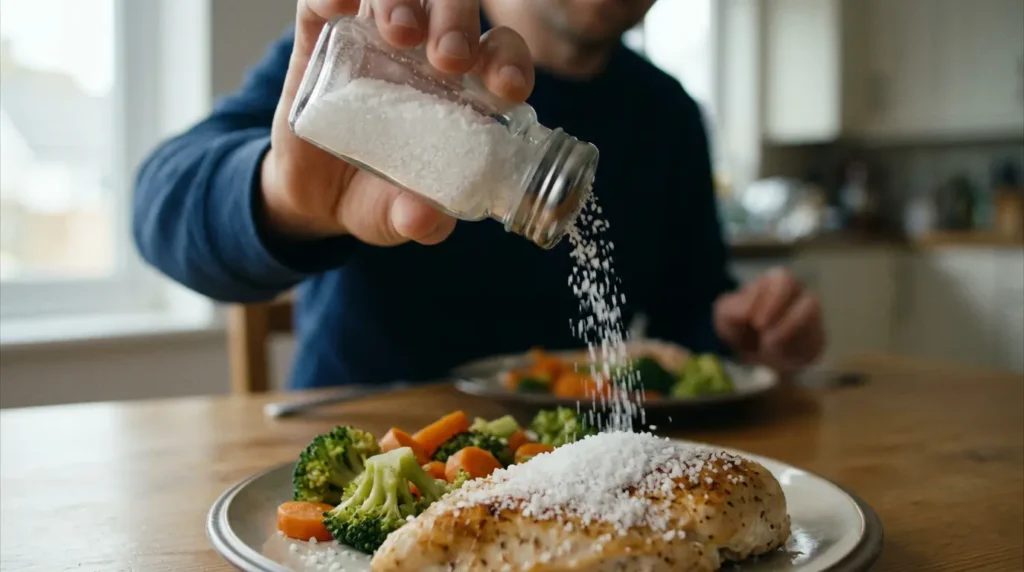
Salt contains sodium, which causes the body to retain water.
👉 More sodium = more water in the bloodstream
👉 Increased blood volume = higher pressure on arteries
2. Increased Workload on the Heart
When blood volume increases, the heart has to work harder to pump blood.
👉 This puts extra strain on the cardiovascular system.
3. Effect on Blood Vessels
Excess salt can make blood vessels stiff and narrow.
👉 This reduces their ability to relax, leading to increased blood pressure.
4. Kidney Function
The kidneys help regulate sodium balance in the body.
👉 High salt intake:
- Disrupts kidney function
- Reduces the ability to remove excess sodium
- Leads to long-term blood pressure issues
How Much Salt is Too Much?
Most health guidelines recommend:
👉 Less than 5 grams of salt per day (about 1 teaspoon)
However, many people consume much more due to hidden salt in processed foods.
Hidden Sources of Salt
You may be consuming excess salt without realizing it.
Common sources include:
- Packaged foods
- Pickles
- Chips and snacks
- Restaurant food
- Sauces and condiments
Signs of Excess Salt Intake
High salt intake may not show immediate symptoms, but over time it can lead to:
- High blood pressure
- Swelling (water retention)
- Headaches
- Increased thirst
Who is More Sensitive to Salt?
Some people are more affected by salt than others:
- Individuals with hypertension
- Older adults
- People with kidney disease
- Those with a family history of high blood pressure
How to Reduce Salt Intake

1. Avoid Processed Foods
Choose fresh, home-cooked meals.
2. Read Food Labels
Check sodium content in packaged foods.
3. Use Natural Flavors
Replace salt with:
- Lemon
- Herbs
- Spices
4. Limit Pickles and Papads
These are high in salt.
5. Cook Smart
Reduce salt gradually to adjust your taste.
Benefits of Reducing Salt
Lowering salt intake can:
- Reduce blood pressure
- Improve heart health
- Decrease risk of stroke
- Support kidney function
Conclusion
Salt plays a major role in regulating blood pressure, but excess intake can be harmful. By reducing salt consumption and making healthier food choices, you can protect your heart and maintain normal blood pressure levels.
👉 Small changes in daily habits can lead to significant improvements in long-term health.
FAQs
1. How does salt increase blood pressure?
It causes water retention, increasing blood volume and pressure.
2. What is the recommended daily salt intake?
Less than 5 grams per day.
3. Can reducing salt lower blood pressure?
Yes, it can significantly improve blood pressure levels.
4. Which foods are high in salt?
Processed foods, pickles, snacks, and packaged items.
5. Is all salt harmful?
No, small amounts are necessary, but excess intake is harmful.