

Best Fruits for Diabetes: What to Eat & What to Avoid
Introduction
Fruits are often misunderstood in diabetes management. Many people believe that diabetics should avoid fruits completely—but this is a myth.
According to your eBook, diabetes is not caused by fruit intake, and low glycemic index (GI) fruits can be safely consumed in the right portions . In fact, fruits provide essential nutrients that support overall health and help in disease prevention.
Why Fruits Are Important for Health
Fruits are packed with:
- Vitamins and minerals
- Antioxidants
- Fiber
- Phytonutrients
They are a natural way to satisfy sweet cravings instead of consuming refined sugar. As mentioned in the eBook, fruits help reduce the risk of heart disease, inflammation, diabetes, and even cancer .
Fiber in fruits also helps improve digestion and keeps you full for longer.
Understanding Glycemic Index (GI)
The glycemic index (GI) is a measure of how quickly a food raises blood sugar levels.
According to the eBook:
- Low GI: 55 or less
- Medium GI: 56–69
- High GI: 70 or above
👉 Lower GI foods cause a slower rise in blood sugar, making them better for diabetes management.
Best Fruits for Diabetes (Low GI)
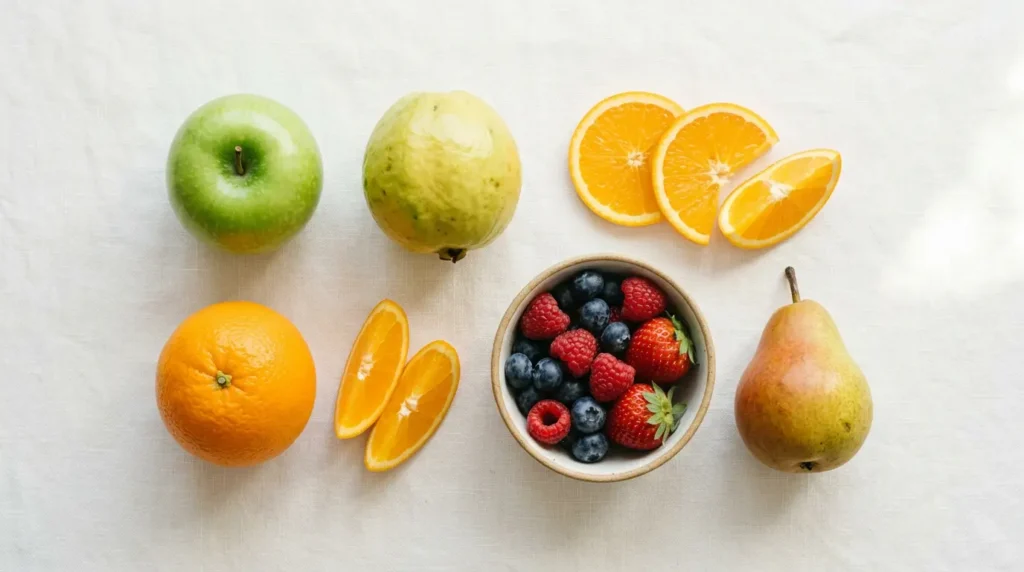
These fruits are safer choices for people with diabetes:
- Apple
- Guava
- Orange
- Pear
- Jamun
- Berries
These fruits release sugar slowly and help maintain stable blood sugar levels.
Fruits to Eat in Moderation (Medium GI)
These fruits can be consumed in controlled portions:
- Banana
- Mango
- Papaya
- Pineapple
- Grapes
Portion control is important to avoid sudden sugar spikes.
Fruits to Limit (High GI)
Some fruits raise blood sugar quickly and should be limited:
- Watermelon
- Dates
Occasional consumption is fine, but not in large quantities.
Whole Fruits vs Fruit Juice
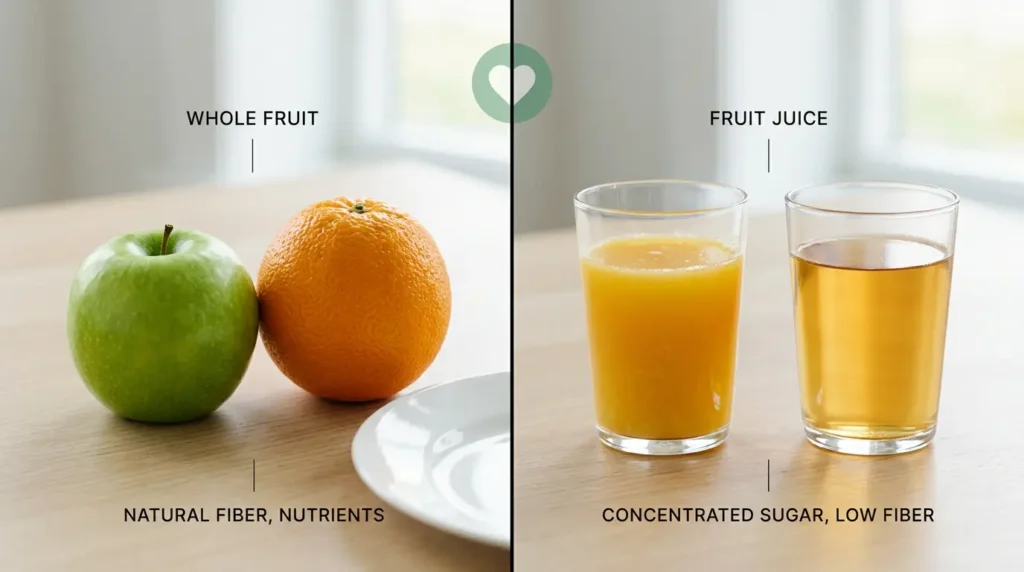
One common mistake is replacing whole fruits with juice.
As clearly explained in the eBook:
- Whole fruits contain fiber
- Juice lacks fiber and increases sugar absorption
Fruit skin and pulp provide important nutrients and antioxidants that are lost in juice
👉 Always choose whole fruits over juice.
Best Time to Eat Fruits
Timing plays an important role in blood sugar control.
According to the eBook:
- Best consumed on an empty stomach or in the morning
- Can be taken as a snack when hungry
- Avoid eating fruits immediately after meals
- Do not mix fruits with regular meals
This helps improve digestion and prevents sugar spikes.
How Much Fruit Should You Eat?
The recommended intake is:
- 2–5 servings per day
- One serving = one tennis ball-sized portion
This amount provides enough nutrients without affecting blood sugar levels.

Common Myths About Fruits
❌ Diabetics should not eat fruits
✔ Truth: Low GI fruits are safe
❌ Fruit juice is equal to whole fruit
✔ Truth: Whole fruits are better
❌ Only one type of fruit is enough
✔ Truth: Variety is important for better nutrition
Conclusion
Fruits are not harmful—they are essential for good health.
By choosing the right fruits, controlling portions, and following proper timing, you can enjoy fruits without affecting your blood sugar.
👉 Remember:
Choose low GI fruits, eat whole fruits, and maintain portion control
FAQs
1. Can diabetics eat fruits daily?
Yes, in controlled portions and choosing low GI fruits.
2. Which fruit is best for diabetes?
Apple, guava, berries, and orange are good choices.
3. Is banana allowed in diabetes?
Yes, but in small portions.
4. Why is fruit juice not recommended?
It lacks fiber and causes faster sugar spikes.
5. What is the best time to eat fruits?
Morning or between meals on an empty stomach.