

Fruits and Diabetes: What to Eat, What to Avoid & How to Eat Right
Introduction
Many people with diabetes feel confused about fruits.
“Can I eat fruits?”
“Will fruits increase my sugar levels?”
This confusion is very common. Fruits do contain natural sugar, but that doesn’t mean they are harmful. In fact, when eaten correctly, fruits can be a healthy part of a diabetes diet.
The key is not to avoid fruits, but to understand how to eat them in the right way.
Why Fruits Matter in Diabetes
Fruits are rich in essential nutrients that support overall health.
They provide:
- Vitamins and minerals
- Antioxidants that protect the body
- Fiber that slows sugar absorption
Unlike processed sugar, fruits release sugar slowly in the body because of their fiber content. This helps prevent sudden spikes in blood sugar levels.
The 3 Golden Rules of Eating Fruits
To manage diabetes effectively, follow these three simple rules:
1. Type of Fruit
Not all fruits are the same. Some raise blood sugar quickly, while others release sugar slowly.
2. Quantity (Portion Size)
Even healthy fruits can increase sugar levels if eaten in large amounts.
3. Timing
Eating fruits at the right time helps avoid blood sugar spikes.
👉 Always remember:
Right Fruit + Right Time + Right Quantity
What is Glycemic Index (GI)?
Glycemic Index (GI) measures how quickly a food raises blood sugar levels.
- Low GI foods: Release sugar slowly (best choice)
- High GI foods: Cause rapid sugar spikes (should be limited)
Choosing low GI fruits is important for better diabetes control.
Best Fruits for Diabetes (Low GI Fruits)
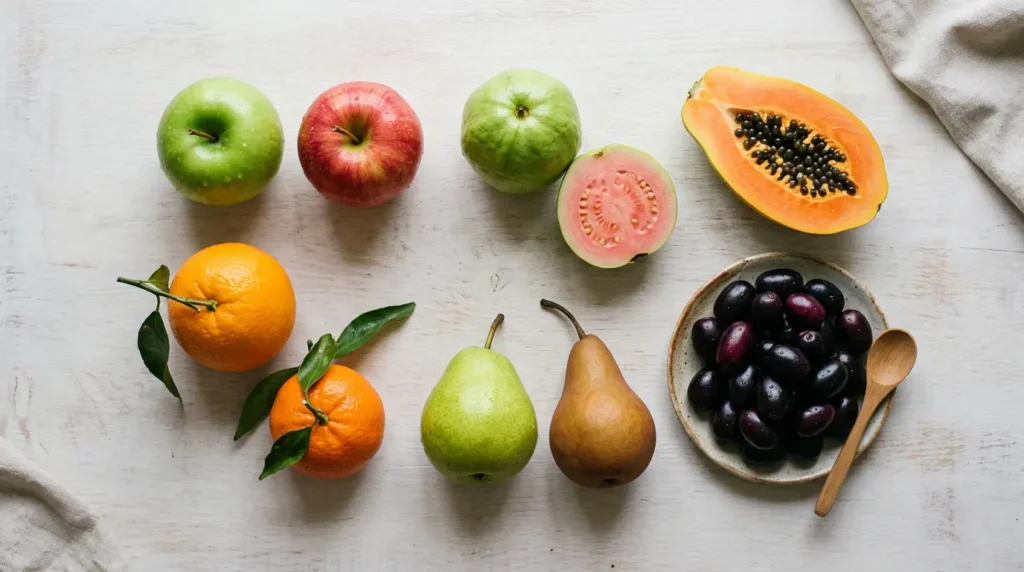
These fruits are safe and can be included regularly in your diet:
- Apple
- Guava
- Orange / Mosambi
- Papaya
- Pear
- Jamun
- Pomegranate
- Strawberries
Why these fruits are good:
- They are rich in fiber
- They release sugar slowly
- They help maintain stable blood sugar levels
Fruits to Eat in Moderation (Medium GI)
These fruits can be eaten occasionally and in limited quantity:
- Banana (prefer semi-ripe)
- Mango
- Pineapple
- Chikoo (sapota)
These fruits contain more natural sugar, so portion control is important.
Fruits to Limit or Avoid (High GI)
These fruits can raise blood sugar quickly and should be eaten carefully:
- Watermelon
- Muskmelon
- Dates
- Raisins
- Overripe banana
If consumed, they should be taken in very small portions and not frequently.
Right Time to Eat Fruits
Timing plays an important role in managing blood sugar.
Best time to eat fruits:
- Mid-morning (10–11 AM)
- Evening snack (4–5 PM)
Avoid:
- Eating fruits immediately after meals
- Eating fruits late at night
Eating fruits at the right time helps in better digestion and prevents sugar spikes.
Portion Control (Most Important Rule)
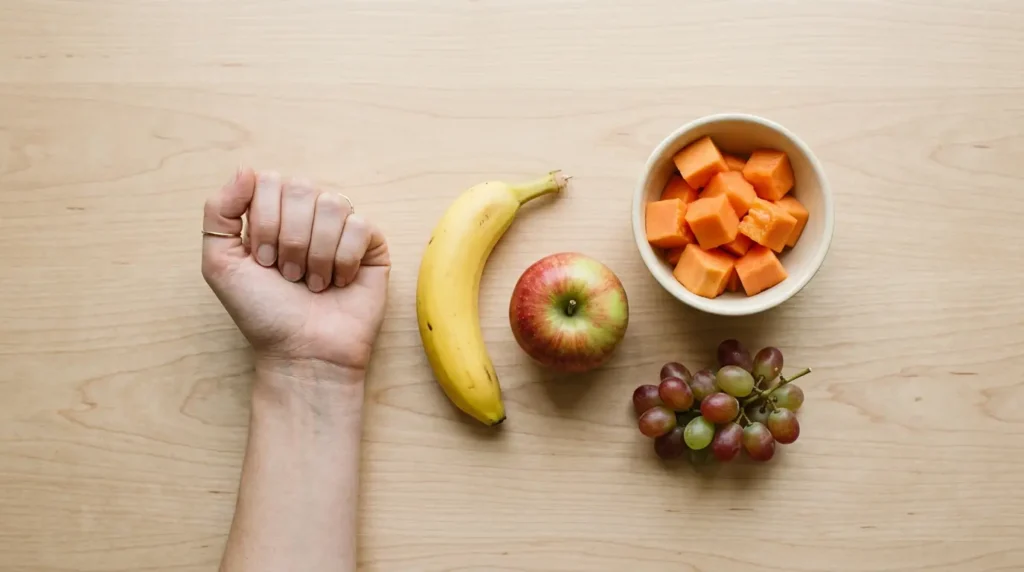
Portion size is the most important factor when eating fruits.
👉 1 portion = size of your fist
Examples:
- 1 small apple
- ½ cup papaya
- 1 small banana
- 10–15 grapes
Eating more than the required portion can increase blood sugar levels, even if the fruit is healthy.
Common Mistakes to Avoid

Many people make simple mistakes that affect blood sugar control:
- Drinking fruit juice instead of whole fruits
- Eating fruits right after meals
- Mixing multiple fruits together
- Consuming smoothies with banana, dates, and milk
Avoiding these mistakes can significantly improve blood sugar management.
Fruit Juice – The Biggest Myth
Many people think fruit juice is healthy, but it is not suitable for diabetes.
Why fruit juice is not recommended:
- It contains no fiber
- It causes a rapid increase in blood sugar
Whole fruits are always a better option because they contain fiber, which slows down sugar absorption.
Smart Fruit Combinations
Combining fruits with protein or healthy fats can help control blood sugar.
Best combinations:
- Apple + almonds
- Papaya + seeds
- Guava + peanuts
These combinations slow down digestion and prevent sudden sugar spikes.
Special Case: High Blood Sugar
If your blood sugar levels are high:
- Avoid fruits like mango, banana, and chikoo
- Choose only low GI fruits
- Keep portions small
This helps in better blood sugar control and prevents complications.
Conclusion
Fruits are not harmful for diabetes when eaten in the right way.
Instead of avoiding fruits completely, focus on:
- Choosing the right fruits
- Controlling portions
- Eating at the right time
👉 The simple formula to follow is:
Right Fruit + Right Time + Right Quantity
With these small changes, you can enjoy fruits safely and manage diabetes effectively.
FAQs
1. Can people with diabetes eat fruits daily?
Yes, fruits can be eaten daily if you choose low GI fruits and control portion size.
2. Which fruits are best for diabetes?
Apple, guava, papaya, jamun, and orange are some of the best options.
3. Is banana good for diabetes?
Banana can be eaten in small amounts, preferably semi-ripe.
4. Why is fruit juice not recommended?
Fruit juice lacks fiber and causes a rapid rise in blood sugar.
5. What is the best time to eat fruits?
Mid-morning or evening is the best time to eat fruits.