
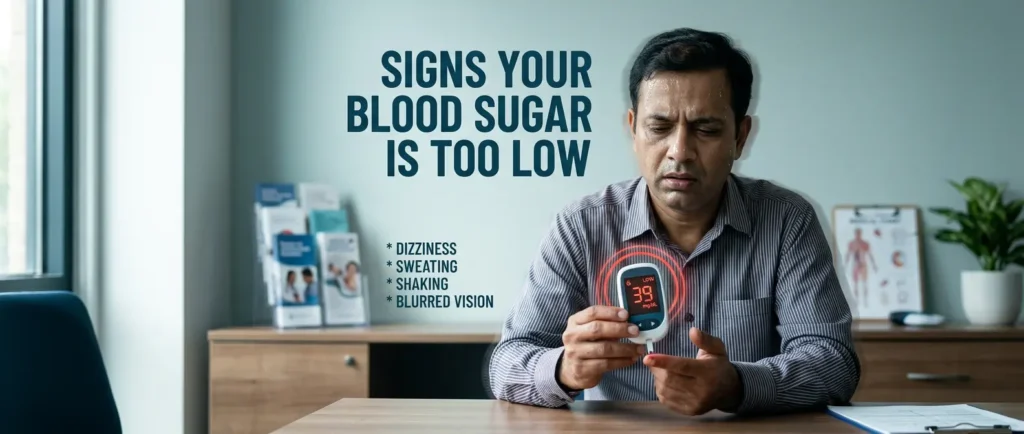
Signs Your Blood Sugar Is Too Low (Hypoglycemia): What You Should Know
Introduction
While most people focus on high blood sugar, low blood sugar (hypoglycemia) can be equally dangerous. It can occur suddenly and may lead to serious complications if not treated quickly.
Recognizing the early signs of hypoglycemia is essential for anyone living with diabetes or at risk of blood sugar fluctuations.
What Is Hypoglycemia?
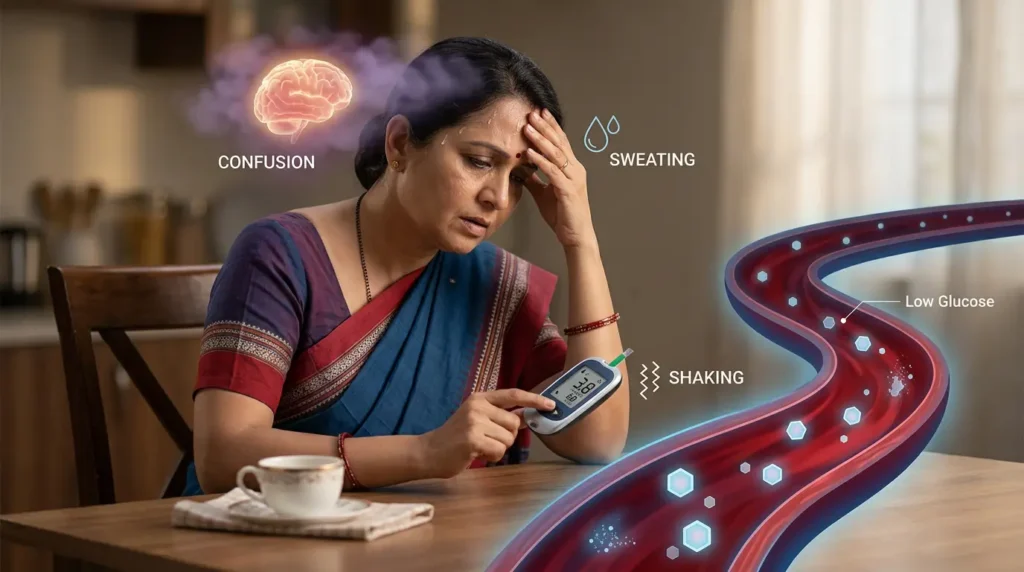
Hypoglycemia occurs when blood sugar levels drop below 70 mg/dL.
This means your body does not have enough glucose to function properly, especially the brain, which relies on glucose for energy.
Common Causes of Low Blood Sugar
Hypoglycemia can happen due to:
- Skipping or delaying meals
- Taking too much insulin or medication
- Excess physical activity without proper nutrition
- Drinking alcohol without eating
- Irregular eating patterns
👉 It can occur in both Type 1 and Type 2 diabetes.
Early Signs of Hypoglycemia
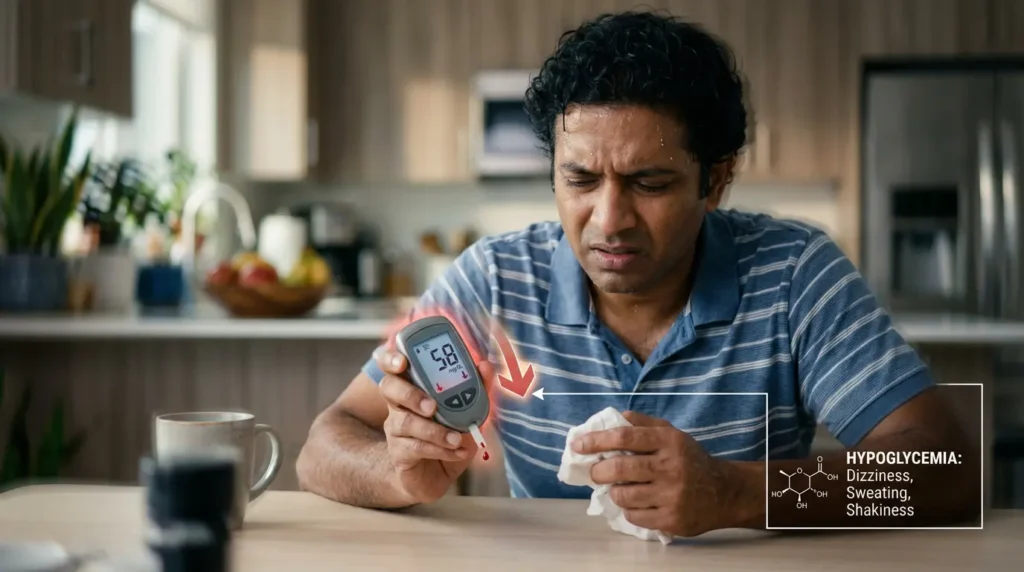
Recognizing early symptoms can help prevent serious complications.
Mild Symptoms
- Shakiness or trembling
- Sweating
- Hunger
- Dizziness
- Fast heartbeat
👉 These are warning signs that your blood sugar is dropping.
Moderate Symptoms
If not treated, symptoms can worsen:
- Headache
- Irritability or mood changes
- Difficulty concentrating
- Blurred vision
- Weakness or fatigue
Severe Symptoms (Medical Emergency)
If hypoglycemia is not corrected, it can become dangerous:
- Confusion
- Loss of coordination
- Seizures
- Loss of consciousness
👉 Immediate treatment is required at this stage.
Why Hypoglycemia Is Dangerous
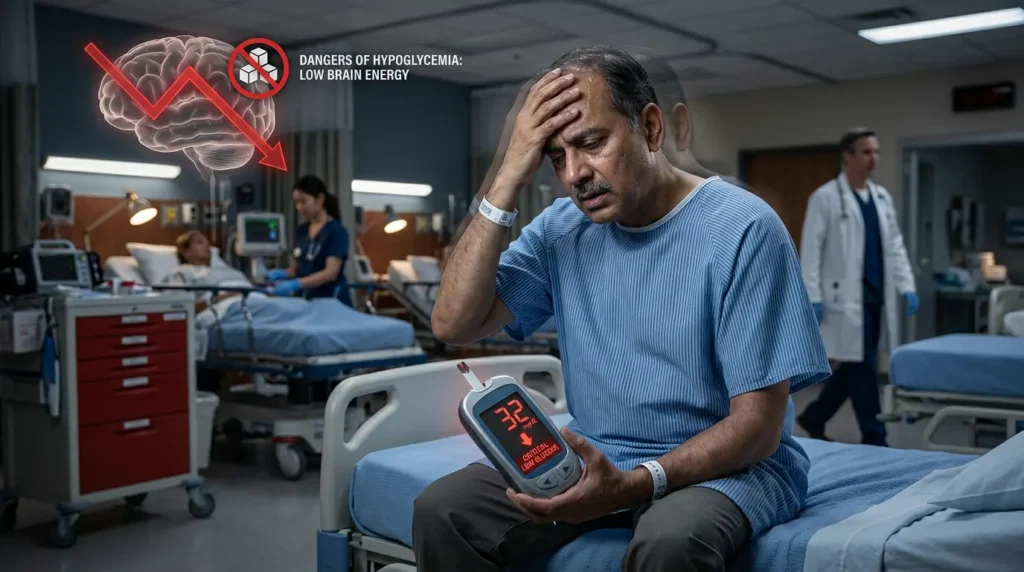
Low blood sugar affects brain function and can lead to:
- Accidents or falls
- Loss of consciousness
- Long-term neurological damage (in severe cases)
👉 Repeated episodes can also reduce awareness of symptoms.
What To Do If Blood Sugar Drops
Follow the 15-15 Rule
- Take 15 grams of fast-acting carbohydrates, such as:
- Glucose tablets
- Fruit juice
- Sugar or honey
- Wait 15 minutes and recheck blood sugar
👉 Repeat if needed until levels normalize.
How to Prevent Hypoglycemia
1. Don’t Skip Meals
Eat regularly and maintain consistent meal timing.
2. Monitor Blood Sugar
Regular monitoring helps identify patterns.
3. Balance Medication and Food
Ensure your medication matches your food intake.
4. Plan Exercise Properly
Eat before or after physical activity if needed.
5. Carry Emergency Snacks
Always keep quick sugar sources with you.
When Should You Seek Medical Help?
- Frequent hypoglycemia episodes
- Severe symptoms
- Difficulty managing blood sugar
👉 A doctor can adjust your treatment plan accordingly.
Conclusion
Hypoglycemia is a serious but manageable condition. Recognizing the early signs and taking quick action can prevent complications.
👉 Remember:
Low blood sugar needs immediate attention—don’t ignore the warning signs.
🔹 Take Control of Your Blood Sugar Safely
If you are experiencing frequent low sugar episodes, proper guidance is essential.
At Dr. Rajender’s Lifestyle Clinic, we help you balance diet, medication, and lifestyle to prevent both high and low blood sugar.
👉 Book your consultation today
📞 +91 8179630411
FAQs
1. What level is considered low blood sugar?
Below 70 mg/dL.
2. Can hypoglycemia occur without diabetes?
Yes, but it is more common in diabetics.
3. What is the fastest way to treat it?
Consume fast-acting carbohydrates like glucose or juice.
4. Can it be prevented?
Yes, with proper diet, monitoring, and planning.
5. Is hypoglycemia dangerous?
Yes, if untreated, it can lead to serious complications.