

Diabetes Diet & Lifestyle Guidelines: A Complete Daily Routine for Better Health
Introduction
Managing diabetes is not just about taking medicines. It is about following the right lifestyle every single day.
Small daily habits like what you eat, when you eat, how you sleep, and how active you are can make a big difference in controlling blood sugar levels.
A structured routine helps in:
- Maintaining stable blood sugar
- Reducing complications
- Improving overall health
This guide will help you understand simple and practical daily habits that can improve your health naturally.
Start Your Day the Right Way
Your morning routine sets the tone for the entire day.
Begin your day with:
- 100–150 ml ash gourd juice, gradually increasing to 200 ml
- After a few days, you can add a green smoothie (100 ml)
These drinks help in detoxification, hydration, and improving metabolism.
Starting your day with healthy fluids instead of tea or coffee can support better blood sugar control.
Include Seeds and Nuts Daily
Adding seeds and nuts to your diet provides essential nutrients and healthy fats.
Best options:
- Chia seeds
- Flax seeds
- Pumpkin seeds
- Sunflower seeds
- Watermelon & muskmelon seeds
- Almonds and walnuts
👉 Soak them for 6–8 hours before consuming
Benefits:
- Improve digestion
- Provide healthy fats
- Help control hunger
- Support blood sugar balance
Eat Fruits the Right Way
Fruits are healthy, but portion control is very important.
Guidelines:
- Consume around 75–100 grams of fruits
- Always eat whole fruits with skin
- Avoid fruit juices
Whole fruits contain fiber, which slows sugar absorption and prevents sudden spikes.
Focus on Good Sleep
Sleep plays a major role in diabetes control.
Follow these habits:
- Sleep for 7–8 hours daily
- Go to bed by 10–11 PM
- Avoid screens after 9 PM
Lack of sleep can increase stress hormones and worsen blood sugar levels.
Follow the Perfect Plate Method
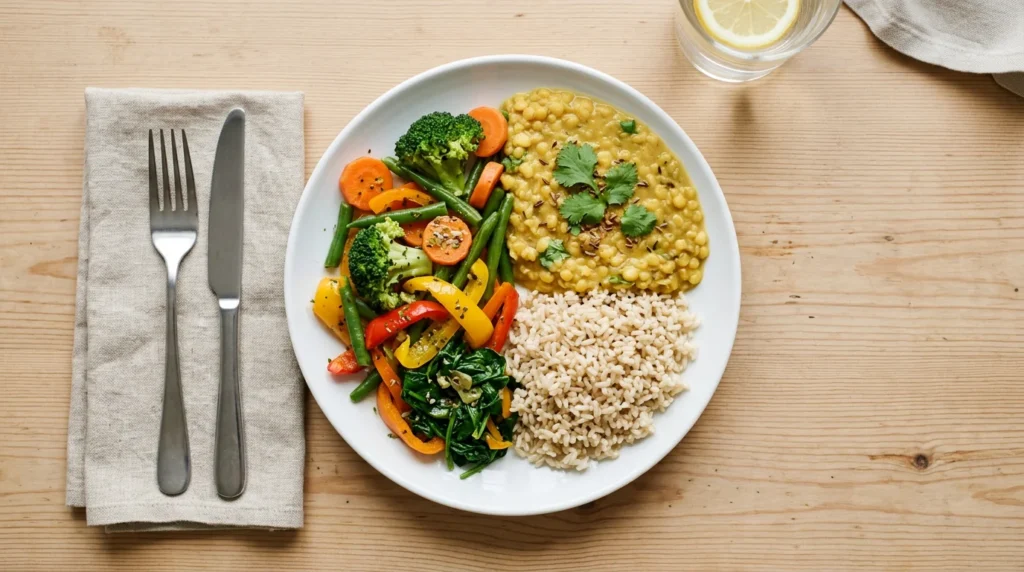
Your meal should be balanced and well-planned.
Ideal Plate Division:
- 50% vegetables (raw + cooked)
- 25% protein (dal, rajma, tofu, egg whites, chicken, fish)
- 25% carbohydrates (brown rice or single-polished rice)
This balance helps maintain steady blood sugar levels and keeps you full for longer.
Limit Certain Foods
Some foods can increase blood sugar quickly and should be reduced.
Avoid or limit:
- Tubers like potato and yam
- Deep-fried foods
- Foods with rich gravies
- Maida-based items (white flour foods)
- Packaged and processed foods
These foods can lead to insulin resistance and weight gain.
Choose Better Dairy Alternatives
Milk may not suit everyone, especially in diabetes management.
Better options:
- Curd
- Buttermilk
- Almond milk
- Soya milk
- Oat milk
These options are easier to digest and may have a better impact on blood sugar levels.
Stay Hydrated
Water is essential for overall health and blood sugar control.
Daily requirement:
- Around 35 ml per kg body weight
Proper hydration helps:
- Flush toxins
- Improve metabolism
- Maintain energy levels
Avoid Hidden Sugars

Sugar is not just in sweets—it is present in many foods.
Avoid:
- Sugar
- Jaggery
- Honey
Even natural sweeteners can increase blood sugar levels.
Start Meals with Salad
A simple habit can make a big difference.
👉 Always start your meal with raw salad
Benefits:
- Improves digestion
- Slows sugar absorption
- Helps in portion control
Avoid adding extra salt to salads.
Maintain Proper Meal Timings
Timing is as important as food.
Follow these rules:
- Eat meals on time
- Do not skip meals
- Avoid long gaps between meals
Irregular eating can lead to:
- Sudden sugar drops
- Overeating
- Poor sugar control
Stay Active Every Day

Physical activity is essential for managing diabetes.
Simple habits:
- Walk for 8–10 minutes after meals
- Attend regular yoga or exercise sessions
Post-meal walking helps:
- Improve digestion
- Reduce blood sugar spikes
Track Your Progress
Monitoring helps you stay on track.
Important practices:
- Check blood sugar regularly
- Share meal habits with your nutritionist
- Follow guidance consistently
Tracking helps in understanding what works best for your body.
Follow Professional Guidance
Support and guidance make the journey easier.
- Stay connected with your nutritionist
- Follow personalized advice
- Ask questions whenever needed
Consistency and guidance together bring better results.
Continue Medications as Advised
Do not stop medications on your own.
- Continue medicines as prescribed
- Make lifestyle changes along with treatment
Both together help in better diabetes management.
Conclusion
Managing diabetes is not about strict dieting—it is about building the right lifestyle.
Simple habits like:
- Eating balanced meals
- Sleeping on time
- Staying active
- Avoiding processed foods
can make a big difference.
👉 Focus on consistency, not perfection.
Healthy habits practiced daily can help you control diabetes and live a better, healthier life.
FAQs
1. Can I manage diabetes with lifestyle alone?
Lifestyle plays a major role, but medications should be continued as advised by your doctor.
2. How important is meal timing?
Very important. Irregular meals can lead to sugar fluctuations.
3. Is walking after meals helpful?
Yes, it helps reduce blood sugar spikes and improves digestion.
4. Can I eat fruits daily?
Yes, but in limited portions and always as whole fruits.
5. Why is sleep important in diabetes?
Poor sleep can increase stress hormones and affect blood sugar levels.
If you want next