

Introduction
The global rise in obesity and type 2 diabetes mellitus (T2DM) is becoming a major public health concern. At the same time, sleep deprivation and sleep disorders are also increasing due to modern lifestyle habits, stress, screen exposure, and irregular routines.
Research now shows a strong connection between sleep and type 2 diabetes, sleep deprivation and obesity, and overall metabolic health. Poor sleep not only affects energy levels but also influences appetite, weight gain, insulin resistance, and blood sugar control.
Understanding the relationship between sleep duration and diabetes can help improve prevention and treatment strategies for obesity and type 2 diabetes.
How Sleep Affects Metabolic Health

Sleep plays a vital role in maintaining metabolism and hormonal balance.
Healthy sleep helps:
- Regulate appetite hormones
- Maintain blood sugar levels
- Support insulin sensitivity
- Control energy metabolism
When sleep duration becomes shorter, the body’s metabolic processes become disrupted, increasing the risk of obesity and diabetes.
Sleep Deprivation and Obesity

Studies show a strong relationship between sleep deprivation and obesity.
1. Increased Hunger and Cravings
Poor sleep affects appetite-regulating hormones:
- Ghrelin increases → hunger increases
- Leptin decreases → fullness decreases
As a result:
- Cravings for sugary and high-fat foods increase
- Calorie intake rises
- Frequent snacking becomes common
This promotes weight gain and abdominal obesity.
2. Reduced Energy Expenditure
People who sleep less often feel tired and less active during the day.
Lack of energy reduces:
- Exercise motivation
- Physical activity
- Daily movement
Reduced activity combined with higher calorie intake increases obesity risk.
3. Increased Stress Hormones
Poor sleep increases cortisol levels, the body’s primary stress hormone.
High cortisol levels:
- Increase emotional eating
- Promote fat storage around the abdomen
- Worsen metabolic imbalance
This explains the strong connection between poor sleep and weight gain.
Sleep and Type 2 Diabetes
There is also a clear link between sleep duration and diabetes.
1. Insulin Resistance and Sleep
One of the most important mechanisms is insulin resistance and sleep disruption.
Sleep deprivation reduces insulin sensitivity, meaning:
- Cells respond poorly to insulin
- Blood sugar remains elevated
- Diabetes risk increases
This is why sleep and blood sugar control are closely connected.
2. Changes in β-Cell Function
The pancreas contains β-cells that produce insulin.
Research suggests that lack of sleep may impair β-cell function, reducing the body’s ability to regulate glucose effectively.
Over time, this increases the risk of type 2 diabetes mellitus.
3. Increased Inflammation
Sleep deprivation increases inflammation in the body.
Chronic inflammation:
- Worsens insulin resistance
- Damages metabolic health
- Contributes to diabetes progression
The Dangerous Cycle Between Sleep, Obesity and Diabetes
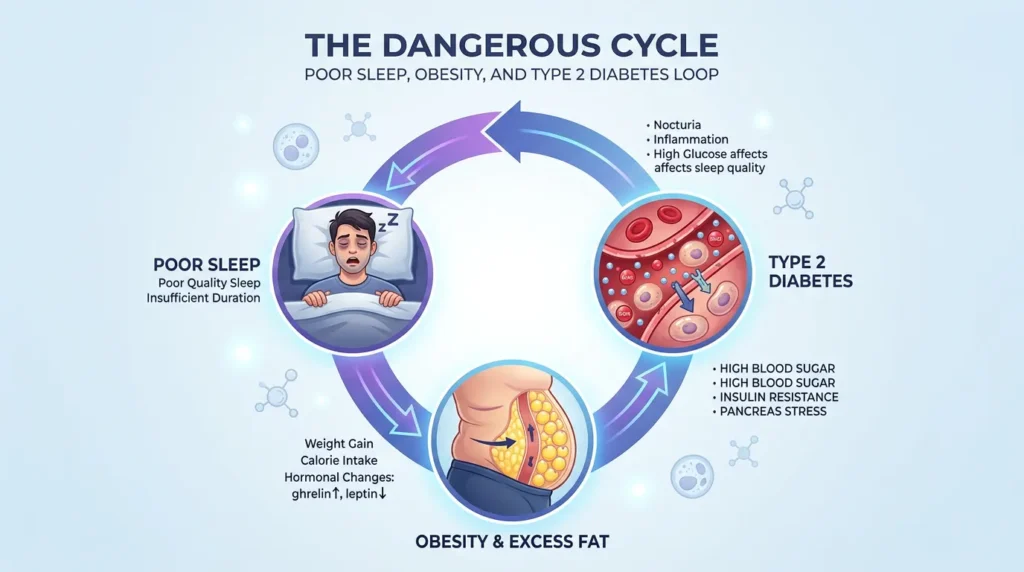
The relationship between these conditions is closely interconnected.
The cycle works like this:
Poor sleep → Increased hunger → Weight gain → Insulin resistance → Type 2 diabetes → Poor sleep again
For example:
- Obesity increases risk of sleep apnea
- Sleep apnea reduces sleep quality
- Poor sleep further worsens insulin resistance
This creates a harmful metabolic cycle.
Research Evidence Linking Sleep and Diabetes
Epidemiological studies consistently show that:
- Short sleep duration increases obesity risk
- Sleep disorders increase diabetes risk
- Poor sleep affects energy homeostasis and glucose metabolism
Research also suggests that people with shorter sleep duration may lose less weight during:
- Lifestyle interventions
- Weight-loss programs
- Bariatric surgery
This highlights the importance of sleep in long-term weight management.
How Much Sleep Is Needed?
Most adults need:
👉 7–8 hours of quality sleep daily
Both insufficient sleep and excessive sleep may negatively affect metabolic health.
Maintaining regular sleep timing is equally important.
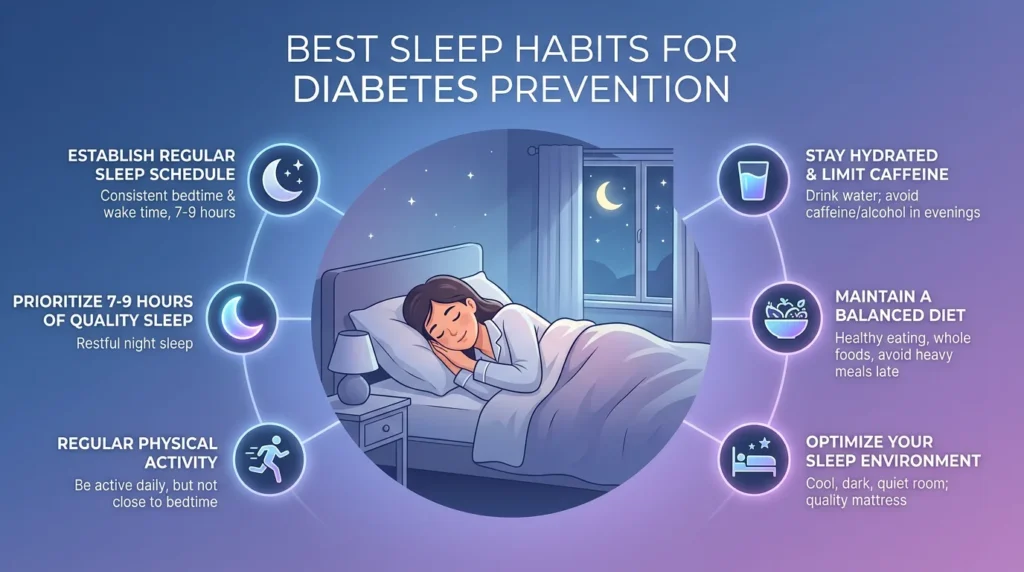
Best Sleep Habits for Diabetes Prevention
Following healthy sleep habits can improve metabolic health significantly.
1. Maintain a Regular Sleep Schedule
Sleep and wake up at the same time daily.
2. Reduce Screen Time Before Bed
Avoid phones, TVs, and bright screens at night.
3. Exercise Regularly
Physical activity improves sleep quality and insulin sensitivity.
4. Avoid Heavy Late-Night Meals
Late eating can disturb sleep and worsen blood sugar levels.
5. Manage Stress
Yoga, meditation, and breathing exercises improve sleep quality naturally.
Conclusion
The connection between sleep deprivation and obesity, sleep duration and diabetes, and metabolic health is stronger than many people realize.
Poor sleep affects appetite hormones, insulin sensitivity, stress levels, and blood sugar control, increasing the risk of obesity and type 2 diabetes mellitus.
👉 The key message is simple:
Healthy sleep should be treated as an essential part of diabetes and obesity prevention.
Along with proper nutrition and exercise, good sleep habits can significantly improve long-term metabolic health.
FAQs
1. Can lack of sleep increase diabetes risk?
Yes, sleep deprivation worsens insulin resistance and blood sugar control.
2. How does poor sleep cause obesity?
Poor sleep increases hunger hormones and cravings, leading to weight gain.
3. What is the ideal sleep duration for adults?
Most adults require 7–8 hours of quality sleep daily.
4. Can improving sleep help with weight loss?
Yes, healthy sleep supports metabolism and appetite control.
5. Why is sleep important for metabolic health?
Sleep regulates hormones, insulin sensitivity, and overall energy balance.
For personalized lifestyle and nutrition guidance, connect with Dr. Rajender’s Lifestyle Clinic and take the first step toward a healthier life.