
Introduction
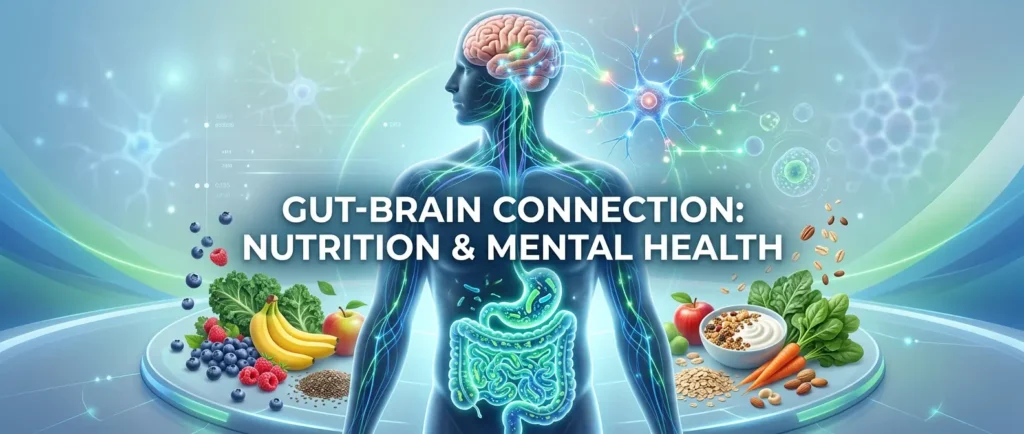
The connection between gut health and mental health is gaining massive attention in modern healthcare research. Scientists now understand that the digestive system and brain constantly communicate through a powerful network called the gut-brain axis.
This communication affects:
- Mood
- Stress
- Sleep
- Appetite
- Memory
- Emotional health
Research suggests that unhealthy gut bacteria, poor digestion, and inflammation may increase the risk of anxiety, depression, and other mental health problems.
The good news is that nutrition and lifestyle habits can strongly influence the gut-brain connection naturally.
What Is the Gut-Brain Connection?
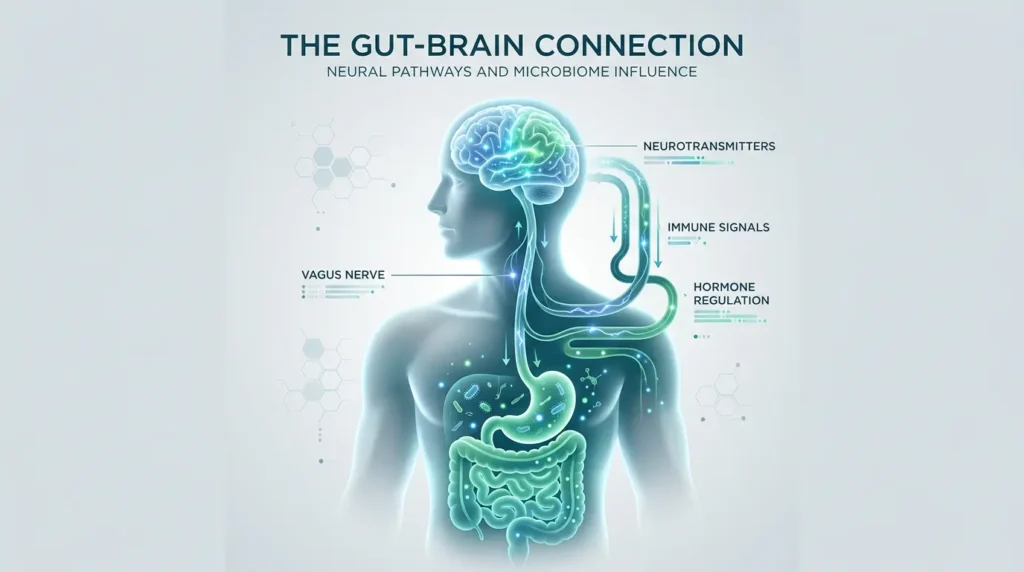
The gut-brain connection refers to the communication system between the digestive system and the brain.
The gut and brain communicate through:
- Nerves
- Hormones
- Neurotransmitters
- Gut bacteria
- Immune signals
This means your brain can affect digestion, and your gut can also influence mental health.
The Role of the Vagus Nerve
One of the most important links between the gut and brain is the vagus nerve.
The vagus nerve:
- Sends signals between the gut and brain
- Helps regulate digestion
- Influences stress responses and mood
Interestingly, the gut contains millions of neurons that communicate directly with the brain.
This is one reason why stress often affects digestion and gut problems may affect emotions.
How Gut Bacteria Affect Mental Health
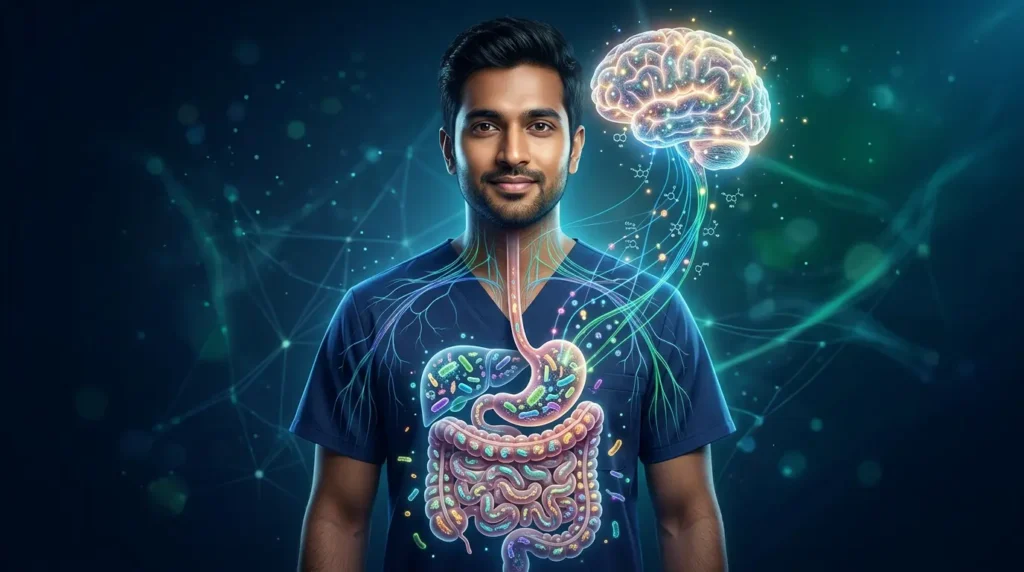
Trillions of bacteria live inside the digestive system. These are called the gut microbiome.
Healthy gut bacteria help:
- Improve digestion
- Reduce inflammation
- Support immunity
- Influence brain function
An unhealthy gut microbiome may negatively affect mental wellness.
Serotonin and Gut Health
Serotonin is known as the “feel-good” neurotransmitter.
It helps regulate:
- Mood
- Sleep
- Appetite
- Memory
A large amount of serotonin is actually produced in the gut.
This explains why digestive health and emotional health are closely connected.
GABA and Emotional Balance
Gut bacteria also produce GABA (gamma-aminobutyric acid), a neurotransmitter linked with relaxation.
GABA helps regulate:
- Anxiety
- Fear
- Stress
Healthy gut bacteria may support better emotional balance naturally.
Inflammation and Brain Health
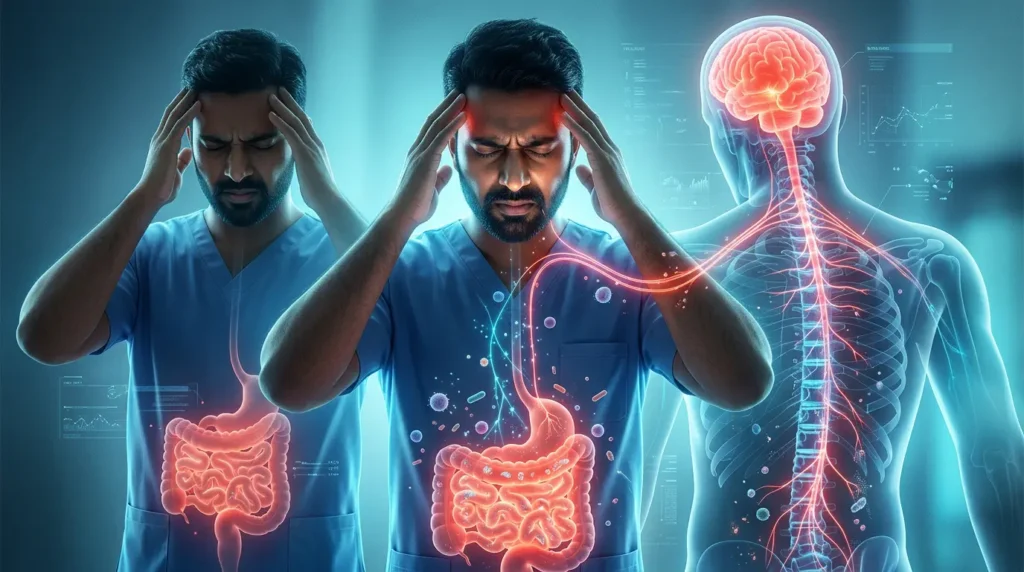
Poor gut health may increase inflammation inside the body.
When the gut barrier becomes weak or “leaky,” harmful substances may enter the bloodstream and affect the brain.
Chronic inflammation has been associated with:
- Depression
- Anxiety
- Brain fog
- Cognitive decline
This is why maintaining gut health is important for mental wellness.
Best Foods for Gut and Brain Health
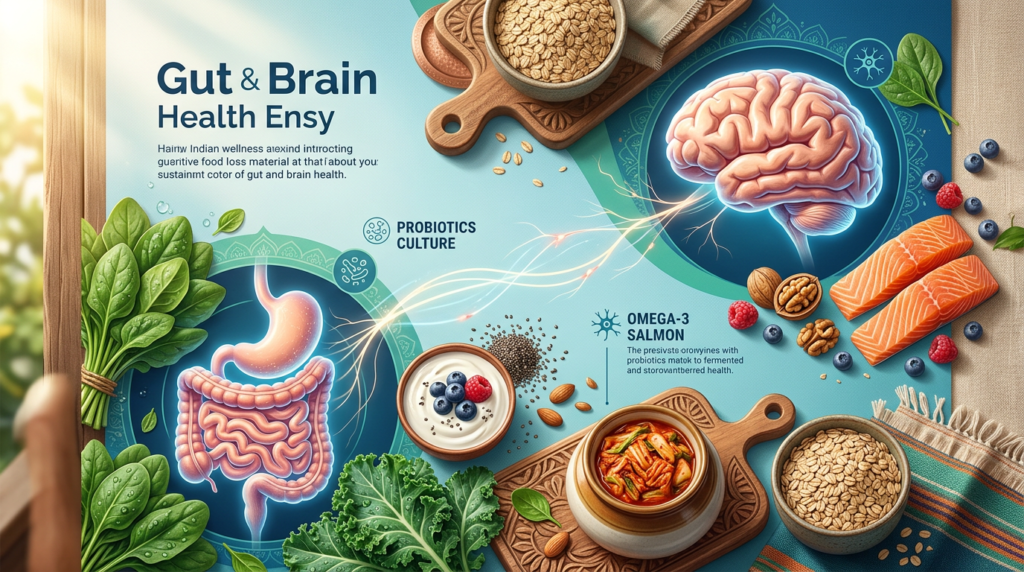
Nutrition plays a major role in supporting the gut-brain axis.
1. High-Fiber Foods
Fiber feeds healthy gut bacteria.
Best high-fiber foods include:
- Fruits
- Vegetables
- Oats
- Whole grains
- Lentils
Fiber also supports digestion and reduces inflammation.
2. Probiotic Foods
Probiotics are healthy bacteria that improve gut health.
Examples include:
- Yogurt
- Kefir
- Kimchi
- Fermented foods
Some probiotics that support mental health are called psychobiotics.
3. Prebiotic Foods
Prebiotics help nourish beneficial gut bacteria.
Examples:
- Garlic
- Onion
- Banana
- Oats
Research suggests prebiotics may help improve mood and reduce stress.
4. Omega-3 Rich Foods
Healthy fats support both brain and gut function.
Good sources:
- Fatty fish
- Walnuts
- Chia seeds
- Flaxseeds
Lifestyle Habits That Support the Gut-Brain Axis
The gut-brain connection is also affected by:
- Sleep quality
- Stress levels
- Physical activity
- Processed food intake
Healthy lifestyle habits can improve both digestive and mental health.
How to Improve Gut Health Naturally
Simple Daily Tips
- Eat more fiber-rich foods
- Reduce processed foods
- Stay hydrated
- Sleep well
- Exercise regularly
- Manage stress
Small daily changes can create major improvements in gut and brain wellness.
Conclusion
The gut and brain are deeply connected through the gut-brain axis. Healthy gut bacteria, proper nutrition, and balanced lifestyle habits may help improve digestion, mood, stress management, and overall mental health.
👉 The key message is simple:
A healthy gut supports a healthy mind.
Focusing on fiber-rich foods, probiotics, healthy fats, and stress management can naturally support both gut and brain function.
FAQs
1. What is the gut-brain axis?
It is the communication system connecting the gut and brain.
2. Can gut health affect mental health?
Yes, unhealthy gut bacteria and inflammation may affect mood and brain function.
3. What foods improve gut and brain health?
Fiber-rich foods, probiotics, prebiotics, and omega-3-rich foods.
4. What are psychobiotics?
Psychobiotics are probiotics that may support mental health.
5. Why is fiber important for gut health?
Fiber feeds healthy gut bacteria and supports digestion naturally.