
Introduction
Gut health plays a crucial role in overall wellbeing. The digestive system is not just responsible for breaking down food—it also affects immunity, metabolism, hormones, and even mental health.
However, many people ignore early warning signs of poor gut health. An unhealthy gut can lead to problems like diabetes, weight gain, low immunity, and chronic inflammation.
Recognizing these signs early can help you take corrective steps and prevent long-term health issues.
What is Gut Health?
Gut health refers to the balance of microorganisms (gut microbiome) present in the digestive system.
A healthy gut:
- Supports digestion
- Absorbs nutrients efficiently
- Strengthens immunity
- Maintains hormonal balance
When this balance is disturbed, it leads to gut dysbiosis, which can affect multiple body systems.

Common Signs of Poor Gut Health
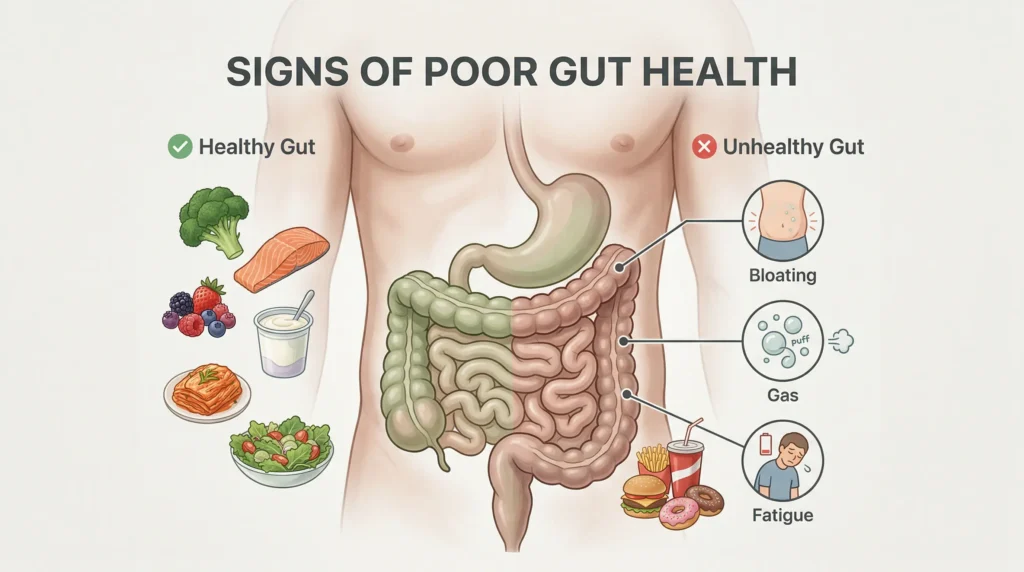
1. Bloating and Gas
Frequent bloating or gas after meals is one of the earliest signs of gut imbalance.
👉 It indicates poor digestion and unhealthy gut bacteria.
2. Indigestion or Acidity
Regular indigestion, heartburn, or discomfort after eating suggests that your gut is not functioning properly.
3. Constipation or Loose Motions
Irregular bowel movements are a strong indicator of poor gut health.
👉 Both constipation and diarrhea signal imbalance in gut bacteria.
4. Frequent Sugar Cravings
Unhealthy gut bacteria can increase cravings for sugar and processed foods.
👉 This further worsens gut imbalance and affects blood sugar control.
5. Fatigue and Low Energy
Even after adequate sleep, feeling tired may be linked to poor nutrient absorption.
👉 A weak gut fails to extract essential nutrients from food.
6. Weak Immunity
Around 70% of immunity is linked to gut health.
👉 Frequent infections or slow recovery can indicate gut issues.
7. Skin Problems
Skin conditions like acne, eczema, or dull skin may be connected to gut inflammation.
👉 Gut health and skin health are closely linked.
8. Difficulty Managing Weight
Poor gut health can affect metabolism, leading to weight gain or difficulty losing weight.
9. Brain Fog and Mood Changes
The gut and brain are connected through the gut-brain axis.
👉 Poor gut health can lead to:
- Anxiety
- Mood swings
- Lack of focus
What Causes Poor Gut Health?
Several lifestyle factors contribute to gut imbalance:
- Processed and junk food
- Excess sugar intake
- Lack of fibre
- Poor sleep
- Stress
- Overuse of antibiotics
How to Improve Gut Health
1. Eat Fibre-Rich Foods
- Vegetables
- Fruits
- Whole grains
2. Include Probiotics
- Curd
- Buttermilk
- Fermented foods
3. Add Prebiotics
- Garlic
- Onion
- Banana
- Oats
4. Stay Hydrated
Adequate water supports digestion.
5. Manage Stress
Practice yoga, meditation, or breathing exercises.
6. Sleep Well
Quality sleep supports gut balance and hormone regulation.

Conclusion
Your gut is the foundation of your health. Ignoring its signals can lead to serious health problems over time.
By recognizing early signs like bloating, fatigue, cravings, and poor digestion, you can take timely action and improve your overall wellbeing.
👉 A healthy gut leads to better digestion, stronger immunity, and balanced metabolism.
FAQs
1. What are the first signs of poor gut health?
Bloating, gas, and indigestion are early signs.
2. Can gut health affect weight?
Yes, poor gut health can lead to weight gain or difficulty losing weight.
3. How can I improve my gut health naturally?
Eat fibre-rich foods, include probiotics, and manage stress.
4. Does gut health affect immunity?
Yes, most of the immune system is linked to the gut.
5. Can poor gut health cause fatigue?
Yes, due to poor nutrient absorption.